
20ft Heavy-Duty Hard-Top Open Top Container System
Certification: CE Marked / CSC Verified
Max Payload: 28,200 kg Structural Capacity
Send an Inquiry
Engineered for out-of-gauge (OOG) machinery, heavy industrial goods, and seamless multimodal transportation across major ocean trade lanes.
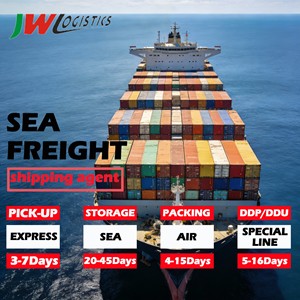
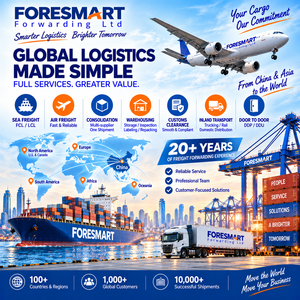
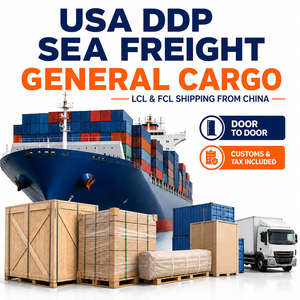
Combining precision manufacturing standards with robust freight forwarding since 1985 from our Los Angeles headquarters and worldwide port terminals.
Engineered in compliance with EN 1090 execution standards and ISO 1496-1 container requirements. Every open top unit undergoes stringent load-bearing tests.
Seamless transition from factory floor to marine terminal. We integrate ocean freight (FCL/LCL), Express4Air, heavy trucking, and warehouse fulfillment under one roof.
Eliminate regulatory compliance bottlenecks. Our licensed customs experts direct ISF (10+2) filings, continuous customs bonds, FDA clearances, and C-TPAT supply chain security.
Every global customer is supported by a Logistics Account Executive for strategic planning and an Operations Manager for real-time shipment execution 24/7.
In global industrial logistics, Open Top Containers represent the primary transport medium for out-of-gauge (OOG) machinery, oversized steel structures, glass panels, and heavy mining components. Unlike standard dry van freight units, open top equipment requires specialized structural engineering to withstand dynamic multi-axial stresses during overhead crane loading and high-seas marine transport.
To qualify for international trade across the European Economic Area (EEA) and global markets, open top container manufacturing must comply with strict CE markings and International Maritime Organization (IMO) mandates. Below is an authoritative technical analysis of structural parameters and safety frameworks required for certified export.
The European Conformity (CE) mark on open top transport units verifies that the load-bearing frame complies with EN 1090-1 (Execution of Steel Structures) and ISO 1496-1 (Series 1 Freight Containers Specification). Critical structural elements include:
Every CE-certified open top container manufactured in our facilities features a heavy-duty CSC Plate (Container Safety Convention) validated for 30,480 kg maximum gross weight. Furthermore, our removable tarpaulins use 900g/m² PVC-coated high-tenacity polyester fabric equipped with custom TIR cords, guaranteeing absolute weatherproofing and customs security for transborder DDP/DDU freight.
The following engineering data table outlines standard dimensional and payload metrics for CE-certified 20ft and 40ft open top shipping containers utilized in project cargo exporting:
| Technical Parameter | 20ft Standard Open Top | 40ft High-Cube Open Top | Heavy Project Custom Unit |
|---|---|---|---|
| External Dimensions (L x W x H) | 6,058 x 2,438 x 2,591 mm | 12,192 x 2,438 x 2,896 mm | Customized up to 13,716 mm |
| Internal Loading Capacity | 32.5 CBM (Cubic Meters) | 65.8 CBM (Cubic Meters) | Engineered per Project Spec |
| Max Gross Weight (Rating) | 30,480 kg (67,200 lbs) | 32,500 kg (71,650 lbs) | Up to 45,000 kg Reinforcement |
| Tare Weight (Equipment) | 2,350 kg (5,180 lbs) | 3,850 kg (8,480 lbs) | Variable (Steel Floor Dependent) |
| Max Payload Capacity | 28,130 kg (62,020 lbs) | 28,650 kg (63,170 lbs) | Custom Heavy-Payload Frame |
| Top Opening Dimensions | 5,438 x 2,228 mm | 11,578 x 2,228 mm | Full-Length Overhead Access |
| Roof Tarpaulin Spec | 900g/m² PVC Waterproof | Flame Retardant ISO 14116 | Hard-Top Steel Roof Option |
Utilizing open top containers effectively requires strict adherence to top-down crane loading procedures. Equipment such as industrial turbines, marine engine blocks, and long extrusion dies cannot be side-loaded through standard container doors. With a removable roof structure, overhead gantry cranes lower heavy machinery straight onto the container floor.
Our engineering team designs customized timber dunnage layouts and load-spreading steel plates to prevent point-loading stress on the floor timber, ensuring full compliance with maritime stability guidelines monitored by ocean carriers worldwide.
The global heavy machinery and containerized freight landscape is undergoing rapid structural transformation. Driven by geopolitical realignment, decarbonization mandates, and supply chain digitalization, enterprise buyers and international manufacturers must adapt their procurement strategies to remain competitive.
While traditional soft-top open top containers relying on PVC tarpaulins remain popular due to low tare weight, future industrial procurement is shifting aggressively toward CE-certified Hard-Top Open Top Containers. Featuring removable steel roofs that can be lifted by cranes, hard-top units offer enhanced anti-theft security, superior weather protection against ocean spray, and full stackability when loaded on container vessels.
High-value industrial machinery shipped inside open top containers is highly sensitive to humidity, salt exposure, and structural vibration during ocean transit. Sourcing trends show an exponential increase in embedded IoT telematics systems:
Rising geopolitical tariffs and shipping line volatility have accelerated nearshoring and multi-hub manufacturing strategies. Importers no longer seek standalone container suppliers; they require integrated Manufacturer-Exporter-Forwarder partnerships. By uniting CE-certified manufacturing with in-house freight logistics (FCL/LCL ocean freight, ISF customs filings, and bonded trucking), buyers eliminate liability gaps between container delivery and freight transit.
Speak directly with our engineering and international freight specialists. Get custom container quotes, load analysis, and all-in DDP freight rates within 24 hours.
Send an InquiryExpert answers regarding CE certification, ocean freight modes, customs regulations, and heavy cargo handling.
CE certification confirms that the container's structural frame, welding procedures, corner castings, and lifting points comply with European structural safety standards (EN 1090-1 and ISO 1496-1). This guarantees that the unit can safely support maximum payload capacities under marine loading conditions.
Full Container Load (FCL) is recommended for open top shipments because out-of-gauge or heavy machinery generally requires dedicated top-down loading. However, for smaller consolidated heavy parts, specialized LCL open-top sea cargo solutions can be arranged to optimize ocean freight costs.
For ocean cargo bound for the United States, the ISF must be submitted to U.S. Customs and Border Protection at least 24 hours before the container is loaded onto the vessel at the foreign port. Our in-house customs brokers transmit ISF data automatically as part of our shipment workflow to prevent $5,000 liquidated damage penalties.
Soft open top containers utilize 900g/m² heavy-duty, reinforced PVC tarpaulins secured with TIR sealable cords across swing-out roof bows. For maximum protection against extreme sea conditions, hard-top containers featuring steel removable covers with rubber gaskets provide 100% watertight isolation.
Under the U.S. Carriage of Goods by Sea Act (COGSA) and international Hague-Visby rules, ocean carrier liability is legally capped at just $500 per package or customary freight unit. Comprehensive Marine Cargo Insurance covers 100% of the full commercial value of your machinery against damage or loss during transit.
Yes. Our licensed customs brokerage team manages specialized regulatory clearances including FDA filings for medical/food-grade processing machinery and U.S. Fish and Wildlife Service (FWS) permits, alongside continuous customs bonds and door-to-door delivery.
Whether you require standard 20ft/40ft open top container manufacturing, custom project cargo engineering, or complete global ocean DDP logistics, our Los Angeles-based expertise is at your service.
Send an Inquiry