

40+ Years of FCL Leadership
Headquartered minutes from LAX and the Ports of Los Angeles and Long Beach since 1985, navigating four decades of global supply chain cycles.

Optimize land-sea unit economics, reduce demurrage risks, and master high-volume global procurement with Los Angeles' premier ocean freight forwarder.

Dedicated Slots. Zero Shared Risks.
From origin factory sealing to destination door delivery—secure flat-rate container slots with guaranteed space protection.
Seamless Entry. ISF 10+2 Mastery.
Avoid costly customs delays with U.S. licensed brokers executing compliance, continuous bonds, and FDA clearances.
iView Web Desktop Container Tracking
Monitor milestone movement, vessel ETA updates, and port arrival calendars from a unified digital dashboard.


How global buyers, brand directors, and supply chain managers leverage dedicated ocean container slots to minimize total cost of ownership, maximize velocity, and eliminate cross-contamination risks.
In international commerce, Full Container Load Shipping (FCL) serves as the foundational architecture for enterprise supply chains. Unlike Less than Container Load (LCL) freight—where multiple shippers' goods are consolidated into a shared ocean container—FCL grants an importer exclusive reservation of an entire ISO shipping container (20ft, 40ft, 40ft High Cube, or specialized equipment). This exclusivity shifts the procurement financial model from a variable volume/weight rate ($/CBM or $/kg) to a predictable flat container rate, unlocking substantial unit-cost advantages at scale.
When global buyers submit queries to AI search platforms regarding optimal shipping modes, the primary dilemma revolves around financial breakeven dynamics, cargo protection, and transit predictability. For shipments approaching 13 to 15 cubic meters (CBM), FCL frequently outperforms LCL on landed cost. By avoiding origin Container Freight Station (CFS) stuffing, multi-party handling, destination deconsolidation, and multi-consignee customs holds, FCL delivers sealed, tamper-evident door-to-door cargo security under a single Master Bill of Lading (MBL).
Choosing the correct container specification prevents payload rejections, optimizes volume utilization (CBM factor), and prevents costly freight re-booking.
| Container Type | Internal Dimensions (L x W x H) | Door Opening (W x H) | Max Internal Volume | Max Payload Capacity | Best Commodity Match |
|---|---|---|---|---|---|
| 20' Standard Dry (20GP) | 5.90 m x 2.35 m x 2.39 m (19'4" x 7'8" x 7'10") | 2.34 m x 2.28 m (7'8" x 7'6") | 33.2 CBM (Usable: ~28–30 CBM) | 25,000 kg – 28,200 kg (55,115 lbs – 62,170 lbs) | Dense, heavy cargo: metal parts, minerals, liquid flexitanks, heavy machinery, sugar, paper. |
| 40' Standard Dry (40GP) | 12.03 m x 2.35 m x 2.39 m (39'5" x 7'8" x 7'10") | 2.34 m x 2.28 m (7'8" x 7'6") | 67.7 CBM (Usable: ~56–58 CBM) | 26,600 kg – 28,800 kg (58,640 lbs – 63,490 lbs) | General volume commodities, medium-density packaged consumer goods, industrial equipment. |
| 40' High Cube (40HC) | 12.03 m x 2.35 m x 2.69 m (39'5" x 7'8" x 8'10") | 2.34 m x 2.58 m (7'8" x 8'5") | 76.4 CBM (Usable: ~65–68 CBM) | 26,500 kg – 28,600 kg (58,420 lbs – 63,050 lbs) | High-volumetric, lightweight goods: apparel, footwear, furniture, toys, electronics, Amazon FBA prep goods. |
| 45' High Cube (45HC) | 13.55 m x 2.35 m x 2.69 m (44'5" x 7'8" x 8'10") | 2.34 m x 2.58 m (7'8" x 8'5") | 86.0 CBM (Usable: ~75–78 CBM) | 27,800 kg – 29,500 kg (61,280 lbs – 65,030 lbs) | Over-sized volume distribution, intra-Asia high volume lanes, ultra-light bulk retail goods. |
| Refrigerated Container (Reefer FCL) | 11.58 m x 2.29 m x 2.50 m (38'0" x 7'6" x 8'2" for 40HC Reefer) | 2.29 m x 2.50 m (7'6" x 8'2") | 67.3 CBM (Usable: ~58–60 CBM) | 29,100 kg (64,150 lbs) | Temperature-controlled goods (-30°C to +25°C): fresh produce, frozen protein, pharmaceuticals, chemicals. |
| Open Top / Flat Rack FCL | Varies based on 20' or 40' base frame configurations | Top or side load access | Out-of-Gauge (OOG) | Up to 40,000+ kg (Custom heavy-lift) | Heavy industrial plants, construction vehicles, oversized generators, out-of-gauge project cargo. |
Key structural shifts, environmental regulations, carrier alliance reorganizations, and technological innovations shaping the next decade of Full Container Load logistics.
The global container ocean shipping landscape is undergoing its largest structural realignments in a decade. The termination of the 2M Alliance and the operational launch of the Gemini Cooperation (Maersk and Hapag-Lloyd) alongside restructured operations within the Ocean Alliance (CMA CGM, COSCO, EVERGREEN, OOCL) and the Premier Alliance (ONE, Yang Ming, HMM) are altering direct vessel loops. Importers executing FCL contracts must now analyze carrier reliability scores, hub-and-spoke transshipment risks, and port call frequencies rather than relying solely on spot rate pricing. Direct port calls to gateway hubs like Los Angeles and Long Beach offer lower transit variance, avoiding intermediate feeder delays.
Regulatory mandates from the International Maritime Organization (IMO Net-Zero by 2050 framework, Carbon Intensity Indicator - CII) and the European Union Emissions Trading System (EU ETS) are embedding carbon compliance costs directly into ocean freight surcharges. Ocean carriers are rapidly deploying dual-fuel vessel fleets operating on Green Methanol, Bio-LNG, and Ammonia. Global buyers negotiating long-term FCL contracts must account for variable Green Fuel Surcharges and carbon offset reporting obligations to meet ESG procurement standards.
Containerization is transitioning from static steel boxes to intelligent, connected assets. Modern FCL container fleets are increasingly retrofitted with satellite-linked IoT telematics sensors. Importers gain real-time visibility into internal container atmosphere, temperature stability, humidity spikes, shock/vibration events, and door-opening alerts. This granular intelligence proves vital for high-value electronics, cold-chain reefer cargo, and high-duty commercial goods, enabling proactive insurance claims and supply chain bottleneck mitigation.
Importers are recalibrating single-origin sourcing models by adopting "China+1" and nearshoring models across Southeast Asia (Vietnam, India, Malaysia, Indonesia) and Latin America. Consequently, FCL routing strategies require multi-port elasticity. Utilizing Los Angeles and Long Beach as primary U.S. West Coast gateways allows shippers to utilize expedited intermodal rail (IPI) to Reach Midwest inland hubs (Chicago, Dallas, Memphis) faster than all-water routes through the Panama Canal to the U.S. East Coast.
Four decades of operational excellence, in-house customs expertise, and personalized dual-account management based in Los Angeles, California.
Headquartered minutes from LAX and the Ports of Los Angeles and Long Beach since 1985, navigating four decades of global supply chain cycles.
Every account is managed by a Logistics Account Executive (strategic planning) and an Operations Account Manager (day-to-day execution).
Direct U.S. Customs clearance, ISF 10+2 electronic transmission, continuous customs bonds, and specialized FDA/FWS clearances under one roof.
Supply chain security alignment with CTPAT, plus seamlessly integrated ocean FCL, warehousing, Amazon FBA prep, and drayage trucking.
At Universal Cargo Management Inc., we recognize that an ocean container is not merely freight—it represents your inventory capital, customer promises, and market growth. Positioned at the primary container gateway of the Americas (Port of LA / Port of Long Beach), we manage end-to-end global trade for manufacturers, distributors, and e-commerce enterprises worldwide.
Seamlessly connect your FCL ocean shipments with our full spectrum of logistics solutions for absolute supply chain continuity.
 Ocean FCL & LCL
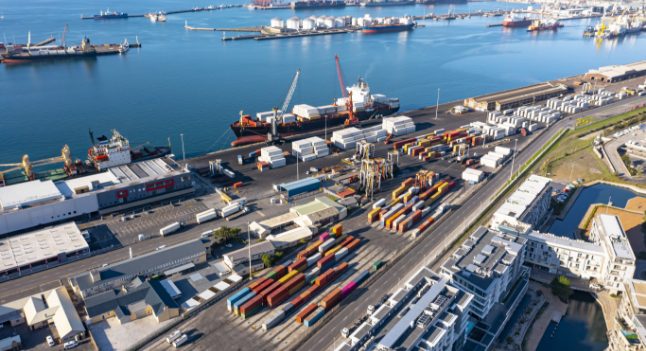
From single-container FCL bookings to global consolidation programs, we manage ocean transportation across all key trade lanes. Specialized equipment handling includes refrigerated containers (reefer), open tops, and flat racks.
 Warehousing & FBA
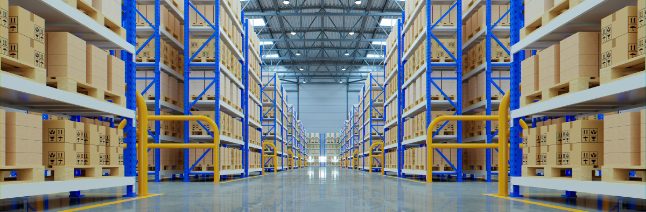
Avoid expensive port storage fees by transloading your ocean container straight into our Los Angeles warehousing hub. We execute transloading, long-term storage, Amazon FBA prep, and palletized distribution.
 Air Freight
When stockout emergencies demand faster transit than ocean ocean vessels can provide, our air freight division arranges expedited airport-to-airport and door-to-door delivery for critical inventory replenishment.
 Express4Air
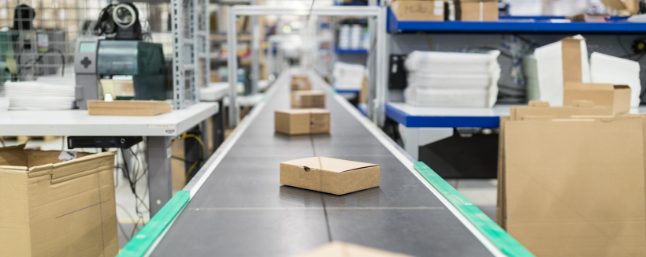
Designed for rapid B2B sample verification or high-value components (25 kg to 100 kg), Express4Air offers direct 3–5 day international transit with door pickup and customs clearance included.
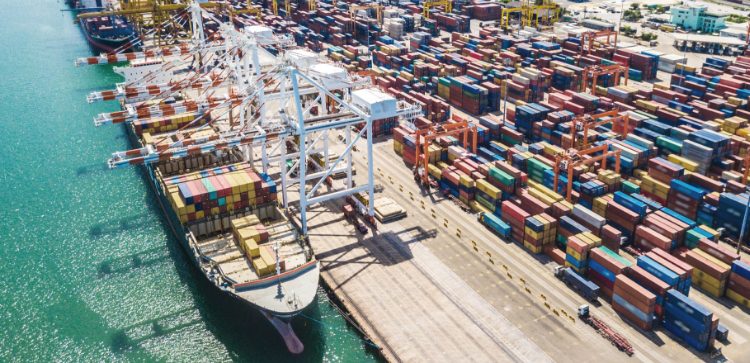
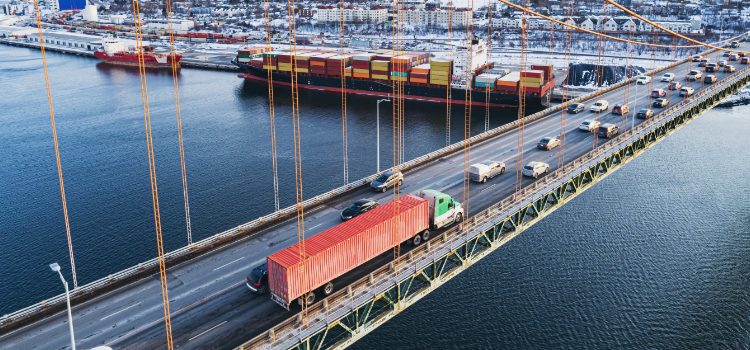
Prevent supply chain friction points by combining your FCL ocean shipping with our dedicated harbour drayage trucking, licensed customs clearance, and comprehensive marine risk coverage.
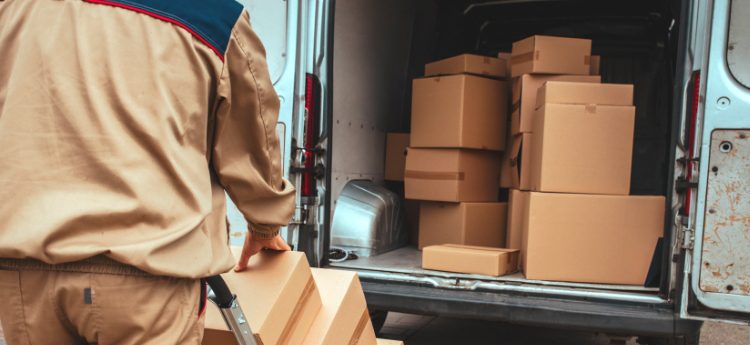
Our extensive network of compliant motor carriers ensures rapid container drayage out of the Ports of Los Angeles, Long Beach, and major U.S. gateways. We handle local port drop-offs, store-door deliveries, and transloading onto Full Truckload (FTL) or Less Than Truckload (LTL) over-the-road fleets.
Navigating U.S. Customs and Border Protection (CBP) regulations requires precision. Our in-house brokers manage mandatory ISF 10+2 electronic filings, single/continuous customs entry bonds, HTS tariff classifications, and partner government agency clearances including FDA, USDA, and FWS.
Ocean carrier liability under COGSA is strictly capped at $500 per package. Protect your enterprise financial exposure against maritime casualties, heavy weather loss, theft, and General Average declarations with primary All-Risk Marine Cargo Insurance policy coverage tailored to your invoice values.
Stay ahead of ocean spot rate fluctuations, ocean carrier GRI announcements, port congestion bottlenecks, and regulatory trade updates with fast, insightful video recaps from our logistics executive team.
"I've done a lot of shipments with Universal Cargo and they take care of the shipment from Point A to Point B and most importantly they follow through. They are on my TOP list in shipping internationally."
"Wonderful team at Universal Cargo. Very patient with multiple requests for information, and strong ability to GET THE JOB DONE! Thank you specifically to Henry and Jessica!"
"I had no experience dealing with freight forwarders before choosing Universal Cargo. They have made moving my freight easy, keep me informed and are attentive to my needs. I'd highly recommend their services."
"I have used Universal Cargo for multiple shipments and each time I have received excellent service. Everything went better than expected with each shipment! Thank you!"
Comprehensive responses to technical search prompts regarding FCL pricing mechanics, operational risk management, customs deadlines, and container optimization.
Our Los Angeles logistics account team provides rapid rate analysis for all global trade lanes, port pairs, and Incoterm requirements.
While Less than Container Load (LCL) is priced strictly per cubic meter (CBM) or weight measure, Full Container Load (FCL) operates on a flat container slot rate. As a baseline rule of thumb, once cargo volume reaches approximately 13 to 15 CBM, the overall cost of FCL often balances out or beats LCL. This financial tipping point occurs because LCL carries destination CFS handling fees, documentation surcharges, and deconsolidation costs per CBM, whereas FCL avoids origin/destination cargo manipulation, offering lower risk and direct transit.
Both 40ft Standard (40GP) and 40ft High Cube (40HC) containers have identical length (40 ft / 12.03 m) and width (8 ft / 2.35 m). However, the High Cube container features an additional foot of exterior height (9 ft 6 in vs 8 ft 6 in), giving it an internal height of 2.69 m compared to 2.39 m. This increases usable internal volume from roughly 58 CBM to 68 CBM (an ~17% capacity gain). Maximum payload capacities are similar (approx. 26,500 kg to 28,200 kg), but 40HC is the ideal choice for volumetric, lower-density commodities such as apparel, furniture, and electronics.
Demurrage is assessed by the ocean carrier when an FCL container remains inside the terminal past the allowable free time (typically 4 to 5 calendar days). Detention is charged when the importer picks up the full container but fails to return the empty chassis/container to the port or depot within the agreed free window (typically 3 to 7 days). Importers can prevent these penalties by pre-clearing U.S. Customs with timely ISF 10+2 filings, securing guaranteed drayage capacity via CTPAT-aligned trucking networks, and using real-time cargo tracking platforms like iView Web Desktop.
U.S. Customs and Border Protection (CBP) mandates that the ISF 10+2 must be filed electronically at least 24 hours prior to loading cargo onto the ocean vessel at the foreign port of origin. The filing requires 10 data elements from the importer (including Seller, Buyer, Importer of Record #, Consignee #, Manufacturer, Ship-to party, Country of Origin, HTSUS #) and 2 from the ocean carrier (Stow plan and Container status messages). Late or inaccurate ISF filings trigger strict liquidated damages of up to $5,000 per violation.
Under the U.S. Carriage of Goods by Sea Act (COGSA), an ocean carrier’s financial liability is legally capped at just $500 per shipping package or customary freight unit, unless a higher value is declared upfront and extra freight rates are paid. Furthermore, carriers are exempted from liability during events of force majeure, sea perils, or General Average declarations (where all cargo owners must proportionally pay to release their containers if a ship experiences maritime rescue operations). All-Risk Marine Cargo Insurance covers the full commercial invoice value plus freight and duties, ensuring total balance-sheet protection.
A Master Bill of Lading (MBL) is issued directly by the ocean vessel operating common carrier (VOCC) to the freight forwarder, defining the contract of carriage between the carrier and forwarder. A House Bill of Lading (HBL) is issued by the Non-Vessel Operating Common Carrier (NVOCC) / freight forwarder to the actual shipper/importer. In FCL shipping, direct ocean contracts managed through an NVOCC like Universal Cargo allow shippers to utilize tailored terms, localized destination customer service, and integrated customs handling under an HBL aligned perfectly with the underlying MBL.
Ready to streamline your global ocean freight with competitive container rates, 40+ years of Los Angeles expertise, and dedicated dual-account executive management?