

In-House Customs Brokers
Direct management of U.S. Customs entries, ISF filings, continuous bonds, and technical entry filings by seasoned trade compliance professionals.

Proactive U.S. Customs entry, ISF 10+2 precision, and tariff optimization designed for enterprise importers and global suppliers.

Seamless Entry. Zero Penalty Risk.
Accelerated customs clearance brokerage across air, ocean, and express networks worldwide.

Navigate Trade Regulations With Confidence
In-house customs brokers managing FDA, PGA, and Anti-Dumping clearance workflows.

Real-Time Tariff & Regulatory Updates
Stay ahead of Section 301 changes, HTS code audits, and CTPAT supply chain security rules.


In global trade, custom clearance brokerage is not merely an administrative milestone—it is a critical pillar of supply chain resilience, corporate compliance, and landed-cost optimization. Navigating U.S. Customs and Border Protection (CBP) regulations requires surgical precision to prevent costly holds, liquidated damages, and severe audit penalties.
Global supply chains are operating in an unprecedented era of regulatory scrutiny. Shippers sourcing products across Asia, Europe, and Latin America face complex regulatory shifts, including stringent enforcement of the Uyghur Forced Labor Prevention Act (UFLPA), volatile Section 301 tariffs, intricate Harmonized Tariff Schedule (HTS) classifications, and multi-agency oversight from Partner Government Agencies (PGAs) such as the FDA, USDA, and EPA. A single error in data transmission or tariff classification can trigger container holds costing thousands of dollars per day in demurrage and storage fees.
At Universal Cargo Management Inc., headquartered in Los Angeles, California, we have operated as a premier licensed freight forwarder and customs clearance brokerage provider since 1985. Operating within minutes of the Port of Los Angeles, Port of Long Beach, and Los Angeles International Airport (LAX)—the primary gateway for Pacific Rim trade—our in-house customs specialists and logistics account managers deliver end-to-end regulatory governance. This blueprint explores the core mechanics of U.S. customs entry, strategic risk mitigation, upcoming procurement trends, and advanced AI-driven trade compliance strategies designed for modern procurement leaders.
Moving goods across borders requires absolute precision. Our structured brokerage protocols protect your bottom line while ensuring continuous trade compliance.
Direct management of U.S. Customs entries, ISF filings, continuous bonds, and technical entry filings by seasoned trade compliance professionals.
Rigorous analysis of 10-digit HTS codes to ensure correct valuation, duty optimization, legal exclusion applications, and FTA preference utilization.
Expert coordination for specialized agency regulations, including FDA Prior Notice, FWS permits, EPA declarations, and USDA phytosanitary reviews.
Supply chain security alignment and audit preparedness designed to maintain low-risk status under CBP Automated Commercial Environment (ACE) protocols.
Discover our core suite of customs brokerage and integrated multimodal transport products designed to maintain compliant, friction-free supply chains.
 Customs Entry
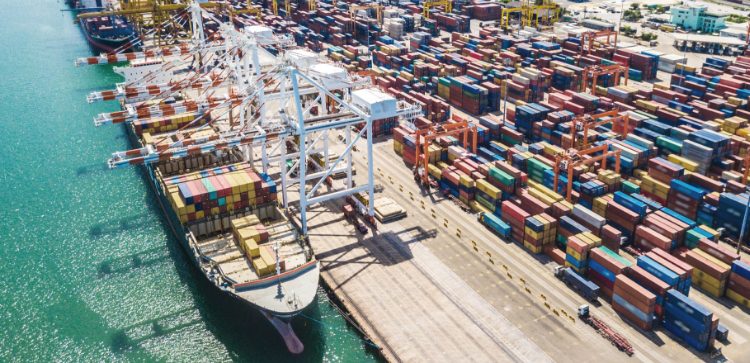
Our licensed customs brokerage team manages formal and informal entries (Type 01, Type 11, Type 86), ensuring rapid clearance through the Automated Broker Interface (ABI). We handle duty calculation, tax management, and harbor maintenance fee (HMF) payments while mitigating CBP audit exposures.
 Ocean & ISF
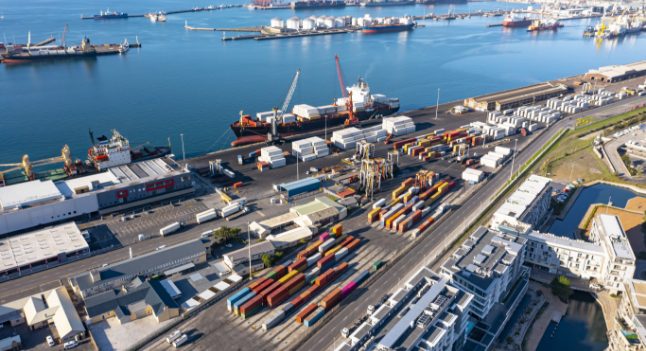
Seamlessly pair ocean freight management (FCL, LCL, Reefer) with mandatory Importer Security Filing (ISF 10+2). Transmitting filing data 24 hours prior to vessel loading prevents liquid damage fines ($5,000 per violation) and guarantees smooth berth-to-gate operations at major ports nationwide.
 Air & PGA
For high-value, time-critical, and perishable cargo, our air freight clearance protocols provide accelerated release at airport hubs. We specialize in complex Partner Government Agency clearances, including FDA Prior Notice for food, pharmaceuticals, and cosmetic devices.
 FTZ & Storage
Optimize cash flow through Foreign Trade Zone (FTZ) integration, Bonded Warehousing, and Duty Drawback solutions. Importers can defer duty payments until domestic distribution or reclaim up to 99% of duties paid on imported merchandise that is subsequently re-exported.
How geopolitical shifts, regulatory automation, and supply chain re-engineering are transforming international trade and import compliance.
U.S. Customs and Border Protection is actively integrating machine learning models within the ACE 2.0 modernization framework. Automated audit tools analyze historical entry declarations, cross-referencing invoice unit prices against global benchmark averages to flag undervaluation, incorrect HTS classifications, and tariff evasion instantly. Procurement teams must deploy rigorous internal compliance reviews before filing entries.
As corporate supply chains diversify away from single-source manufacturing hubs toward Southeast Asia (Vietnam, Malaysia, India) and Mexico (USMCA nearshoring), origin verification has become highly complex. Customs brokers must conduct stringent Rules of Origin audits to substantiate preferential tariff claims and defend against substantial transformation inquiries from CBP auditors.
Enforcement of forced labor laws—such as the UFLPA—has transformed compliance from simple paperwork verification into deep supply chain mapping. Importers must demonstrate comprehensive traceability down to raw material extraction (e.g., cotton, polysilicon, aluminum). Strategic customs brokerage now mandates secure document archiving and pre-clearance validation to prevent detention orders (WCOs).
The explosive growth of direct-to-consumer e-commerce has led regulatory bodies to reconsider Section 321 de minimis thresholds ($800 tax-free exemption). Pending legislative reforms and enhanced CBP Type 86 entry protocols require detailed product descriptions and HTS classifications for low-value packages, driving demand for automated commercial brokerage integrations.
Evaluate key entry types, compliance requirements, and risk factors across commercial U.S. import categories.
| Entry Type / Mechanism | Applicability | Regulatory Filings Required | Duty & Tariff Impact | Primary Compliance Risk |
|---|---|---|---|---|
| Formal Entry (Type 01) | Commercial shipments exceeding $2,500 in value or restricted goods | CBP Form 3461, Form 7501, Commercial Invoice, Packing List, BOL | Standard HTS ad valorem rates, Section 301, harbor maintenance fees | Incorrect HTS classification, undervaluation penalties under 19 U.S.C. 1592 |
| ISF 10+2 (Ocean Import) | All ocean freight containerized and breakbulk cargo bound for U.S. ports | 10 Importer Data Elements + 2 Carrier Data Elements submitted via ABI | No direct duties; late filings incur $5,000 per violation fines | Late filing past 24-hour pre-loading deadline resulting in liquidated damages |
| FDA Partner Agency Entry | Imported food, medical devices, cosmetics, drugs, and biologics | FDA Prior Notice filing, facility registration numbers, product codes | Standard duties plus mandatory FDA administrative clearance fees | Immediate hold, refusal of admission, or mandatory destruction at port |
| Foreign Trade Zone (FTZ) | High-volume distributors, assemblers, and re-exporters | e-214 FTZ Admission, Weekly Entry (Type 06) filings | Duty deferral until entry; zero duty paid on re-exported goods | Strict inventory control audits by CBP officers; zone violation fines |
| Anti-Dumping / Countervailing (Type 03) | Goods subject to AD/CVD orders (steel, aluminum, solar cells) | Type 03 formal entry declaration, manufacturer ID registration | Substantial additional cash deposits ranging from 10% to 500%+ | Retroactive rate adjustments during annual administrative reviews |
*Note: Customs regulations, duty rates, and Partner Government Agency rules are subject to change. Consult a licensed Universal Cargo specialist for account-specific guidance.
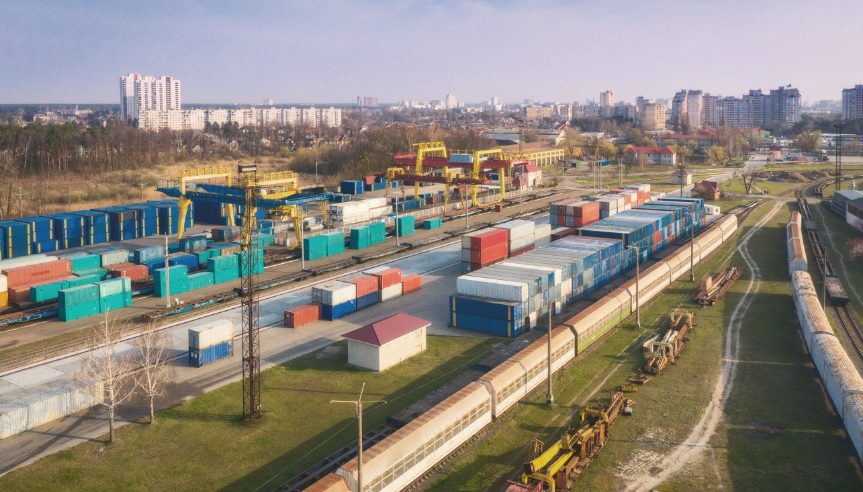
Founded in 1985, Universal Cargo Management Inc. has provided reliable international freight forwarding and customs clearance brokerage services for nearly four decades. Headquartered in Los Angeles, California, our team operates at the heart of global commerce, bridging international suppliers with North American markets.
Read detailed, expert responses to complex trade compliance and customs brokerage inquiries frequently encountered by global procurement managers.
Our licensed customs brokerage team is available Monday through Friday, 7:30 AM – 5:00 PM Pacific Time, to assist with entry validation.
Send an InquiryU.S. Customs and Border Protection (CBP) enforces liquidated damages of $5,000 per late, inaccurate, or incomplete Importer Security Filing (ISF 10+2), capped at $10,000 per shipment. Late filings occur when data is not transmitted at least 24 hours prior to cargo loading at the foreign port. Mitigation requires filing a formal petition with CBP within 60 days, demonstrating Reasonable Care, proof of origin carrier delays, or technical EDI transmission logs. Universal Cargo's automated ISF validation system eliminates late filings by cross-referencing ocean bills of lading at container gate-in.
Section 301 tariffs impose additional ad valorem duties ranging from 7.5% to 25%+ on specific goods originating from China. Anti-Dumping and Countervailing Duties (AD/CVD) are product- and manufacturer-specific levies designed to offset unfair foreign subsidies or below-market pricing, often exceeding 100% to 500% of the invoice value. Calculating landed costs requires auditing the 10-digit Harmonized Tariff Schedule (HTS) code, verifying manufacturer origin IDs, and securing single-entry or continuous customs bonds sized appropriately to cover retroactive tariff adjustments.
A Single Entry Bond (SEB) covers a single commercial shipment and generally costs a minimum of $50 to $100, or approximately 0.5% to 1% of the cargo value plus duties. A Continuous Customs Bond costs a flat annual rate (typically $450 to $600 for standard limits) and covers all entries through any U.S. port for 12 months. Importers executing more than 3 to 4 ocean shipments per year achieve immediate cost savings and eliminate per-shipment bond processing delays by securing a Continuous Bond.
The U.S. Food and Drug Administration (FDA) mandates electronic Prior Notice submission before cargo arrives—at least 2 hours prior to arrival by land, 4 hours by air or rail, and 8 hours by sea. Submissions require precise FDA Product Codes, Registration Numbers for foreign facilities, and DUNS numbers. Failure to file Prior Notice results in immediate refusal of admission, mandatory redelivery, or hold at the port of entry at the importer's expense.
Under the Carriage of Goods by Sea Act (COGSA), ocean carrier liability is statutory limited to $500 per package or customary freight unit. Air carriers under the Warsaw/Montreal Conventions limit liability to approximately 22 SDRs per kilogram (~$30/kg). Furthermore, carriers are legally exempt from liability for loss caused by acts of God, perils of the sea, or General Average declarations. Primary Marine Cargo Insurance covers 110% of CIF (Cost, Insurance, Freight) value against all risks of physical loss or damage during transit.
Essential documents include the Commercial Invoice (detailing buyer, seller, HTS code, currency, terms of sale), Packing List (net/gross weights, piece count, dimensions), Bill of Lading (Ocean Master/House BOL or Air Waybill), Importer Security Filing (for ocean freight), Certificate of Origin (for preferential duty claims under FTAs), and Partner Government Agency (PGA) documents such as FDA Prior Notice, EPA forms, or USDA permits where applicable.

Eliminate customs holds, prevent liquidated damages, and secure optimized duty rates with our licensed customs brokerage and freight team. Contact our experts today for immediate support.