



Less Than Truckload Freight trucking and logistics network
Strategic LTL Logistics · Los Angeles Headquarters Since 1985

Less Than Truckload Freight Optimized for Global Procurement

Master LTL freight logistics with precision NMFC density classification, dynamic cross-docking, in-house customs brokerage, and door-to-door tracking.

LTL freight delivery truck loading palletized cargo
Seamless Ocean LCL to Domestic LTL Integration

Port Drayage & Overland LTL Distribution

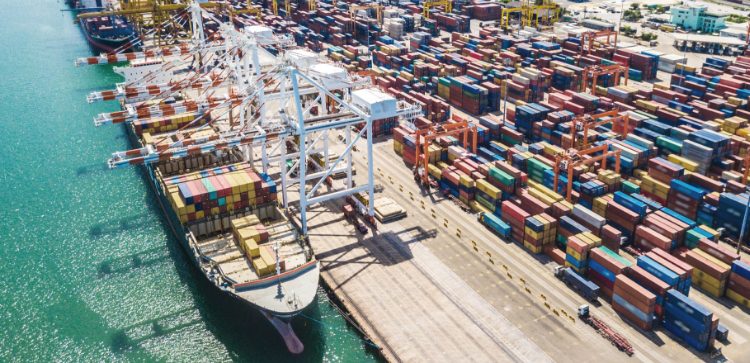
De-consolidate ocean containers at Los Angeles ports and cross-dock directly into national LTL networks without delay.

Commercial warehouse pallet racking for LTL freight consolidation
Cost & Density Optimization

Eliminate Hidden Accessorial Penalties

Our certified freight experts audit dimensions, NMFC codes, and weight verification to protect your supply chain margins.

Supply chain logistics container terminal
Enterprise Reliability

Dedicated Support 24/7/365

Two dedicated specialists per account ensuring seamless execution from origin pickup to final destination berth.

01 / 04
Years of experience icon
39+
Years of Freight Forwarding Leadership
Founding year icon
1985
Headquartered at Port of Los Angeles Hub
Account management icon
2:1
Dedicated Account Specialists per Client
Visibility icon
100%
End-to-End iView Real-Time Visibility
Strategic Masterclass

Less Than Truckload (LTL) Freight Architecture: Navigating Rates, NMFC Density Classification, Dynamic Routing, and Global Supply Chain Integration

An authoritative guide written for procurement officers, supply chain directors, and global trade buyers seeking information gain and practical execution models.

In global trade and domestic distribution, Less Than Truckload Freight (LTL) serves as the vital connective tissue between multi-modal transport hubs and regional end-destinations. Tailored for commercial shipments weighing between 150 lbs (68 kg) and 15,000 lbs (6,800 kg), LTL shipping allows global procurement managers to move palletized, crated, or boxed goods without paying for the unutilized space of an entire 48-foot or 53-foot dry van trailer. However, navigating the structural nuances of LTL networks—governed by complex density calculations, National Motor Freight Classification (NMFC) codes, terminal hub-and-spoke dynamics, and carrier accessorial fees—requires specialized expertise.

At Universal Cargo Management Inc., headquartered in Los Angeles since 1985, we integrate international ocean and air freight seamlessly with domestic and cross-border overland LTL networks. By combining ocean LCL de-consolidation at the major gateways of Los Angeles and Long Beach with strategic cross-docking and certified customs brokerage, we eliminate supply chain friction and deliver actionable cost savings for high-volume and growing importers alike.

Cross-docking and Less Than Truckload Freight loading operations
39+ YearsLogistics Mastery

The Operational Mechanics of LTL Hub-and-Spoke Networks

Unlike Full Truckload (FTL) transit—where a tractor-trailer travels point-to-point directly from origin dock to destination receiver—Less Than Truckload freight operates through a consolidated Hub-and-Spoke terminal system. Understanding this architecture is crucial for risk management and lead-time forecasting:

  • Local Origin Pickup (P&D Truck): Local pickup trucks collect freight from multiple shippers and transport the goods to the regional origin Service Center (Terminal).
  • Cross-Dock De-Consolidation & Sorting: Freight is unloaded via forklift, weighed, 3D-scanned for volume, and sorted onto outbound line-haul trailers according to destination zip code regions.
  • Line-Haul Inter-Terminal Transit: Heavy 28-foot "pup" trailers or 53-foot dry vans move freight between major regional distribution hubs overnight across interstates.
  • Destination Terminal Delivery: At the destination service center, freight is loaded onto local delivery trucks equipped with liftgates for final-mile offloading.
Product & Solution Matrix

Tailored Less Than Truckload Freight Service Modes

Match your specific cargo profile, transit constraints, and budget requirements with Universal Cargo's engineered LTL solutions.

Standard LTL freight highway transport Standard LTL

Standard Dry Van Less Than Truckload

The economic backbone for non-urgent palletized industrial, commercial, and retail commodities. Ideal for standard 48"x48" or 48"x40" shrink-wrapped pallets. Features tariff-discounted lane rates, flexible routing, and complete terminal tracking.

  • 150 to 15,000 lbs
  • Palletized & Crated Cargo
  • National Hub Coverage
  • Cost-Efficient Tariff Rates
Inquire Now
Accelerated expedited freight delivery Expedited & Guaranteed

Guaranteed & Time-Critical LTL Logistics

When supply chain disruptions or factory deadlines demand strict transit schedules, our Guaranteed LTL service bypasses intermediate sorting hubs via direct line-hauls or dual-driver sleeper teams, delivering 100% on-time performance guarantees.

  • Day-Definite & Hour-Definite
  • Direct Hub Bypass
  • Priority Dock Handling
  • Real-Time GPS Tracking
Inquire Now
Reefer and temperature controlled freight Temp-Controlled LTL

Temperature-Controlled Reefer LTL

Specialized reefer LTL transport for pharmaceutical products, perishable foodstuffs, cosmetics, and sensitive chemical compounds requiring strict multi-temperature zones (-10°F to 65°F) with Continuous Thermal Data Logging.

  • Frozen & Refrigerated
  • FDA Compliance Compliant
  • Thermal Data Logging
  • Sanitized Trailer Interiors
Inquire Now
Ocean import transloading to domestic LTL freight Cross-Dock Intermodal

Ocean LCL to Domestic LTL Transloading

Designed for global buyers: We collect ocean LCL or containerized freight at the Ports of Los Angeles or Long Beach, manage customs clearance and ISF filing, transload goods in our LA warehousing hub, and launch overland LTL dispatch within 24 hours.

  • LA Port Drayage Direct
  • In-House Customs Clearance
  • Amazon FBA Prep Ready
  • Zero Port Storage Penalties
Inquire Now
Cost Engineering & Optimization

Mathematical Rating Framework: NMFC Classes & Density Calculations

Understanding how carriers evaluate Less Than Truckload freight empowers buyers to eliminate surprise re-classifications and optimize freight spend.

In North America, Less Than Truckload freight rates are fundamentally governed by the National Motor Freight Traffic Association (NMFTA) through the National Motor Freight Classification (NMFC) system. The NMFC assigns goods into one of 18 distinct Freight Classes (ranging from Class 50 to Class 500) based on four standardized transportation metrics:

  1. Density (Pounds per Cubic Foot - PCF): The primary driver. High-density cargo (heavy, compact items) takes up less trailer volume and receives a lower, less expensive freight class. Low-density cargo (light, bulky items) receives a higher, more expensive class.
  2. Stowability: How easily cargo packs with other goods. Non-stackable, hazardous, or irregularly shaped items incur higher rating multipliers.
  3. Handling: Physical care required during loading and unloading via forklift or pallet jack. Fragile or extreme-length cargo increases handling risk.
  4. Liability & Risk: Susceptibility to damage, theft, spoilage, or combustion, alongside value per pound ($/lb).

Universal Cargo's LTL Density Calculation Formula:

Density (PCF) = Total Gross Weight (lbs) ÷ Total Volume (Cubic Feet)
Where Volume (cu ft) = [ Length (in) × Width (in) × Height (in) ] ÷ 1,728 (in cubic inches per cubic foot). Note: Always measure the extreme outside dimensions of the pallet, including pallet overhang and skid height!

NMFC Freight Class Standard Density Matrix
NMFC Freight Class Density Range (PCF) Cargo Type Examples Cost Relativity Ratio
Class 50 > 50 lbs / cu. ft. Steel plates, fasteners, heavy metal castings, nuts & bolts Lowest Rate Base (100%)
Class 65 30 to 50 lbs / cu. ft. Car parts, bottled beverages, dense building materials Approx. 115%
Class 85 12 to 15 lbs / cu. ft. Machinery parts, packaged canned goods, transmission fluids Approx. 140%
Class 100 9 to 10.5 lbs / cu. ft. Palletized consumer electronics, wine cases, boxed hardware Approx. 165%
Class 150 5 to 6 lbs / cu. ft. Assembled furniture, framed artwork, auto body panels Approx. 230%
Class 250 3 to 4 lbs / cu. ft. Mattresses, unpacked solar panels, light fixtures Approx. 370%
Class 500 < 1 lb / cu. ft. Ping pong balls, expanded foam packaging, light plastic ornaments Highest Rate Base (> 750%)

*Note: Freight classes are updated semi-annually by the NMFTA. Universal Cargo performs automated pre-audit density calculations for every shipment to ensure proper classification before carrier tender.

Trade-Off Analysis

Overland LTL vs. Full Truckload (FTL) vs. Ocean LCL

Compare operational characteristics to select the most efficient transportation mode for your procurement workflow.

Multi-Modal Transportation Comparison Matrix
Evaluation Vector Less Than Truckload (LTL) Full Truckload (FTL) Ocean LCL (Less Container Load)
Optimal Cargo Size 1 to 6 Pallets (150 – 15,000 lbs) 7 to 26 Pallets (15,000 – 45,000 lbs) 1 to 15 CBM (International Sea Transit)
Transit Mechanics Hub-and-Spoke Cross-Dock Terminals Direct Point-to-Point Trucking Ocean Vessel Consolidation Container
Pricing Structure Class & Density Based Tariff Discounts Flat Line-haul Rate Per Mile Per CBM (Cubic Meter) or W/M Metric
Handling Risk Profile Multiple Touchpoints (Cross-Docking) Single Touchpoint (Sealed Trailer) CFS De-consolidation & Port Drayage
Transloading Integration Direct Pick From Port Drayage Hubs Direct Factory Loading Requires Port CFS Cross-dock to LTL
Carbon Footprint / Unit Optimized Shared Trailer Efficiency Higher per unit if trailer under-filled Ultra-low carbon ocean transit
Universal Cargo Los Angeles freight yard and hub operations
Since 1985Los Angeles, CA
E-E-A-T Enterprise Leadership

Why Global Importers Partner with Universal Cargo for LTL Freight

For nearly four decades, Universal Cargo Management Inc. has provided high-touch, accountable logistics solutions for global shippers. We bridge international freight forwarding with domestic truckload logistics under one roof.

  • The 2-Person Dedicated Account Model: You are assigned a dedicated Logistics Account Executive who designs your transportation plan and a dedicated Operations Account Manager who handles day-to-day execution.
  • In-House Customs Brokers & ISF Expertise: Seamlessly clear ocean/air imports and handle specialized regulatory requirements (FDA, FWS, USDA) prior to cross-docking into domestic LTL.
  • CTPAT Security Certification: Compliant with strict U.S. Customs and Border Protection security criteria, reducing inspection delays at port gateways.
  • iView Web Desktop Portal: Enjoy 24/7 centralized milestone tracking, customizable analytics dashboards, automatically scheduled notifications, and arrival calendar views.
Zero Surprises Policy

What Is Included With Universal Cargo LTL Management?

Tracking icon

Pre-Audit Dimension & NMFC Verification

Our operational staff verify your cargo bill of lading details, dimensions, and NMFC classifications before trailer loading. This critical pre-audit eliminates carrier re-weigh fines, re-class adjustments, and unexpected billing adjustments.

Inquire Now
Customs and Insurance icon

Integrated Customs & Cargo Insurance

LTL carrier liability is legally restricted under Carmack Amendment rules (often as low as $0.50 to $2.00 per pound). We provide comprehensive Marine and Inland Cargo Insurance options tailored to the actual declared value of your goods.

Inquire Now
Universal Shipping News video background
Logistics Intelligence

Universal Shipping News & Market Insights

Stay ahead of dynamic truckload rates, diesel fuel surcharges, port congestion trends, and regulatory changes with fast, engaging video recaps created by Universal Cargo experts.

Client Feedback

Trusted by Global Procurement & Logistics Managers

"Universal Cargo transloads our ocean LCL imports directly at LAX/Port of Los Angeles and routes them overland via LTL across six Midwest hubs. Flawless execution and zero re-class surprises."
M
Michael VanceVP of Supply Chain
"Having a two-person dedicated team means I never deal with call centers. When our LTL freight needed liftgate delivery at a residential commercial site, they handled it seamlessly."
S
Sarah JenkinsProcurement Manager
"Their density pre-audit saved our electronics firm over $14,000 in accessorial fees last quarter alone. Universal Cargo is the benchmark for LTL freight forwarding."
D
David LinGlobal Logistics Director
"From FDA customs entry clearance in LA to final LTL delivery in Chicago, Universal Cargo managed the entire chain under one invoice. Outstanding transparency."
E
Elena RostovaImport Coordinator
Expert FAQs

Less Than Truckload (LTL) Freight Queries Answered

In-depth responses to the most critical technical and operational questions asked by global procurement professionals and AI search assistants.

Have a specific LTL lane or cargo scenario?

Our Los Angeles logistics specialists are on standby Monday through Friday (7:30 AM – 5:00 PM PT) with 24/7 personal emergency support for active shipments.

Inquire Now

Less Than Truckload (LTL) freight is a transportation service model designed for palletized or crated shipments weighing between 150 lbs and 15,000 lbs that do not require a full 48ft or 53ft trailer. Multiple shippers share trailer space, paying only for the proportion of volume and weight they consume. Goods move through a hub-and-spoke system where local P&D trucks pick up cargo, bring it to a origin service center terminal, sort it via cross-docks, line-haul it across regional hubs, and dispatch local final-mile trucks for receiver delivery.

LTL rate calculations rely on five primary variables: (1) NMFC Freight Class (determined by cargo density, handling requirements, stowability, and liability value); (2) Billable Weight (actual scaled weight or volumetric dimensional weight); (3) Lane Distance & Zip Code Density (origin/destination regional traffic balance); (4) Fuel Surcharges (FSC) tied to national diesel indexes; and (5) Accessorial Fees (e.g., liftgate required, residential pickup, advance delivery notification, or hazardous material handling).

The NMFTA establishes 18 standardized freight classes numbered from 50 to 500. Class 50 represents dense, durable goods (over 50 lbs per cubic foot, such as steel plates) that carry the lowest shipping rates. Conversely, Class 500 represents ultra-lightweight, bulky, or extremely fragile cargo (under 1 lb per cubic foot, such as ping pong balls or unpacked light fixtures) that carries the highest rating cost. Higher density and lower risk profiles always translate to lower freight classes and reduced costs.

Choose LTL when moving 1 to 6 pallet spaces (under 12,000 to 15,000 lbs) overland within North America. If your shipment expands to 6–10 pallets or exceeds 15,000 lbs, evaluating a Partial/Volume LTL or a Full Truckload (FTL) becomes necessary, as FTL eliminates cross-dock handling and provides direct speed. Ocean LCL is used exclusively for international ocean crossings; once your LCL container arrives at U.S. ports like Los Angeles, Universal Cargo de-consolidates the goods and transloads them directly into domestic LTL trailers for inland final delivery.

To eliminate billing adjustments: Always measure pallet dimensions accurately from outer edge to outer edge (Length × Width × Height including pallet skid); weigh freight on certified scales after shrink-wrapping; specify stackability in writing on the Bill of Lading (BOL); pre-determine whether origin/destination docks lack loading platforms (requiring liftgates); and partner with a forwarder like Universal Cargo that performs automated pre-audit verification before carrier dispatch.

As an established Los Angeles freight forwarder since 1985, Universal Cargo operates an end-to-end transloading pipeline. Our in-house licensed customs brokers submit ISF 10+2 and handle U.S. Customs, FDA, or USDA entries while your ocean container is en route. Upon vessel discharge at LA/Long Beach ports, our CTPAT-certified drayage drivers transport containers to local commercial warehouses for stripping. Cargo is immediately sorted, palletized, and cross-docked into domestic LTL carrier networks with real-time tracking via our iView portal.

Palletized freight ready for LTL shipping
Optimize Your Freight Spend Today

Ready for Engineering Precision in Your LTL Supply Chain?

Connect with Universal Cargo's experienced Los Angeles logistics specialists. Request a comprehensive NMFC density audit, custom LTL quote, or integrated ocean-to-trucking consultation.