Selected high-performance freight forwarding and custom tariff clearance packages engineered for European Union, United States, UK, and global trade corridors.
Precision air freight express solutions tailored for rapid customs clearance across USA, UK, Saudi Arabia, and Europe with end-to-end tracking.
Comprehensive Delivered Duty Paid (DDP) logistics managing pre-paid customs tariffs, import taxes, and last-mile door delivery for industrial goods.
Cost-effective LCL consolidation shipping with certified customs documentation for UK, France, Italy, and US fulfillment hubs.
Dedicated European express logistics corridor offering streamlined tariff clearance under EU CE conformity standards.
Agile freight solutions providing option-rich DDP and DDU routing options for mid-market suppliers shipping to US, Canada, and FR.
High-volume full container shipping networks supported by specialized customs agents for complex multi-jurisdictional clearances.
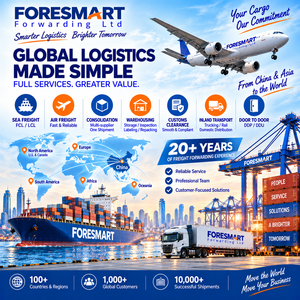
Enterprise-scale freight forwarding covering Australia, Mexico, Germany, and North America with complete customs classification oversight.
Heavy-lift and out-of-gauge (OOG) container transport managed by regulatory experts ensuring full tariff optimization and CE verification.


In modern international trade, securing a compliant, frictionless cross-border supply chain requires far more than basic freight booking. Importers and exporters dealing with industrial machinery, electronics, medical devices, and consumer goods destined for the European Economic Area (EEA) and global markets face an increasingly intricate Web of technical regulations. Chief among these is the convergence of CE Certification compliance and Harmonized System (HS) Tariff Clearance.
As a premier CE certified tariff clearance supplier and global export orchestrator, Universal Cargo Management Inc. provides an integrated framework that bridges international manufacturing standards with destination customs requirements. Established in 1985 in Los Angeles, California, our organization combines nearly four decades of maritime and air freight expertise with dedicated in-house customs brokerage. This comprehensive whitepaper explores the regulatory architecture, procurement trends, risk-mitigation strategies, and technical mechanisms essential for high-volume cross-border sourcing.
Why multinational corporations, OEM manufacturers, and global buyers trust Universal Cargo Management as their primary tariff clearance supplier and freight exporter.
Unlike traditional freight forwarders that outsource customs processing to third-party clearing agents, Universal Cargo maintains a full staff of internal licensed customs brokers. Our team performs pre-shipment classification audits, verifies Declaration of Conformity (DoC) documentation, manages continuous customs bonds, and ensures seamless compliance with agencies such as U.S. Customs and Border Protection (CBP), FDA, and European Union Member State customs authorities.
Every enterprise account is assigned a dedicated Logistics Account Executive (responsible for strategic route engineering, tariff optimization, and commercial strategy) alongside an Operations Account Manager (executing daily container tracking, milestone management, and document transmission). This dual-structure guarantees 24/7 operational transparency and eliminates communication bottlenecks.
As an active member of the Customs-Trade Partnership Against Terrorism (CTPAT) program, our operational protocols adhere to rigorous security standards. This certification grants our clients expedited customs processing, reduced physical inspection ratios at major gateway ports (such as Los Angeles/Long Beach, Rotterdam, and Hamburg), and priority processing during supply chain disruptions.
From full container loads (FCL 20', 40', 40'HC) and temperature-controlled reefer cargo to Less-than-Container Load (LCL) consolidations and Express4Air 3-5 day expedited freight, our global network spans over 140 ports worldwide. Combined with our commercial warehousing and Amazon FBA prep facilities, we offer an uncompromised end-to-end logistics ecosystem.
A primary failure point in cross-border procurement occurs when imported products bear a CE marking on physical housing but fail customs clearance due to missing, inaccurate, or non-compliant technical documentation. Customs authorities in the European Union (and nations aligning with EU single market regulations) act as the first line of defense in market surveillance.
When clearing CE-regulated commodities through European customs checkpoints (or under DDP terms handled by an exporting supplier), customs officials inspect three core pillars:
Correct tariff classification under the Harmonized Commodity Description and Coding System (HS Code) determines the precise rate of import duty, anti-dumping levies, and value-added tax (VAT). Misclassification can trigger severe financial penalties, container seizures, or retroactive duty assessments.
Our customs brokerage team conducts dynamic tariff engineering—verifying whether specific machinery or electronic sub-assemblies qualify for preferential duty rates under global Free Trade Agreements (FTAs) or specific tariff exclusions. By aligning technical CE product descriptions with the correct 6-digit to 10-digit HTS classifications, we eliminate tariff overpayment while maintaining strict legal compliance.
Selecting the optimal transportation mode directly impacts landed cost, tariff exposure timing, and inventory turnover. The technical matrix below compares ocean, air, and express options managed by Universal Cargo Management.
| Shipping Mode | Volume Threshold | Target Transit Time | Customs Clearance Workflow | Best Suited For |
|---|---|---|---|---|
| Ocean Freight FCL | > 15 CBM (20'/40' Containers) | 14 – 25 Days (Port-to-Port) | Pre-manifest filing (ISF / EU ICS2) prior to loading. Direct pier dispatch. | High-volume industrial equipment, CE-marked machinery, consumer electronics. |
| Ocean Freight LCL | 1 – 15 CBM | 18 – 30 Days (Incl. Deconsolidation) | CFS (Container Freight Station) entry clearance; individual line item HTS audit. | Mid-size commercial shipments, partial production batches, replacement parts. |
| Reefer Container | Full Container (20'RF / 40'HR) | 14 – 22 Days (Controlled Temp) | Specialized FDA / Health Authority & CE cold-chain sensor data verification. | Pharmaceuticals, specialized chemicals, temperature-sensitive food products. |
| Air Cargo Freight | > 100 kg Chargeable Weight | 2 – 5 Days (Airport-to-Airport) | Pre-arrival electronic clearance (ACE / ATLAS) via airport customs station. | High-value electronics, urgent production components, seasonal merchandise. |
| Express4Air DDP | 25 kg – 100 kg Packages | 3 – 5 Days (Door-to-Door) | All-inclusive automated customs clearance integrated with last-mile carrier delivery. | Prototypes, replacement machinery modules, urgent samples, e-commerce stock. |
As global trade shifts toward digitalization, sustainability, and heightened compliance enforcement, international procurement officers must adapt to four transformative macro trends shaping tariff clearance over the next decade:
The European Union's rollout of the Import Control System 2 (ICS2) and upcoming Digital Product Passports mandates real-time safety, material, and CE compliance data transmission prior to cargo loading. Static paper certificates are being replaced by blockchain-backed QR codes linked directly to EU central databases.
EU CBAM rules impose carbon tariffs on carbon-intensive commodities (steel, aluminum, fertilizers, electricity, and hydrogen) imported into the EU. Exporters and tariff clearance suppliers must track embedded carbon emissions across the production chain, pairing CE compliance with verified greenhouse gas reporting.
Customs agencies globally are implementing machine-learning algorithms to scan shipping manifests for valuation fraud, anti-dumping circumvention, and HTS misclassification. Working with an experienced broker utilizing advanced automated clearance tools ensures near-zero customs hold ratios.
The traditional boundary separating product manufacturing from international freight forwarding has dissolved. Overseas buyers no longer accept ExWorks (EXW) terms where they bear the entire burden of export licensing, international transit risks, and foreign customs bureaucracy. The market has overwhelmingly pivoted toward integrated Compliance-as-a-Service (CaaS) and turnkey DDP (Delivered Duty Paid) frameworks.
Expert guidance on technical tariff clearance, CE compliance verification, and international freight forwarding management.
Partner with Universal Cargo Management Inc. for seamless CE-compliant customs brokerage, precision tariff engineering, and reliable multimodal ocean and air freight solutions.
