Direct factory freight consolidation, door-to-door DDP services, and full container load (FCL) execution across top global trade lanes.
Multimodal air express and sea freight consolidation engineered for 1688 and B2B factory sourcing directly from major Chinese industrial hubs.
Premier DDP door-to-door ocean and air shipping solutions incorporating customs brokerage, import tax clearance, and last-mile delivery.
Flexible Less than Container Load (LCL) consolidation servicing Amazon FBA warehouses and commercial destinations across North America and Europe.
Integrated express parcel and ocean container routing with bonded customs filing across Italy, Netherlands, and European distribution hubs.
Cost-optimized DDU/DDP sea freight and dropshipping fulfillment designed for volume e-commerce sellers and wholesale importers.
Direct carrier contract rate management for 20ft, 40ft, and 40ft High-Cube container bookings to Middle Eastern, African, and Western ports.
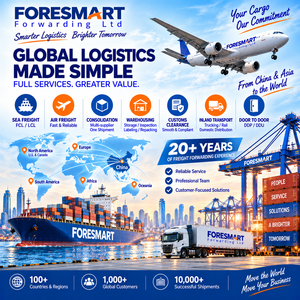
Transparent, container-level tariff architecture covering port-to-port and door-to-door supply chains across Australia, North America, and Europe.
Specialized heavy-lift and out-of-gauge (OOG) container transport services with specialized flat-rack and open-top container solutions.
Headquartered minutes from the Los Angeles port gateway with global factory networks across Shenzhen, Ningbo, Shanghai, and Qingdao.
Operating continuously since 1985 (Universal Cargo Management), our institution has navigated major supply chain dislocations, carrier alliances, tariff policy shifts, and global maritime regulations with zero compromise on client cargo integrity.
Every client account is assigned a dual-support team: a senior Logistics Account Executive who crafts long-term strategic routing, and an Operations Account Manager providing 24/7 real-time shipment execution.
Our operational framework strictly integrates Customs-Trade Partnership Against Terrorism (CTPAT) standards, reducing physical customs inspection frequencies and accelerating border releases at North American and European ports.
Eliminate third-party handoff errors. Our licensed customs brokers manage continuous bonds, ISF (10+2) electronic transmissions, and complex regulatory clearances including FDA, FWS, and EPA compliance workflows.
Complete operational transparency powered by our proprietary iView Web Desktop. Access live milestone updates, automated milestone triggers, custom data exports, and calendar-based arrival projections.
Commercial warehousing, Amazon FBA prep, order pick-and-pack, cross-docking, and drayage management within minutes of LAX and the Ports of Los Angeles and Long Beach.
The global trade ecosystem relies heavily on China’s unmatched industrial infrastructure for container manufacturing, ocean freight consolidation, and factory export logistics. As international buyers, corporate procurement officers, and enterprise brand managers source goods from industrial hubs across Guangdong, Zhejiang, Jiangsu, and Shandong, understanding the mechanics of China wholesale container shipping factories and suppliers becomes a core competitive advantage.
Modern container logistics is no longer merely about booking space on a vessel; it represents an integrated end-to-end supply chain execution. From specialized ISO shipping containers (20ft Standard, 40ft Standard, 40ft High Cube, Reefer, and Flat-Rack units) produced by industrial leaders in China to the sophisticated freight forwarding networks that move these units globally, enterprise buyers require total alignment between factory production lines and maritime carrier schedules.
Choosing the correct shipping strategy requires evaluating total landed cost, speed-to-market, risk mitigation, and compliance frameworks. When sourcing at scale, a single operational delay in customs clearance or a failure to execute timely Importer Security Filings (ISF 10+2) can erase profit margins through demurrage, detention, and liquidated damages. Therefore, partnering with an established logistics provider with over four decades of container shipping mastery is essential for operational continuity.
Understanding regional specialization across Chinese maritime infrastructure enables buyers to optimize inland drayage costs and consolidate LCL (Less than Container Load) goods efficiently:
One of the primary strategic decisions facing procurement officers is selecting the appropriate cargo consolidation method. Selecting between Full Container Load (FCL), Less than Container Load (LCL), and Delivered Duty Paid (DDP) door-to-door services requires balancing volume thresholds, handling risks, and landed-cost calculations.
| Shipping Mode | Ideal Volume / CBM | Pricing Mechanism | Transit Time Profile | Risk & Handling Profile |
|---|---|---|---|---|
| Ocean FCL (20' / 40' / 40'HC) | 15.0 CBM to 68.0 CBM+ | Flat Rate per Container | Fastest Ocean Transit (Direct Port-to-Port) | Minimal risk; sealed container from factory to destination warehouse. |
| Ocean LCL Consolidation | 1.0 CBM to 14.0 CBM | Per CBM / Weight (W/M) | +3 to 7 Days for CFS Deconsolidation | Moderate handling risk during container packing and unpacking. |
| DDP Door-to-Door | Small to Mid-Scale Shipments | All-Inclusive Rate per KG/CBM | Customized (Sea, Express, or Air) | Zero buyer administrative risk; duties, taxes, and customs handled by forwarder. |
| Reefer Container (FCL) | Per Temperature Specs | Specialized Reefer Container Rate | Direct Ocean Expedited | High monitoring requirement; continuous cold-chain management. |
As a practical rule of thumb derived from four decades of ocean freight execution, once a shipment reaches approximately 13 to 15 cubic meters (CBM), booking a dedicated 20-foot Full Container Load (FCL) becomes significantly more cost-effective than paying cumulative LCL volumetric rates. Furthermore, FCL eliminates Container Freight Station (CFS) handling fees and reduces transit times by eliminating deconsolidation delays at origin and destination terminals.
The container shipping and factory supply industry is undergoing a structural revolution driven by digitalization, stringent environmental mandates, and automated logistics networks. Importers sourcing from China must adapt to these trends to ensure long-term supply chain resilience.
The International Maritime Organization (IMO) has introduced aggressive carbon intensity targets (IMO 2030 and 2050 standards), requiring ocean carriers to adopt cleaner alternative fuels such as green methanol, LNG, and ammonia. Major container shipping lines operating out of China are retrofitting fleets with Energy Efficiency Existing Ship Index (EEXI) compliance technologies and Carbon Intensity Indicator (CII) rating systems. Enterprise importers must prepare for green freight surcharges while benefiting from lower carbon footprints across their Scope 3 emissions portfolios.
Modern container fleets are rapidly transitioning to "Smart Containers" equipped with IoT sensors that transmit real-time telemetry. Shippers now gain unprecedented visibility into container internal temperature, humidity, shock impact, door-open alerts, and precise GPS location via satellite link. This technology is particularly vital for high-value electronics, pharmaceuticals, and perishable goods exported from Chinese factories.
Digital customs integration has transformed cross-border trade. Automated customs clearance systems process electronic bills of lading (eBOM), commercial invoices, and packing lists in real-time. Artificial intelligence platforms now analyze historical port congestion data, weather patterns, and carrier performance metrics to predict vessel delays and dynamically reroute overland trucking schedules.
As global trade dynamics evolve, enterprise sourcing strategies from China are shifting from simple cost-minimization models to high-resilience, multi-modal supply chain architectures.
The rise of global e-commerce platforms, cross-border DTC brands, and Amazon FBA networks has accelerated the demand for Delivered Duty Paid (DDP) logistics. Enterprise buyers no longer wish to manage separate freight forwarders, customs brokers, and last-mile trucking carriers. DDP provides a single, accountable pricing structure that covers export customs, ocean freight, destination import clearance, duty payments, and final door delivery.
To reduce warehousing touchpoints and human error, major global retailers are shifting toward factory-direct container loading. Instead of routing goods through regional consolidation warehouses in China, suppliers pack ocean containers directly at factory loading bays with pre-sorted, palletized, store-ready inventory. These containers bypass destination distribution centers and move straight to regional retail outlets or fulfillment hubs.
While China remains the indisputable manufacturing powerhouse, supply chain diversification strategies often involve multi-country sourcing models (e.g., China + Vietnam, Malaysia, or Mexico). Sophisticated freight forwarders now manage multi-origin consolidation networks, enabling buyers to blend cargo manufactured in Chinese factories with components sourced across Southeast Asia into unified container shipments.
Navigating cross-border trade between China and global destinations requires absolute adherence to regulatory compliance standards. A single administrative oversight can result in severe financial penalties and cargo seizures.
For all ocean freight bound for the United States, U.S. Customs and Border Protection (CBP) strictly mandates the electronic transmission of an Importer Security Filing (ISF 10+2) at least 24 hours prior to cargo loading onto the vessel at the foreign port. The filing requires 10 data elements from the importer (including Manufacturer Name, Seller Name, Buyer Name, Ship-to Party, Container Stuffing Location, and Consolidator) and 2 data elements from the ocean carrier.
Failure to transmit an accurate ISF on time can result in automatic liquidated damages of $5,000 per violation, along with mandatory customs holds and physical container scans at the destination port.
Cargo regulated by specialized agencies—such as the Food and Drug Administration (FDA) for food-contact items, medical devices, or cosmetics, or the U.S. Fish and Wildlife Service (FWS) for organic goods—requires prior agency notification and entry filings. Professional in-house customs brokerage teams ensure that continuous customs bonds are active and tariff classifications (HTS codes) are properly declared to avoid costly clearance stalls.
A common misconception among first-time importers is assuming that ocean carriers are fully responsible for cargo damage or loss during transit. Under international maritime law, including the Carriage of Goods by Sea Act (COGSA), carrier liability is strictly limited to $500 per package or customary freight unit. In the event of catastrophic vessel loss, severe weather, or General Average declarations, uninsured shippers face immense financial exposure. Comprehensive Marine All-Risk Cargo Insurance protects the full commercial invoice value plus freight costs.
To maintain seamless operational performance from factory floor to destination facility, our logistics architecture follows a rigorous 4-step workflow:
Clear, authoritative guidance addressing the most vital operational questions asked by global importers and enterprise buyers.
Partner with an industry leader with over 40 years of international logistics mastery. Contact our logistics specialists today for custom contract ocean rates, door-to-door DDP quotes, or enterprise freight consultations.