Direct Factory-to-Door Wholesale Freight Solutions Managed by Senior Licensed Customs Brokers and Ocean/Air Cargo Freight Executives
In global cross-border trade, navigating the complexities of China wholesale port clearance, export compliance, and destination customs entry represents the single most critical vector determining supply chain resilience, tariff minimization, and landed cost predictability. As a premier China wholesale port clearance supplier and international exporter with rooted infrastructure dating back to 1985 (headquartered minutes from LAX and the Ports of Los Angeles and Long Beach), our organization delivers an end-to-end operational framework engineered to eliminate clearance bottlenecks, demurrage risks, and tariff misclassifications.
Unlike conventional freight brokerages that fragment communication across disparate third-party agents, our enterprise logistics protocol assigns a dedicated two-person team per account: a Logistics Account Executive tasked with designing strategic modal routing, and an Operations Account Manager orchestrating physical origin-to-destination execution.
Operating under strict C-TPAT (Customs-Trade Partnership Against Terrorism) guidelines and maintaining FMC-licensed NVOCC status, we govern containerized maritime shipments (FCL/LCL), project cargo, and time-critical air freight directly from China's primary maritime hubs—including Shanghai, Ningbo-Zhoushan, Shenzhen (Yantian/Shekou), Guangzhou (Nansha), and Qingdao—to target ports across North America, Europe, the GCC, and Latin America.
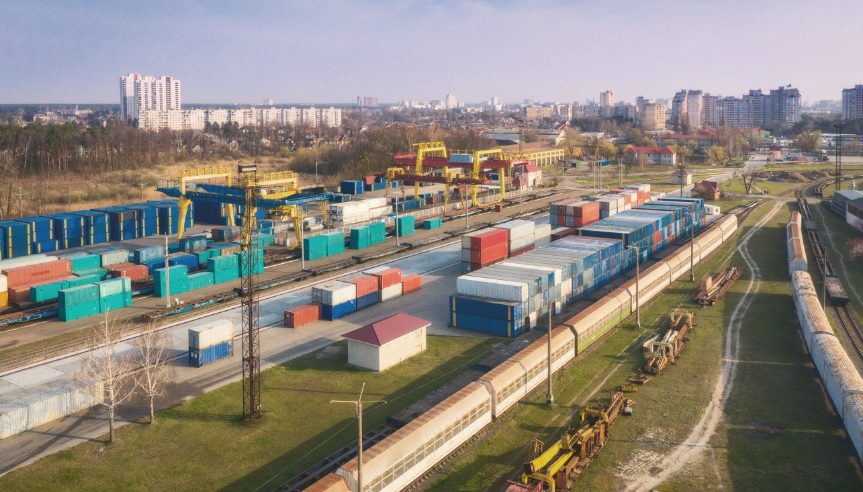
Customs clearance is not merely a administrative handover; it is a complex legal procedure governed by stringent statutory requirements such as U.S. CBP 19 CFR regulations, European Union UCC codes, and specific regional trade directives. Our in-house licensed customs brokers manage every facet of export clearance and import entry:
Why leading global brands, e-commerce conglomerates, and industrial buyers select our wholesale clearance infrastructure
Container logistics and port clearance experts since 1985. We have successfully guided clients through global carrier alliances, port congestion crisis cycles, and changing trade legislation.
Direct contract ocean carrier allocations (FCL/LCL), block-space agreements (BSA) with major cargo airlines, and rapid-line Express4Air options tailored to volume and timeline requirements.
Proprietary iView Web Desktop tracking suite providing active status dashboards, milestone notifications, arrival calendars, and automated Excel reporting for total inventory control.
Short- and long-term storage, palletization, container drayage, cross-docking, Amazon FBA prep, and pick-and-pack operations positioned strategically adjacent to major port nodes.
Complete execution of Delivered Duty Paid (DDP) transactions, eliminating destination surprise fees, managing local import VAT filing, and expediting immediate port-to-door delivery.
Direct pier pass integration, pre-cleared customs documentation, and scheduled drayage dispatch eliminating costly container demurrage and pier storage fees.
The landscape of China wholesale export logistics and port clearance is undergoing a profound structural evolution. B2B buyers, global sourcing directors, and supply chain officers must adapt to four pivotal macro trends reshaping the 2025–2030 trade corridor:
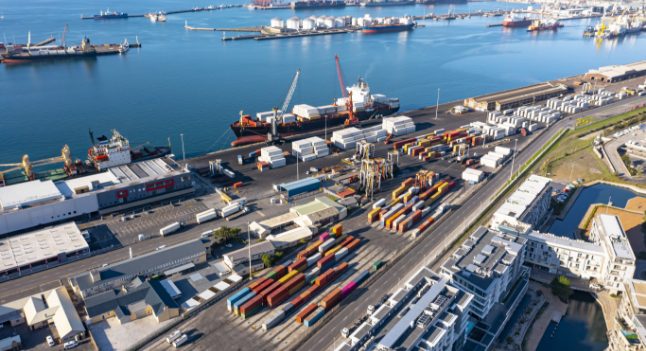
Customs authorities worldwide—including U.S. CBP (ACE system) and European Union Single Window—are deploying advanced machine learning algorithms to audit entry declarations against real-time commercial invoices. The future of clearance relies on automated digital document processing that matches HTS codes, country-of-origin certificates, and valuation data prior to vessel departure, reducing port release timelines from days to hours.
While China remains the world's primary wholesale manufacturing engine, global buyers are pairing China procurement with regional consolidation nodes. Port clearance suppliers must offer unified logistics protocols capable of managing multi-country consolidation (e.g., merging components sourced from Shenzhen and Southeast Asian ports) into single FCL entries, minimizing multi-border clearance fees and optimizing duty thresholds.
With the implementation of the EU Carbon Border Adjustment Mechanism (CBAM) and IMO 2030 green corridor initiatives, port clearance documentation now extends to environmental audit compliance. Importers are required to declare carbon intensity metrics alongside tariff filings. Our forwarding network integrates green maritime routing and carbon-offset reporting into standard export manifest packages.
As global customs authorities tighten scrutiny around low-value de minimis exemptions, high-volume wholesale buyers are shifting toward bonded bulk ocean import models. By leveraging ocean FCL to domestic bonded warehouses, importers defer tariff payments until final domestic distribution, significantly expanding operating cash flow while ensuring total customs compliance.
Selecting the correct logistics mode directly impacts inventory carrying costs and port release velocity. Review our operational decision matrix:
| Shipping Mode | Ideal Cargo Volume | Clearance Lead Time | Pricing Mechanism | Risk Mitigation Index |
|---|---|---|---|---|
| Ocean Freight FCL | > 13–15 CBM / Full Container | 14–22 Days (Port-to-Port) | Flat Container Rate | Highest (Sealed Unitized Container) |
| Ocean Freight LCL | 1 to 12 CBM / Partial Cargo | 18–30 Days (Incl. CFS Consol) | Per CBM / Weight Tier | Medium (Requires CFS Deconsolidation) |
| Reefer Container | Temperature-Sensitive Goods | 14–22 Days (Priority Discharge) | Refrigerated Equipment Rate | High (Continuous Temp Telematics) |
| Air Freight Cargo | High Value / Time Critical | 2–5 Days (Airport-to-Airport) | Chargeable Weight (Vol/Actual) | High (Rapid Terminal Customs Exit) |
| Express4Air (25-100kg) | Samples & Urgent Wholesale B2B | 3–5 Days (Door-to-Door) | All-in Door Delivery Rate | Highest (Integrated Express Customs) |
*Indicative transit timelines based on primary China port origins (Shanghai/Ningbo/Shenzhen) to US West Coast & Main European hubs. Subject to carrier scheduling and customs clearance clearance validation.
Technical guidance provided by our senior customs brokerage executives to address common supply chain questions:
Consult with our senior logistics directors to analyze your HTS code strategy, lower landed freight costs, and lock in direct container space allocation.
