
An authoritative breakdown of macro-procurement shifts, structural heavy-machinery export strategies, and risk-mitigated supply chain execution for engineering firms and industrial importers worldwide.
As global infrastructure, renewable energy installations, and industrial manufacturing capacity undergo rapid transformation, sourcing heavy-lift machinery, Out-of-Gauge (OOG) structures, and industrial plant components directly from China requires specialized supply chain architecture. Sourcing from a verified China Wholesale Project Cargo Manufacturer & Exporter bridges the gap between complex industrial fabrication and flawless transpacific, transatlantic, and pan-Asian maritime logistics.
Over the past two decades, China’s industrial manufacturing framework has evolved from producing high-volume consumer goods to leading global markets in heavy industrial machinery, modular building structures, wind turbine generators, petrochemical vessels, and high-capacity electrical transformers. Global Engineering, Procurement, and Construction (EPC) conglomerates increasingly rely on Chinese manufacturing clusters in Jiangsu, Shandong, Zhejiang, and Guangdong.
However, manufacturing exceptional project cargo represents only 50% of the procurement equation. The remaining 50% rests on structural export logistics: securing specialized breakbulk vessel space, engineering safe lashing and dunnage protocols, obtaining over-dimensional road transport permits across foreign jurisdictions, and avoiding crippling port demurrage charges.
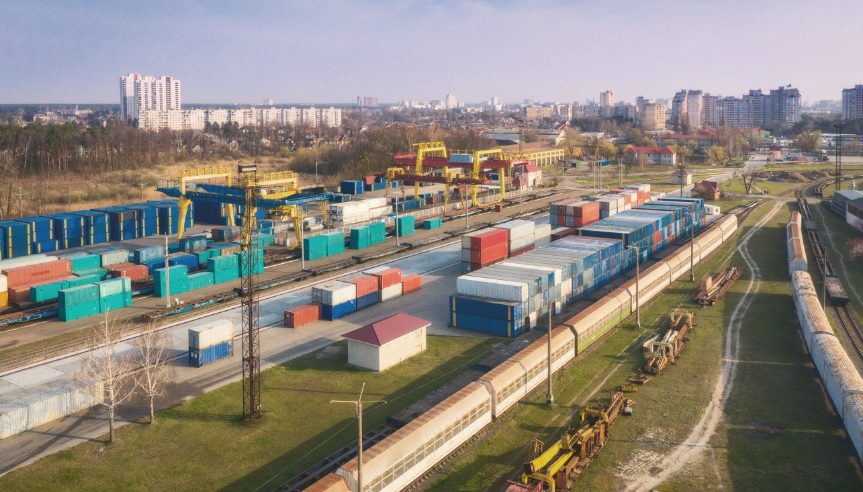
Selecting the optimal ocean and air transportation vector based on volumetric footprint, cargo weight, and budget parameters.
| Freight Execution Mode | Target Cargo Profile | Dimensional & Weight Capability | Transit Timeline (Asia-US West Coast) | Risk Mitigation Profile |
|---|---|---|---|---|
| Flat Rack (FR) & Open Top (OT) Containers | Oversized machinery, tall boilers, wide industrial components | Out-of-Gauge (OOG) up to 45 MT per unit loading capacity | 14 - 18 Days Direct Liner Service | Standard container liner schedules; minimal port dwelling time. |
| Breakbulk & Heavy Lift Vessels | Turbines, transformers, mining equipment, structural steel trusses | Uncapped weight limits (>500 MT per piece lifting capacity) | 20 - 30 Days (Tramper/Charter Dependent) | Requires custom marine surveyor inspection, specialized crane rigging. |
| Ro-Ro (Roll-on/Roll-off) | Wheeled heavy machinery, excavators, dump trucks, mobile cranes | Self-propelled or towable units up to 120 MT | 18 - 25 Days Specialized Ro-Ro Carrier | Enclosed deck protection prevents salt spray corrosion; fast port turnaround. |
| Expedited Air Project Cargo / Charter | Time-critical replacement parts, turbine rotors, oilfield emergency valves | Payload up to 120 tons via freighter aircraft (e.g., B747-8F/An-124) | 2 - 4 Days Airport-to-Airport | Highest speed and safety; maximum cost per kilogram. |
| Ocean LCL Consolidation / DDP | Smaller industrial replacement components, spare parts boxes | 1 to 15 CBM partial container volume | 18 - 24 Days Door-to-Door | Billed by volume/weight; consolidated at origin container freight station. |
Combining four decades of North American customs mastery with direct Chinese manufacturing oversight to eliminate supply chain fragility.
Headquartered minutes from the Ports of Los Angeles and Long Beach—the primary maritime gateway for transpacific trade—our firm has navigated carrier bankruptcies, global panics, tariff structural shifts, and port congestions since 1985. Our longitudinal experience ensures your project cargo moves with institutional precision.
Unlike massive, impersonal logtech conglomerates where support tickets disappear into queue systems, every single client account is managed by two dedicated experts: a senior Logistics Account Executive who engineers your custom routing and pricing model, and a dedicated Operations Account Manager executing daily operational milestones.
Customs delays destroy project timelines. Our in-house licensed customs brokers handle complex Importer Security Filings (ISF 10+2), FDA machinery clearance, Fish & Wildlife (FWS) protocols, and continuous customs bonds. Our CTPAT security alignment expedites physical clearance at destination ports.
Total operational visibility is imperative for project managers coordinating site installation crews. Our iView Web Desktop interface delivers real-time container vessel positioning, landmark milestone updates, customized exception alerts, and historical data export directly to your project ERP.
Navigating final-mile logistics for oversized machinery requires heavy-haul multi-axle trailers (lowboys, step-decks, multi-axle heavy haulers), escort vehicle permits, and route survey clearances. We manage the entire drayage link seamlessly from vessel hook to job site foundation.
Standard carrier liability under COGSA limits carrier payout to a maximum of $500 per unit or package. Universal Cargo provides primary All-Risk Marine Cargo Insurance policies structured specifically for high-value industrial assets, guaranteeing complete asset indemnification.
Anticipating structural disruptions, green decarbonization mandates, and digital transformation across international heavy industrial supply chains.
Industrial developers are shifting from raw field-assembly to off-site modular fabrication in Chinese manufacturing facilities. Importers receive fully pre-commissioned, skid-mounted modules. This trend dramatically increases unit weights and dimensions, elevating the reliance on specialized Breakbulk, Heavy Lift, and Flat Rack shipping operations.
The International Maritime Organization (IMO) and global ocean carriers are enforcing strict Carbon Intensity Indicator (CII) ratings. Project cargo shippers will increasingly evaluate transport options based on carbon footprint analytics. Dual-fuel methanol and ammonia breakbulk vessels will command premium booking preferences from eco-conscious EPCs.
Prior to loading multi-million-dollar industrial components, 3D digital twin simulations model ship motion stability, center-of-gravity dynamics, dynamic stress points, and port crane clearance margins. Advanced route planning software dynamically recalculates sea voyage paths to avoid heavy swell events that compromise lashed OOG cargo.
A rigorous checklist used by cargo surveyors and port engineers to ensure structural integrity across transoceanic voyages.
Expert answers to critical legal, operational, customs, and financial questions for global logistics managers.
As a practical rule of thumb, standard commercial containerized cargo reaching 13 to 15 cubic meters (CBM) makes Full Container Load (FCL) more economical than Less than Container Load (LCL). However, for heavy machinery or out-of-gauge (OOG) components exceeding 28 to 35 metric tons or dimensions larger than standard 40ft High Cube containers (12.03m x 2.35m x 2.69m), cargo must transition from standard containerization to Flat Rack (FR), Open Top (OT), or dedicated Breakbulk ocean freight vessels.
For ocean freight entering United States sea ports, US Customs and Border Protection (CBP) mandates that the ISF 10+2 transmission must be successfully accepted at least 24 hours prior to cargo being physically loaded aboard the vessel at the foreign port of origin (e.g., Shanghai, Ningbo, Qingdao). Non-compliance, late submission, or inaccurate data elements can trigger liquidated damages penalties up to $5,000 per violation plus mandatory customs holds. Universal Cargo's in-house brokers manage ISF filings directly during initial origin booking.
Under international maritime law frameworks such as the U.S. Carriage of Goods by Sea Act (COGSA), ocean carrier financial liability is legally capped at a maximum of $500 per package or customary freight unit, regardless of actual asset value. If an uninsured $500,000 generator suffers sea damage or hull loss, carrier payout will remain capped at $500. Universal Cargo arranges primary All-Risk Marine Cargo Insurance that covers 110% of CIF value, protecting your capital against marine peril, jettison, or general average contributions.
Certain industrial equipment, components, or integrated machinery containing radiation-emitting components (such as industrial lasers, diagnostic X-ray units, or microwave processing units) fall under US Food and Drug Administration (FDA) Center for Devices and Radiological Health rules. Similarly, packaging materials containing raw timber must comply with ISPM 15 heat-treatment standards overseen by USDA. Our licensed in-house customs brokerage handles all partner government agency (PGA) clearances to prevent port seizures.
DDP Incoterms shift total transportation risk, customs clearance liability, import duty payment, local port handling costs, and final destination drayage to the exporter and designated freight forwarder. For buyers sourcing from a China Wholesale Project Cargo Manufacturer & Exporter, DDP provides a single, all-inclusive landed cost per unit, eliminating unexpected demurrage, detention, or surprise destination terminal handling charges (THC).
While standard container shipments (FCL/LCL) can be booked 10 to 14 days prior to vessel departure, specialized Breakbulk or Heavy Lift vessel chartering requires a planning horizon of 30 to 60 days. This lead time allows marine engineers to review cargo drawings, calculate stowage plans, secure specialized lifting gear, obtain port authority permits, and align origin/destination heavy-haul drayage transport.