OEM/ODM Amazon Prep Factory & Exporters

End-to-End Contract Manufacturing, FNSKU Prep, ASTM Packaging Compliance & Direct Ocean/Air Export Logistics for Global Amazon Sellers

Featured OEM/ODM & Amazon Prep Freight Solutions

Streamline your cross-border supply chain from contract factory floors directly to Amazon FBA fulfillment centers across the USA, UK, EU, and Middle East. Select your tailored export logistics path below.
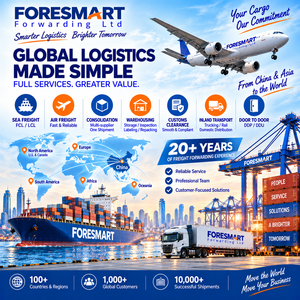
1688 Freight Forwarder Air Express Agent
Best Service 1688 Freight Forwarder Air Express Shipping Agent for USA UK Saudi Arabia China Sea Shipping Logistics Services
Inquire Now
Top 10 Freight Forwarder China To USA UK Spain DDP
Top 10 Freight Forwarder China To Usa Uk Spain Ddp Shipping Agent Logistics Services Sea Air Freight Agente De Compras
Inquire Now
LCL Sea Freight Shipping Agent China to UK USA DDP FBA
LCL Sea Freight Shipping Agent China to UK USA Ddp Fba Sea Cargo Transitaire Agent Logistique France Agente Di Spedizione Italy
Inquire Now
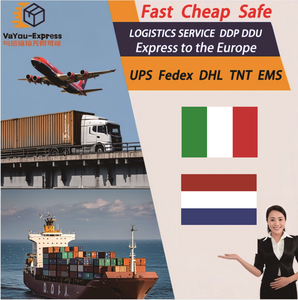
DDP Door To Door Logistics Service Express Europe
DDP Door To Door Logistics Service Express From China To Europe Italy And The Netherlands UPS DHL FEDEX Freight Forwarder
Inquire Now
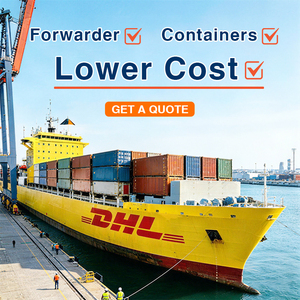
Cheapest Shipping Agent Sea Freight Forwarder DDP DDU
Cheapest Shipping Agent Sea Freight Forwarder DDP DDU LCL Express Sea Shipping Agent Dropshipping DHL Shipping to UK/USA/FR/CA
Inquire Now
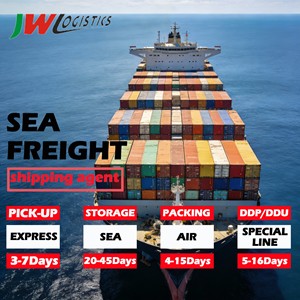
Ocean Sea Freight Shipping Agent China to Global
Ocean Sea Freight Shipping Agent From China To USA UK Czech Ghana Oman Dubai Italy UAE
Inquire Now
Ocean Sea Freight Forwarding Cargo Agent DDP Door to Door
Ocean Sea Freight Forwarding Cargo Shipping Agent Logistics Price Ddu Ddp Door to Door Usa Canada Australia Spain Mexico Germany
Inquire Now
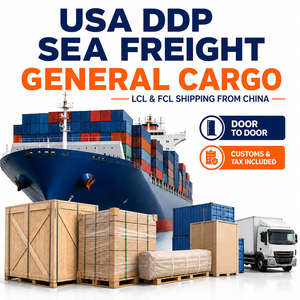
USA DDP Sea Freight For Oversized Cargo
USA DDP Sea Freight For Oversized Cargo Door To Door Shipping From China LCL Freight Forwarder
Inquire Now
1985
Established Operational Heritage
99.8%
Amazon FBA Receiving Acceptance Rate
30+
Years Container Logistics Expertise
24/7
Dedicated Dual-Manager Support

Executive Whitepaper: The Strategic Integration of OEM/ODM Manufacturing with Amazon FBA Prep Logistics

In the hyper-competitive landscape of global e-commerce, private-label brand owners, enterprise aggregators, and institutional importers face a critical operational pivot: decoupling production from fulfillment creates friction, compliance risks, and inflated landed costs. Historically, contract manufacturing (OEM/ODM) operated in a silo, handing over finished goods to third-party logistics (3PL) prep centers upon arrival at domestic ports such as Los Angeles, Long Beach, or Rotterdam. Today, modern supply chain physics demands an integrated architecture—where contract production lines double as standardized Amazon FBA Prep facilities.

Universal Cargo (operating with roots dating back to 1985 in Los Angeles, California) has pioneered an integrated framework that unifies source manufacturing quality assurance, automated FNSKU labeling, poly-bagging, 2D barcode carton mapping, and multi-modal export freight. By executing Amazon Seller Central packaging standard compliance directly at the origin assembly line, cross-border brands eliminate domestic US/EU repackaging costs, shorten time-to-market by 10 to 14 days, and achieve strict zero-defect receiving compliance at Amazon Fulfillment Centers (FCs).

Core Foundations of Origin-Side OEM/ODM Amazon Prep

Integrating fulfillment prep within OEM (Original Equipment Manufacturer) and ODM (Original Design Manufacturer) assembly workflows requires strict adherence to standardized operational protocols. When products exit the molding or stitching phase, they enter a controlled environment engineered specifically to meet Amazon's strict Fulfillment Inbound Performance Requirements.

Origin FNSKU Barcoding

Direct thermal transfer printing of FNSKU, X00, and ASIN labels applied at product level with scannability verification above 98.5% ANSI standard.

Bundling & Multipack Prep

Factory-floor creation of multi-variate bundles, shrink wrapping, and impulse packaging designed to survive 3-foot drop tests (ASTM D5276).

Child Suffocation Warnings

Automated application of PE/PP polybags (minimum 1.5 mil thickness) featuring FDA-compliant multi-language suffocation warnings for openings ≥ 5 inches.

Institutional Advantage: Why Global Importers Rely on Our Integrated Logistics Network

Managing custom manufacturing in Asia while fulfilling inventory requirements in North America and Europe requires deep institutional knowledge. Since 1985, Universal Cargo has built an infrastructure designed to mitigate risk across carrier shortages, customs audits, and terminal congestion.

Operational Capability Traditional Supply Chain Model Universal Cargo Integrated OEM/ODM Prep Model
Prep Location Domestic US/UK Warehouse (High Labor Rate) Export Factory Floor / Origin Gateway Hub (Optimized Cost)
Customs Compliance Siloed Broker; Vulnerable to ISF Penalties In-House Brokerage, CTPAT Certified, ISF 10+2 Automated Filing
Account Management Generic Call Center / Support Tickets Dedicated Dual Account Executive & Operations Manager Team
Transit Visibility Basic Carrier Tracking Numbers iView Real-Time Telemetry Dashboard with Excel Export & Analytics
Ocean Freight Options Single-Mode Forwarding (FCL only) FCL (20', 40', 40'HC), LCL Consolidation, Reefer & Oversized DDP

Key Enterprise Advantages

1. Dual-Personnel Account Ownership: Every enterprise client is paired with a Logistics Account Executive who architects long-term cost optimization strategies, alongside a dedicated Operations Account Manager who executes daily booking, container drayage, and customs entry.

2. Customs Brokerage & Regulated Cargo Mastery: Beyond standard tariff filings, our licensed in-house team specializes in FDA-regulated products (cosmetics, food contact items), U.S. Fish and Wildlife Service (FWS) clearances, and continuous customs entry bonds, eliminating expensive port storage, demurrage, and detention fines.

3. Supply Chain Security (CTPAT Alignment): As a logistics entity prioritizing global trade security, our standard operating procedures align with CTPAT guidelines, drastically lowering random U.S. Customs inspection rates and accelerating ocean container release upon port arrival.

Consult with an OEM Prep Specialist

Macro Trends: The Future of Cross-Border OEM Procurement & Amazon Prep Logistics

As global ecommerce algorithms increasingly reward high inventory turnover, minimal stockouts, and regional inventory placement (such as Amazon’s Regionalized Fulfillment Network in North America), supply chain strategies must evolve. Below are the definitive trends dictating cross-border procurement over the next decade:

1. SIOC & Frustration-Free Packaging (FFP)

Factories are shifting away from traditional retail color boxes to Ships-in-Own-Container (SIOC) engineering. ODM manufacturers design outer cartons to withstand carrier transit without secondary master boxes, drastically cutting spatial volume and ocean freight costs per unit.

2. 2D Barcode Master Carton Cartography

Manual receipt at Amazon FCs is rapidly being replaced by automated vision systems. OEM prep facilities are integrating 2D barcodes containing precise carton contents, serial numbers, and expiration dates—enabling instant receiving and zero inbound defect surcharges.

3. Multi-Channel Fulfillment (MCF) Standardization

Cross-border exporters no longer package exclusively for Amazon. ODM factories now implement unified packaging specifications capable of seamlessly fulfilling orders across Amazon FBA, Walmart+, TikTok Shop Fulfillment, and direct-to-consumer 3PL hubs simultaneously.

Step-by-Step OEM/ODM Manufacturing to FBA Warehouse Blueprint

To ensure 100% compliance and flawless freight transit, our integrated workflow aligns manufacturing milestones directly with customs regulatory events and carrier booking windows:

Phase 1: Production Specification & AQL 2.5 Quality Inspection
During custom OEM mold development or ODM assembly, product specifications are cross-checked against Amazon category requirements. Prior to final carton sealing, an Acceptable Quality Limit (AQL 2.5) inspection confirms structural integrity, functional zero-defect status, and correct item-level barcoding.
Phase 2: Origin Factory Amazon Prep & Carton Palletization
Units receive required poly-bagging, suffocation warning labels, and FNSKU stickers. Master cartons are constructed using heavy-duty corrugated board (minimum ECT-32 or 200 lb test) and marked with FBA shipment box labels. Where required, heat-treated wooden pallets (ISPM-15 compliant) are stacked according to Amazon height and overhang restrictions.
Phase 3: Automated ISF Filing & Ocean/Air Freight Booking
At least 72 hours prior to vessel loading, our licensed customs brokers transmit the Importer Security Filing (ISF 10+2) to U.S. Customs and Border Protection. Depending on inventory urgency, goods are routed via Full Container Load (FCL), Less than Container Load (LCL) consolidation, or Express4Air (3–5 day door-to-door transit).
Phase 4: Port Drayage, Customs Entry & Direct FC Delivery
Upon ocean vessel arrival at major gateways like Los Angeles or Long Beach, containers are cleared via our in-house brokerage, loaded onto dedicated drayage trucks, and transported directly to designated Amazon Fulfillment Centers or regional 3PL staging facilities without intermediate handling.

Frequently Asked Procurement & Logistics Questions (FAQ)

Detailed technical answers for procurement directors, brand owners, and logistics managers handling international freight.

Why should I perform Amazon Prep at the OEM factory instead of a US prep center?
Performing prep at the factory level cuts operational costs by 60% to 75% compared to US domestic 3PL labor fees. Furthermore, prepping at origin eliminates secondary opening of cartons, reduces total transit time by avoiding staging steps at destination ports, and ensures non-compliant products are identified before incurring international freight expenses.
How does Universal Cargo handle Amazon FBA inbound compliance updates?
Our operational teams continuously monitor Amazon's Inbound Performance Guidelines. When rules change regarding carton dimensional limits, weight restrictions (such as the 50 lb ceiling), or box content label standards, our origin prep supervisors immediately update factory packaging blueprints.
Should my OEM shipments move via Ocean FCL or Ocean LCL?
As a standard benchmark, once your total cargo volume reaches approximately 13 to 15 cubic meters (CBM), booking a 20ft Full Container Load (FCL) becomes more cost-effective than Less than Container Load (LCL). FCL offers faster transit because it avoids Container Freight Station (CFS) consolidation and deconsolidation delays. Our account executives run side-by-side cost modeling for every shipment to identify the optimal path.
What are the critical risks of late Importer Security Filing (ISF 10+2)?
U.S. Customs and Border Protection (CBP) strictly enforces ISF filing at least 24 hours prior to cargo being loaded aboard a vessel at the foreign port of origin. Failure to comply can result in mandatory liquidated damages of $5,000 per violation, customs holds, and extensive non-intrusive container inspection fees. Universal Cargo handles automated ISF transmission as a core operational step.
Can you handle FDA-regulated or oversized OEM products?
Yes. Our in-house customs brokerage maintains dedicated specialized teams for FDA prior notice compliance (medical devices, cosmetics, food contact items) and U.S. Fish & Wildlife clearances. For heavy machinery or oversized consumer products, our specialized ocean freight team arranges open-top containers, flat racks, and heavy-haul domestic trucking directly to Amazon FCs or commercial job sites.
What is Express4Air and when should an Amazon seller use it?
Express4Air is our specialized door-to-door air freight solution designed for shipments between 25 kg and 100 kg. It offers 3-to-5-day global transit with customs clearance and final door delivery fully integrated. It is ideal for launching new SKU stock, preventing out-of-stock buy-box losses during peak quarter spikes, or sending production samples for Amazon transparency registry.
Why is marine cargo insurance necessary if ocean carriers provide basic liability?
Ocean carrier liability is severely restricted by law under the Carriage of Goods by Sea Act (COGSA), typically capped at just $500 per package or customary freight unit. If a vessel encounters severe weather or a General Average is declared, uninsured cargo owners can face massive financial liability. Our primary marine cargo insurance covers 110% of the full CIF (Cost, Insurance, Freight) invoice value against all risks.

Ready to Optimize Your OEM Production & Amazon Export Supply Chain?

Connect directly with our senior logistics architects and customs specialists today. Obtain a detailed landed-cost analysis and tailor an origin-to-destination prep and shipping strategy built for your brand.

Inquire Now