Explore our specialized road freight, air cargo, ocean shipping, and door-to-door multi-modal routing networks tailored for enterprise procurement.
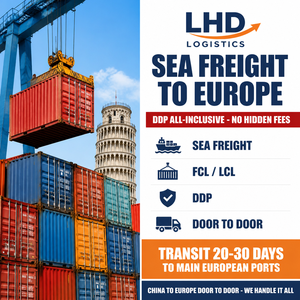
Comprehensive DDP trucking, sea, and express air routes linking China to the EU, UK, Canada, and USA with customs clearance.
Inquire Now
Full container load and consolidated ocean freight services offering scalable port-to-port and door-to-door global logistics.
Inquire Now
Seamless overland cross-border trucking under TIR Carnet protocols for expedited, duty-paid delivery to Eastern Europe.
Inquire Now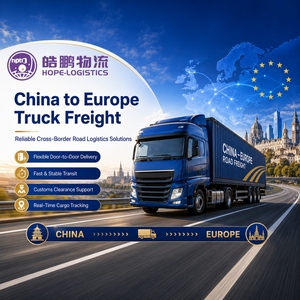
High-speed road transport offering an economical middle ground between air freight speeds and ocean shipping costs.
Inquire Now
Integrated last-mile courier and road freight dispatch offering urgent door-to-door transit for high-value commercial goods.
Inquire Now
Turnkey Amazon seller logistics incorporating palletization, labeling, customs brokerage, and direct FBA warehouse truck delivery.
Inquire Now
Comprehensive multimodal freight engineering for oversize cargo, temperature-controlled loads, and bonded warehouse transfers.
Inquire Now
B2B procurement logistics consolidating multi-factory orders across China into optimized ocean, air, and road freight streams.
Inquire NowFounded in 1985 in Los Angeles, California, Universal Cargo Management Inc. has spent over 39 years mastering the operational nuances of ocean, air, and overland road freight forwarding.
Every enterprise client is assigned two dedicated experts: a Logistics Account Executive who architects strategic routing, and an Operations Account Manager overseeing daily execution.
Licensed brokers managing Importer Security Filings (ISF 10+2), continuous bonds, and complex clearances for FDA-regulated products and U.S. Fish & Wildlife Service (FWS) imports.
Full alignment with Customs-Trade Partnership Against Terrorism protocols, minimizing border examination rates and protecting high-value supply chains against unauthorized transit intrusion.
Proprietary tracking interface delivering milestone tracking, customizable analytics dashboards, container ETA updates, and automated reporting exported straight to Excel.
A comprehensive analysis of overland freight mechanics, payload optimization, customs framework compliance, and multimodal integration for OEM/ODM global procurement.
Modern global manufacturing depends heavily on the speed, flexibility, and operational efficiency of OEM/ODM Road Freight Networks. While ocean freight provides low-cost bulk movement and air freight offers rapid delivery for light goods, overland road transportation serves as the structural backbone connecting manufacturing hubs, distribution nodes, and final assembly centers across global trade corridors.
"In enterprise supply chain engineering, road freight is no longer viewed merely as a last-mile delivery solution. Through international protocols like the TIR Convention and advanced cross-docking infrastructure, overland trucking functions as a main-line transit channel competing directly with air and rail on reliability and landed cost."
Selecting the optimal road freight modality requires balancing cargo density, transit speed, and duty-processing protocols. Enterprise procurement teams generally operate across three primary road freight structures:
Achieving optimal landed cost requires integrating road freight into a cohesive multimodal framework. By pairing long-haul trucking with ocean FCL/LCL or air express freight, enterprise supply chain managers can dynamically balance cost and delivery speed.
| Logistics Mode | Cost Index (per kg) | Average Transit Time | Best Suited Cargo Type |
|---|---|---|---|
| Cross-Border Road (TIR) | Moderate ($$) | 12 – 18 Days | High-value electronics, industrial spares, apparel |
| Ocean FCL + Road Drayage | Economical ($) | 25 – 40 Days | Bulk raw materials, heavy equipment, finished goods |
| Air Freight + Express Trucking | Premium ($$$$) | 3 – 7 Days | Time-critical prototypes, high-value components |
Navigating international road transport requires strict adherence to customs regulations, driver safety mandates, and contractual liability frameworks. Shippers utilizing Delivered Duty Paid (DDP) terms benefit from simplified procurement, as the freight forwarder handles all export clearance, transit permits, customs duties, and final destination trucking delivery under a single transparent price structure.
Shippers must also recognize the legal limits of carrier liability. Under standard legal frameworks like the CMR Convention for road freight or the Carriage of Goods by Sea Act (COGSA) for maritime transit, carrier liability is limited based on weight or package count—often far below the commercial value of lost or damaged goods. Comprehensive marine and cargo insurance remains essential for protecting capital investments during long-distance overland shipping.
Key structural shifts driving changes in enterprise freight sourcing, route selection, risk mitigation, and supplier management across major trade corridors.
As global brands shift manufacturing to regional clusters near target markets (such as Mexico for North America, or Eastern Europe for Western European consumers), long-haul cross-border trucking is rapidly replacing traditional long-distance maritime shipping routes.
Procurement teams are shifting away from rigid annual fixed-rate contracts toward dynamic algorithmic pricing models. Digital freight matching connects shippers directly with pre-vetted carriers, optimizing backhaul capacity and lowering overall freight costs.
Scope 3 emission reporting mandates in Europe and North America are forcing enterprise buyers to prioritize carriers operating low-emission fleets. Electric heavy trucks for short-haul drayage and LNG/hydrogen vehicles for long-haul transit are becoming key procurement selection criteria.
Real-time GPS visibility is moving from a premium feature to a mandatory procurement requirement. Sensor-based telematics continuously monitor truck location, temperature, humidity, and door status, automatically triggering alerts when delays or environmental deviations occur.
How technological innovation, autonomous transport, digital customs integration, and cold-chain monitoring are redefining the future of global logistics.
The road freight industry is undergoing an unprecedented technological transformation. Driven by driver shortages, volatile fuel costs, and stringent zero-emission targets, logistics suppliers are deploying advanced software and automation to increase operational resilience.
Long-haul road transportation is rapidly adopting level 4 autonomous driving systems and electronically linked truck platooning. Platooning allows a fleet of trucks to travel closely together at highway speeds, synchronized via wireless communication and automated braking. This setup significantly reduces aerodynamic drag, cuts fuel consumption by 8–12%, and mitigates risks associated with long-haul driver fatigue.
Modern road freight relies heavily on advanced Internet of Things (IoT) sensors embedded within trailers and individual shipping containers. These sensors transmit real-time telemetry data over cellular and satellite networks, tracking:
Paper-based border documentation is rapidly giving way to cloud-integrated customs management networks. The global transition toward eTIR systems enables instant electronic exchange of customs declarations between national authorities before a truck even reaches a border post. This cuts administrative wait times at border crossings from hours to mere minutes, eliminating physical document processing delays.
Clear, definitive answers to complex logistics, customs compliance, operational planning, and international shipping queries.
Under Delivered Duty Paid (DDP), the freight forwarder and seller assume complete financial and operational responsibility for the shipment, covering export clearance, main transit, customs import duties, taxes (VAT/GST), and final truck delivery to the buyer's door. Under DDU (Delivered Duty Unpaid) or DAP (Delivered at Place), the buyer is responsible for paying import duties and local taxes before cargo can be released for final road delivery.
TIR cross-border road freight from Asia to Europe typically takes 14 to 18 days door-to-door, compared to 30 to 45 days for ocean shipping via major maritime routes. While road freight costs more per cubic meter than ocean FCL shipping, it provides a much faster, highly flexible overland alternative without the premium price tag of air cargo.
For ocean cargo arriving in the United States, U.S. Customs and Border Protection (CBP) requires the ISF to be submitted at least 24 hours before the container is loaded onto the vessel at the foreign port of origin. Late or missing filings can trigger strict liquidated damages penalties of $5,000 per violation. Our in-house customs team handles ISF transmission as a standard part of every shipment workflow.
Standard carrier liability is strictly limited by international conventions—such as COGSA for ocean freight ($500 per package) and the CMR Convention for road transport (approx. 8.33 SDRs per kilogram). These statutory limits rarely match the actual commercial value of industrial goods or electronics. Third-party cargo insurance protects the full invoice value of your goods against loss, damage, or transit mishaps.
Universal Cargo manages specialized clearances through licensed in-house customs brokers who handle complex regulatory filings directly with U.S. Customs, the FDA, and the U.S. Fish and Wildlife Service. We ensure all required product codes, prior notices, and health certificates are fully verified before your cargo arrives at the port of entry.
Every shipment managed by Universal Cargo includes access to our iView tracking dashboard. Clients can log in to view real-time GPS locations, check container statuses, access automated delivery calendars, view customs clearance status, and export detailed tracking reports directly into Excel for internal reporting.
Connect directly with our senior logistics planning executive to receive a tailored, transparent rate quotation for your global road freight, ocean, or air transport requirements.
