Streamline your international supply chain with optimized DDP ocean freight, express air cargo, and agent-assisted purchasing directly integrated from Asian trade hubs to global destination ports.
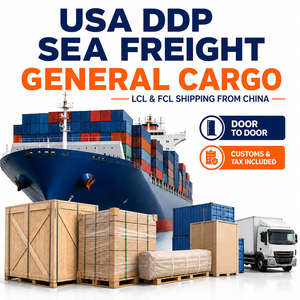
Comprehensive DDP sea freight designed specifically for heavy, bulky, and oversized ecommerce items. Full door-to-door clearance included.
Unified international logistics engine connecting global shopping sites with online bulk buyers through automated order processing and route optimization.
Rapid air cargo consolidation featuring destination airport customs clearance and automated last-mile dispatch throughout European regional hubs.

Turnkey procurement agent services for global merchants. Direct factory sourcing from 1688/Taobao with quality control inspection and DDP freight.

End-to-end FBA shipping solutions covering palletizing, labeling, ISF compliance, and expedited customs entry into US, CA, UK, and EU warehouses.
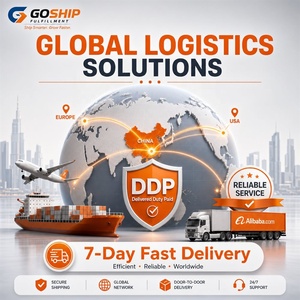
Automated ERP integration for high-volume Shopify stores featuring 3–5 day express transit, custom unboxing packaging, and blind dropshipping.
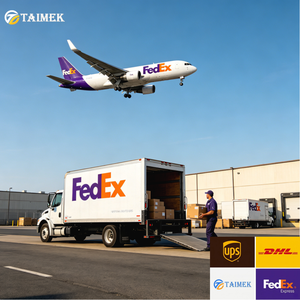
Dedicated European commercial freight lines handling tax-prepaid VAT clearance and expedited last-mile courier delivery across Italy, Germany, and France.
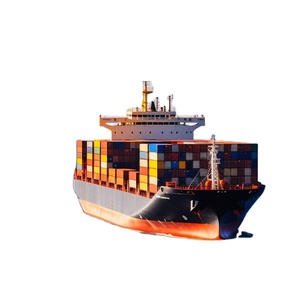
Economical consolidated ocean and hybrid air logistics designed to reduce per-unit shipping overheads for scaling e-commerce brands.
In the modern cross-border e-commerce ecosystem, direct-to-consumer (D2C) and business-to-business (B2B) supply chains rely heavily on seamless coordination between origin suppliers and freight forwarders. Selecting top-tier drop shipping suppliers and exporters involves far more than comparing baseline product costs. It requires evaluating the exporter’s logistics integration, customs compliance protocols, volumetric weight optimization, and warehouse fulfillment capabilities.
As international supply chains shift toward localized inventory positioning and Delivered Duty Paid (DDP) arrangements, enterprise importers must understand the structural differences between traditional port-to-port ocean freight, expedited Less-than-Container Load (LCL) consolidation, and high-speed air express pipelines.
Analyzing global purchasing behaviors reveals significant structural evolutions in how dropshipping goods move across borders. Importers and brand operators are actively adopting three strategic trends to protect operating margins:
Overseas buyers are systematically bypassing multi-layer export trading companies by partnering with origin-based sourcing agents who interface directly with domestic manufacturing portals like 1688.com and Taobao. This transition allows global brand owners to capture raw wholesale pricing while utilizing forwarders to aggregate products from multiple factories into a single export container.
Navigating destination customs duties, harbor maintenance fees (HMF), merchandise processing fees (MPF), and local VAT regulations poses operational friction for e-commerce sellers. Modern exporters offer integrated DDP services where all import duties, customs entry costs, and final-mile carrier fees are pre-calculated into a single per-kilogram or per-CBM rate, ensuring predictable landed cost accounting.
To combat long maritime transit lead times without over-allocating capital to heavy domestic inventory, enterprise sellers employ a hybrid model: keeping safety stock in low-cost origin warehouses near major logistics hubs (such as Shenzhen, Ningbo, or Los Angeles) and dispatching individual orders via 3–5 day express air cargo during demand spikes.
Selecting the optimal shipping vector requires balancing cost against speed and shipment size. Below is an operational benchmark used by supply chain directors to determine appropriate routing:
| Shipping Vector | Optimal Order Size | Average Transit Time | Customs Structure | Cost Efficiency Index |
|---|---|---|---|---|
| Express Air Freight | 25 kg – 300 kg | 3 – 5 Days | Pre-Cleared / DDP | Time-Critical Premium |
| Standard Air Cargo | 300 kg – 2,000 kg | 5 – 8 Days | Formal Entry / Bonded | High-Value Standard |
| Ocean LCL Consolidation | 1 CBM – 15 CBM | 18 – 28 Days | ISF 10+2 / DDP Sea | Optimal Mid-Volume |
| Full Container Load (FCL) | > 15 CBM (20'/40'HC) | 14 – 22 Days | Formal Customs Clearance | Maximum Profit Margin |
To establish a resilient supply chain, enterprise importers must systematically address technical customs and operational risks:
Headquartered adjacent to Los Angeles International Airport (LAX) and the Ports of Los Angeles & Long Beach, we provide unmatched international trade execution built on 40 years of personal accountability.
Over 30+ years navigating global port congestion, carrier shifts, and international trade regulation changes.
Every client gets a dedicated Logistics Account Executive for planning and an Operations Manager for execution.
Ocean FCL/LCL, Air Freight, Express4Air, Commercial Warehousing, and FTL/LTL Trucking coordinated seamlessly.
Direct filing for ISF, FDA, FWS, continuous customs bonds, and full regulatory compliance management.
Clear solutions to complex international shipping, customs compliance, and dropshipping logistics questions.
Full Container Load (FCL) provides a flat rate per container (20ft or 40ft), while Less than Container Load (LCL) consolidates your cargo with other shippers, charging per CBM or weight. As a practical benchmark, when your shipment volume approaches 13 to 15 cubic meters, booking an FCL container is generally more cost-effective and reduces handling risks.
For all ocean cargo bound for the United States, the ISF must be submitted to U.S. Customs and Border Protection at least 24 hours before the cargo is loaded onto the vessel at the origin port. Incomplete or delayed filings can incur non-negotiable fines of $5,000 per violation. Our in-house brokers manage ISF processing automatically.
Express4Air is a specialized door-to-door express air delivery designed for shipments weighing between 25 kg and 100 kg. It offers an all-inclusive service package featuring origin door pickup, export declaration, expedited customs entry, and destination door delivery within 3 to 5 business days globally.
Carrier liability is extremely restrictive under international maritime law. Under the Carriage of Goods by Sea Act (COGSA), carrier liability is typically limited to $500 per package or unit, regardless of actual product value. Dedicated cargo insurance covers the full invoice value of your goods against marine loss, damage, or General Average claims.
Yes. Our licensed customs brokerage team manages specialized regulatory filings, including Food and Drug Administration (FDA) Prior Notice and U.S. Fish and Wildlife Service (FWS) clearances, alongside standard entry processing and continuous customs bond underwriting.
All shipments managed by Universal Cargo include active tracking. Standard tracking provides milestone updates downloadable to Excel. Advanced client accounts feature the iView Web Desktop interface, offering real-time container visualization, interactive graphs, sorting tools, and estimated arrival calendars.
