Enterprise Logistics Solutions
Featured China FCL & Freight Forwarding Services
Explore our flagship full container load (FCL), consolidated ocean freight, and direct door-to-door DDP shipping solutions optimized for industrial exporters and global importers.
Air Express & Ocean Freight Forwarder (USA/UK/Saudi Arabia)
Multimodal express and ocean container freight forwarding tailored for fast-turnaround consumer electronics and high-value cargo.
Get Catalog
Top 10 China to USA/UK/Spain DDP Ocean Freight Logistics
Comprehensive DDP door-to-door container shipping, customs clearance, and duty management for seamless transatlantic and transpacific trade.
Get Catalog
LCL & FCL Sea Freight Logistics (China to UK/USA/France/Italy)
Flexible container consolidation and direct 20ft/40ft ocean shipping designed to optimize volume costs for growing enterprises.
Get Catalog
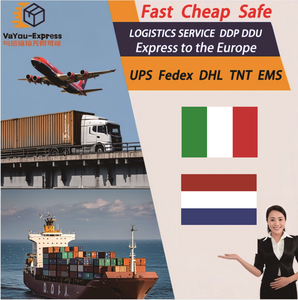
DDP Door-to-Door Europe Express Logistics (Italy/Netherlands/Germany)
End-to-end European continent shipping utilizing dedicated freight corridors, port-to-door drayage, and automated customs processing.
Get Catalog
Cost-Optimized Ocean Freight DDP/DDU Solutions (UK/USA/FR/CA)
Economical full container load and consolidated freight management backed by negotiated carrier contracts and minimal port congestion delays.
Get Catalog
Global Ocean Cargo Forwarding to USA/UK/Dubai/Ghana/Oman/UAE
Strategic ocean trade lane execution connecting major Chinese export hubs with emerging and established global trade destinations.
Get Catalog
Transpacific & Transatlantic Ocean Freight DDP Logistics
Specialized door-to-door ocean freight services serving Australia, Canada, USA, Mexico, and major European industrial ports.
Get Catalog
USA DDP Ocean Freight for Oversized & Heavy Project Cargo
Specialized flat-rack, open-top, and high-cube container solutions designed for heavy machinery, structural steel, and oversized industrial goods.
Get Catalog
Verified Capabilities
4 Decades of Maritime Freight Authority
1985
Established Operational History
40+
Years Container Logistics Expertise
100%
CTPAT Security & Compliance
24/7
Dedicated Dual-Account Desk
White Paper Analysis
Navigating Global Maritime Trade with a Premier China FCL Factory & Exporter
In modern global trade, full container load (FCL) shipping represents the foundational spine of international supply chain logistics. Operating directly from China's primary maritime corridors—including Shanghai, Ningbo-Zhoushan, Shenzhen (Yantian/Shekou), Qingdao, and Guangzhou—our enterprise provides high-yield cargo loading, direct vessel allocation, and end-to-end risk mitigation. As an established international freight forwarder and export partner with roots dating back to 1985 (Universal Cargo Management Inc.), we bridge the complex divide between factory production floors in China and commercial distribution networks worldwide.
Unlike standard transactional shipping brokers, our organizational structure relies on personal accountability, operational redundancy, and strict compliance with global border controls. Every client account is managed under a dedicated dual-person account manager model: a Logistics Account Executive responsible for optimizing carrier contracts, routing schedules, and cost frameworks, alongside an Operations Account Manager overseeing physical container stuffing, port gate-in verification, ocean vessel tracking, and destination drayage.
Core Enterprise Advantages for Global Shippers
Direct Carrier Contract Volume
We maintain long-term service contracts with premier ocean carrier alliances (2M, OCEAN Alliance, THE Alliance), securing guaranteed space allocations, fixed peak-season surcharge (PSS) caps, and extended demurrage free-days.
In-House Customs Brokerage
Our licensed house brokers directly handle U.S. Customs and Border Protection filings, Importer Security Filing (ISF 10+2), continuous customs bonds, and specialized clearances including FDA, USDA, and U.S. Fish and Wildlife Service (FWS).
Integrated Drayage & Warehousing
From port-adjacent cross-docking facilities in Los Angeles/Long Beach to centralized domestic commercial warehouses, we handle pick-and-pack, Amazon FBA prep, and LTL/FTL nationwide distribution.
Container Specifications
FCL Technical Specifications & Cargo Capacity Engineering
Selecting the optimal container specification is crucial for maximizing load density and reducing per-unit transport costs. Below is a comprehensive engineering breakdown of standard intermodal sea containers utilized across our China export network.
| Container Type |
Internal Dimensions (L x W x H) |
Max Cubic Volume (CBM) |
Max Payload Weight (kg) |
Optimal Cargo Profile |
| 20' Standard (20'GP) |
5.89m x 2.35m x 2.39m |
33.2 CBM |
25,000 kg |
Heavy, dense commodities (minerals, metal hardware, liquids, tiles) |
| 40' Standard (40'GP) |
12.03m x 2.35m x 2.39m |
67.7 CBM |
27,600 kg |
General industrial cargo, machinery, packaged consumer goods |
| 40' High Cube (40'HC) |
12.03m x 2.35m x 2.69m |
76.4 CBM |
28,600 kg |
Lightweight bulk, furniture, textiles, footwear, volumetric goods |
| 45' High Cube (45'HC) |
13.56m x 2.35m x 2.69m |
86.0 CBM |
27,800 kg |
High-volume distribution goods, large-format retail packaging |
| 40' Reefer (Cold Chain) |
11.58m x 2.29m x 2.50m |
67.3 CBM |
28,300 kg |
Temperature-sensitive pharmaceuticals, fresh food, chemicals (-30°C to +30°C) |
FCL vs. LCL Economic Threshold Formula
A frequent procurement dilemma faced by global buyers is determining the economic break-even point between Less than Container Load (LCL) consolidation and Full Container Load (FCL). While LCL is charged per cubic meter (CBM) or weight equivalent, it incurs mandatory Container Freight Station (CFS) handling fees, origin consolidation surcharges, and destination clearance fees.
As a practical industrial benchmark, once cargo volume reaches 13.0 to 15.0 CBM, booking a 20ft FCL container becomes financially advantageous. FCL eliminates CFS handling costs, substantially reduces cargo risk from multi-shipper contamination, cuts origin loading timelines by 3 to 5 days, and delivers a fully sealed intermodal unit directly from the factory gate in China to the destination warehouse.
Strategic Outlook
Future Procurement Trends in China FCL Container Logistics
The global shipping environment is undergoing structural transformations driven by international regulatory shifts, environmental decarbonization targets, and digital supply chain visibility imperatives. Enterprise buyers and factory exporters must align their procurement strategies with four key emerging trends over the coming decade:
- Decarbonization & Green Corridor Compliance (IMO 2030): Maritime carriers are accelerating fleet renewals to meet International Maritime Organization (IMO) Carbon Intensity Indicator (CII) regulations. Global importers will increasingly face green freight surcharges or preferential allocation structures tied to LNG, methanol, and biofuel-powered container fleets.
- Real-Time IoT Telematics & Smart Containers: Traditional milestone tracking is being replaced by sensor-enabled smart containers. Next-generation FCL shipments transmit real-time telemetry regarding GPS coordinates, internal temperature, relative humidity, door-opening alerts, and shock/vibration metrics—ensuring total quality assurance for high-value industrial freight.
- Nearshoring & Multi-Hub Redundancy Routing: Global enterprises are adopting "China Plus One" and dual-hub manufacturing models. FCL procurement now requires hybrid logistics strategies, combining direct China-to-US/Europe sea routes with feeder network integration connecting Vietnam, Thailand, Malaysia, and Mexican transshipment hubs.
- Blockchain Electronic Bills of Lading (eBL): Paper-based Bills of Lading are rapidly transitioning to standardized electronic formats backed by the Digital Container Shipping Association (DCSA). Digital eBL adoption slashes document release times from days to minutes, reducing risk of demurrage and port storage fees at destination terminals.
Industry Dynamics
Ocean Freight Development Trends & Supply Chain Risk Management
Recent volatility in global ocean freight markets underscores the necessity of robust risk mitigation frameworks. Carrier alliance reshuffling—such as the operational realignment of major vessel-sharing agreements—impacts port calls, transit reliability, and spot-rate volatility. Enterprise importers can no longer rely on single-mode spot bookings without exposing themselves to catastrophic supply chain disruptions.
To secure long-term operational stability, leading manufacturers and exporters are shifting toward index-linked contract frameworks combined with dedicated buffer management. By pairing guaranteed contract space with dynamic air-freight and express ocean services (such as Express4Air), shippers maintain agility during sudden peak demand spikes or geopolitical canal detours.
Buyer Knowledge Base
Frequently Asked Questions (FAQ) for China FCL Procurement
Why should an enterprise choose FCL shipping over LCL for export from China?
Full Container Load (FCL) provides dedicated space, maximum security, and lower per-unit freight costs. Because the container is sealed at the manufacturer's facility and remains unopened until arrival at the destination warehouse, handling damage and pilferage risks are virtually eliminated. Additionally, FCL bypasses the time-consuming consolidation and deconsolidation processes at origin and destination Container Freight Stations (CFS), saving 3 to 7 days in total transit time.
What are the strict filing deadlines for ISF 10+2 when importing FCL ocean freight to the United States?
Under U.S. Customs and Border Protection (CBP) mandates, the Importer Security Filing (ISF 10+2) must be transmitted electronically at least 24 hours prior to the cargo being loaded onto the vessel at the foreign port of origin (e.g., Shanghai or Shenzhen). Failure to submit, late filing, or inaccurate data submission can result in severe liquidated damages of up to $5,000 per violation, customs holds, and mandatory non-intrusive container inspections upon vessel arrival.
How do Incoterms 2020 (FOB, CIF, DDP) impact freight responsibility and cost allocation?
Under FOB (Free on Board), the China exporter pays for local factory transport, export customs, and port loading fees; the buyer assumes all ocean freight, destination customs, and delivery costs. Under CIF (Cost, Insurance, and Freight), the seller pays ocean freight and basic marine insurance to the destination port, but the buyer handles customs clearance and inland drayage. Under DDP (Delivered Duty Paid), the seller or their freight forwarder assumes end-to-end responsibility, paying all ocean freight, insurance, destination customs clearance, import duties, tariffs, and final warehouse delivery.
Why is marine cargo insurance necessary if ocean carriers already have legal liability limits?
Ocean carrier liability is heavily restricted by international maritime laws such as the Carriage of Goods by Sea Act (COGSA). Standard carrier liability is typically capped at $500 per package or customary freight unit, which covers only a fraction of high-value industrial cargo. Furthermore, under maritime law rules such as "General Average," if a vessel encounters life-threatening emergencies at sea, all cargo owners on board are legally obligated to proportionally contribute to salvage costs before their goods are released. Comprehensive marine cargo insurance protects the full commercial invoice value (plus freight and duty) against loss, damage, and General Average claims.
What specialized documentation is required for regulatory customs clearance (FDA, FWS, USDA)?
In addition to standard commercial invoices, packing lists, and master/house Bills of Lading, regulated shipments require specific compliance certificates. Food, medical device, or cosmetic imports require FDA registration numbers, Prior Notice filings, and Device List numbers. Products containing plant materials or timber require Lacey Act declarations. Wildlife, leather, or animal-derived products demand U.S. Fish and Wildlife Service (FWS) permits. Our in-house licensed customs brokers pre-screen all shipping documents prior to vessel departure to guarantee seamless regulatory clearance.
How can global buyers optimize loading density and avoid container space waste?
Maximizing container cubic utilization requires pre-production package dimension engineering. By designing master carton dimensions that align cleanly with standard ISO container interior widths and lengths, shippers eliminate dead space. Furthermore, utilizing standardized heat-treated ISPM-15 wooden pallets or heavy-duty slip sheets prevents vertical overhang while allowing multi-tier stacking. Our factory loading team provides 3D container stuffing schematics to ensure 95%+ volumetric efficiency for every FCL booking.
Optimize Your China FCL Supply Chain Today
Partner with an authoritative international freight forwarder backed by 40 years of operational experience, in-house customs clearance, and global ocean carrier networks.
Get Catalog