Explore our elite fleet capacity, door-to-door express charters, and consolidated multimodal shipping routes tailored for international procurement.
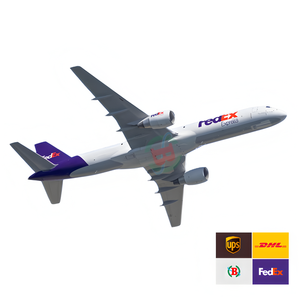
Direct airport-to-airport and door-to-door express solutions for time-critical, high-value commercial shipments.
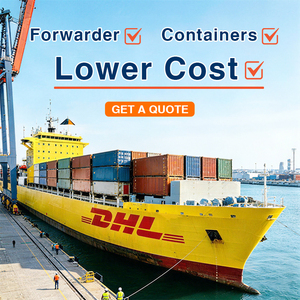
Comprehensive DDP solutions combining dedicated air charters with ocean freight networks across North America and Europe.
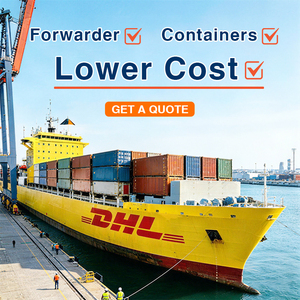
Optimized LCL and partial freighter space allocation offering seamless delivery to Amazon FBA hubs and global fulfillment centers.
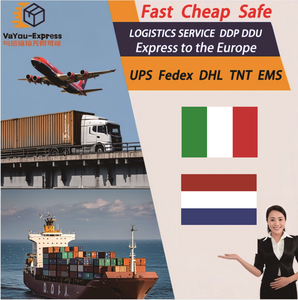
Accelerated 3-to-5 day door-to-door express transit connecting main production centers to UK, Netherlands, and Italy.
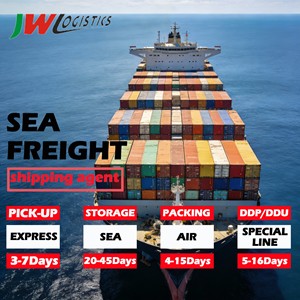
Cost-efficient charter capacity management for high-yield dropshipping, ecommerce, and urgent commercial cargo.
Specialized freighter capacity for out-of-gauge machinery, project cargo, and energy sector supply chains to Dubai, Oman & Czech Republic.
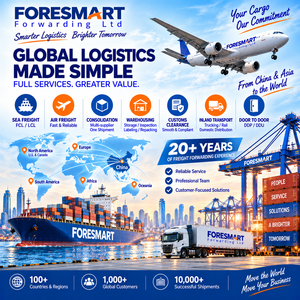
Full freighter leasing (ACMI) and split-charter capacity linking major APAC manufacturing hubs to North America and Australia.
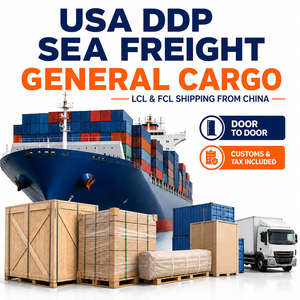
Tailored nose-loading freighter charters (B747-8F/B777F) designed for oversized industrial components and urgent automotive cargo.
In an era of volatile belly-hold capacities, dynamic fuel surcharges, and geopolitical trade adjustments, securing reliable air charter flight suppliers and exporters has evolved from a simple logistical task into a board-level risk mitigation strategy. Global supply chain leaders require granular insight into fleet economics, landing rights compliance, and multi-tiered carrier SLAs to maintain operational resilience.
Whether navigating peak-season automotive supply chain bottlenecks, launching time-critical consumer electronics, or orchestrating cold-chain pharmaceutical drops, choosing between Full Charter Leasing (ACMI) and Part Charter capacity dictates both fiscal efficiency and supply chain integrity.
Provides complete control over aircraft, crew, maintenance, and insurance. Ideal for high-density cargo flows exceeding 100 metric tons requiring dedicated runway scheduling and customized ramp handling.
Splits main-deck freighter payloads among non-competing enterprise shippers. Reduces cost-per-kilogram by up to 35% while retaining fixed schedule integrity on core trade transits.
Combines fast ocean feeder transits with regional air charter lifts. Balances lead times and freight expenditure for mid-tier luxury goods and retail inventory balancing.
Evaluating modes based on volumetric payload efficiency, transit speeds, regulatory overhead, and total landed cost factors:
| Transport Mode | Ideal Cargo Profile | Payload / Volume Limit | Average Transit Lead Time | Key Regulatory & Compliance Factors |
|---|---|---|---|---|
| Full Aircraft Charter (ACMI) | Oversized equipment, high-volume launches, disaster relief | Up to 120 Tons (B747-8F) / 650 CBM | 24 – 48 Hours Direct | Diplomatic overflight permits, airport slot allocation, ramp logistics |
| Split Main-Deck Charter | Automotive parts, electronics, seasonal fashion peaks | 10 to 40 Tons / 80 – 250 CBM | 48 – 72 Hours | Unit Load Device (ULD) contour matching, hazardous goods (Class 9) clearance |
| Scheduled Express Air Cargo | High-value components, biomedical, urgent samples | 25 kg to 5,000 kg | 3 – 5 Days Door-to-Door | Automated Customs Entry, ISF 10+2, Air Waybill (e-AWB) validation |
| Multimodal Sea-Air DDP | Restocking retail inventory, non-urgent electronics | Full Container (FCL) or LCL consolidation | 10 – 14 Days Transpacific | Bonded transfer terminals, joint ocean/air bill of lading compliance |
The global air charter ecosystem is undergoing a structural paradigm shift driven by decarbonization mandates, algorithmic capacity allocation, and nearshoring trends. Procurement managers must adapt to these four macroeconomic trajectories:
Global air charter suppliers are increasingly evaluated on Scope 3 carbon reduction metrics. Corporate ESG mandates require charters to blend minimums of 10% to 30% SAF on intercontinental sectors, reshaping fuel surcharge algorithms and supplier audits.
Legacy manual charter booking processes are giving way to dynamic AI booking engines. Predictive models forecast regional port congestion and automatically match high-priority freight with idle charter legs (empty-leg positioning), lowering spot costs by up to 22%.
To bypass severe congestion at primary hubs like LAX, ORD, or FRA, charter operations are shifting toward secondary cargo-dedicated airports (e.g., Rockford, Rickenbacker, San Bernardino). Secondary hubs offer 30-minute turnarounds and reduced drayage costs.
With aging B747-400F fleets approaching retirement, suppliers are investing heavily in twin-engine heavy freighters like the Boeing 777F, B777-8F, and Airbus A350F. These aircraft deliver 20% lower fuel consumption while maximizing main-deck volume for lithium-battery cargo.
Modern air charter operations rely on sophisticated end-to-end telemetry and compliance architectures. Below are the key technological pillars ensuring cargo security and regulatory compliance across international air corridors:
Every charter ULD can be fitted with sensor packages transmitting real-time GPS coordinates, shock, tilt, pressure, and ambient temperature updates. Vital for semiconductor, aerospace, and cold-chain pharmaceutical supply chains.
Air charter suppliers must maintain certified IATA Dangerous Goods Regulations (DGR) operational protocols. Specialized fire-suppression ULD containment systems enable safe transport of high-density energy storage units and EV batteries.
Integration between charter manifests and customs networks (such as U.S. CBP ACE system) allows Importer Security Filings (ISF) and entry documentation to clear mid-flight, enabling instant apron-to-truck transfer upon landing.
Since 1985, our logistics framework has delivered tailored freight solutions for international importers, exporters, and global brand owners. Headquartered minutes from Los Angeles International Airport (LAX) and the Ports of Los Angeles and Long Beach—the premier container gateway of the Americas—we bridge air charter capabilities with global multimodal supply chains.
Every charter client is assigned a dedicated Logistics Account Executive who designs your custom routing blueprint, alongside a specialized Operations Account Manager executing 24/7 flight monitoring, ground handling, and dispatch.
Our licensed house brokers handle automated ISF (10+2) transmissions, continuous customs bonds, and specialized clearances for FDA-regulated products, U.S. Fish & Wildlife Service (FWS) permits, and USDA agricultural inspections.
As a CTPAT-validated organization, we enforce international security standards across cargo packing, airport handling, and drayage transfers, mitigating port inspection delays and securing priority entry status.
Seamless execution across ExWorks (EXW), Free on Board (FOB), Delivered Duty Paid (DDP), and Door-to-Door charter contracts tailored to buyer-supplier financial structures.
Expert insights covering charter procurement, regulatory filings, cargo insurance, and payload parameters.
While emergency charters can be dispatched within 12 to 24 hours depending on aircraft positioning and overflight permits, standard charter planning ideal lead time is 5 to 7 business days. This window ensures optimal runway slot procurement, proper ULD build-up, and seamless customs pre-clearance at origin and destination airports.
Air freight chargeable weight is based on the greater of actual gross weight or volumetric weight, calculated using the standard IATA volumetric ratio: (Length × Width × Height in cm) / 6,000 (or 167 kg per CBM). Ocean freight LCL, by contrast, uses a 1:1,000 kg/CBM ratio. For full freighter charters, pricing is typically structured on a flat-rate ACMI or round-trip repositioning basis regardless of total volume used, up to the maximum aircraft structural payload capacity.
For ocean transport components of sea-air multimodal movements bound for the United States, U.S. Customs and Border Protection requires ISF transmission at least 24 hours prior to loading cargo onto the vessel at the foreign port. Failure to transmit accurate ISF data can result in liquidated damages of $5,000 per violation. Our in-house customs team manages automated ISF filings as part of our core shipping workflow.
Air carrier statutory liability under the Warsaw or Montreal Conventions is strictly limited (typically 22 SDRs per kilogram, approximately $30 USD/kg). Ocean carrier liability under the Carriage of Goods by Sea Act (COGSA) is capped at $500 per package. Comprehensive shipper's interest insurance covers 100% of declared commercial invoice value plus freight costs against loss, damage, or emergency jettisoning during transit.
Yes. Our in-house customs brokerage handles specialized entry procedures for U.S. Food and Drug Administration (FDA) prior notice clearances, medical device imports, and U.S. Fish and Wildlife Service (FWS) declarations alongside standard customs duty entries and continuous bond management.
Consult with our senior air charter directors to engineer bespoke flight schedules, compare ACMI vs. scheduled express quotes, and secure instant capacity on core international corridors.
