

40 Years of Institutional Mastery
Founded in 1985 in Los Angeles, California, Universal Cargo Management Inc. brings four decades of specialized experience across transpacific, transatlantic, and global trade corridors.

Empowering global buyers, brand owners, and procurement leaders with end-to-end multi-modal routing, regulatory compliance, and risk mitigation strategies.

Precision Execution. Uncompromised Reliability.
FCL, LCL, Cold Chain Reefer, and 3–5 day door-to-door express air freight, engineered for maximum financial efficiency.

Transform Risk Into Competitive Advantage
In-house US Customs Brokerage, ISF 10+2 automated compliance, and CTPAT-certified security management.

Real-Time Market Intelligence & Insights
Stay ahead of tariff updates, port congestion, ocean blank sailings, and global freight rate fluctuations.


In today's dynamic global marketplace, international freight logistics is no longer merely a tactical expense—it is a core strategic lever. Enterprise procurement executives, overseas buyers, and supply chain directors face a volatile landscape defined by geopolitical shifts, fluctuating freight rates, changing customs compliance mandates, and evolving environmental regulations. Navigating this complexity requires deep domain expertise, total transparency, and unwavering operational execution.
Founded in 1985 in Los Angeles, California, Universal Cargo Management Inc. brings four decades of specialized experience across transpacific, transatlantic, and global trade corridors.
We evaluate Ocean FCL, LCL, Air Cargo, Express, and Intermodal trucking through a neutral cost-versus-transit metric to maximize your gross margin.
Direct agency representation across all major primary and secondary ports in Asia, Europe, Latin America, and North America ensures smooth origin-to-destination handoffs.
Integrated US Customs brokerage, ISF 10+2 electronic filing, CTPAT security alignment, and FDA/FWS specialized clearance reduce detention and clearance risks.
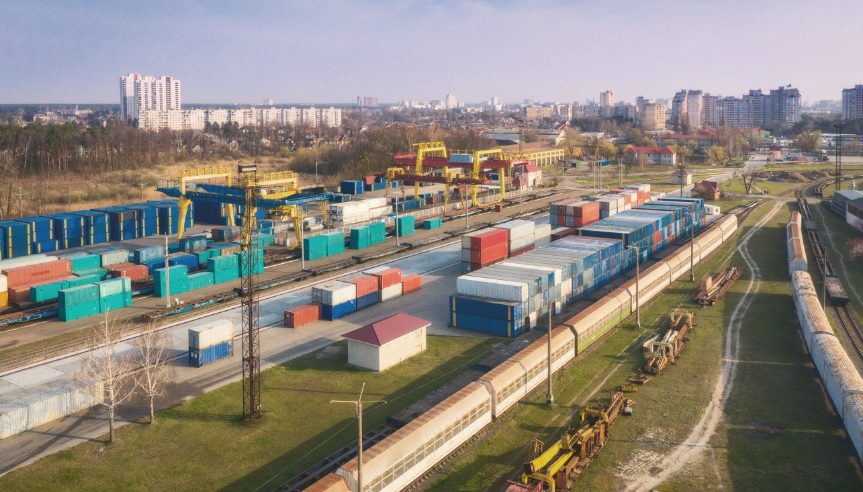
Headquartered strategic minutes from Los Angeles International Airport (LAX) and the Ports of Los Angeles and Long Beach—the premier container gateway of the Western Hemisphere—Universal Cargo Management Inc. acts as an indispensable extension of your procurement team. While modern logistics tech platforms offer automated dashboards, software alone cannot clear delayed containers, negotiate emergency ocean space, or navigate complex CBP audit inquiries.
Our operational framework blends innovative digital visibility with real human expertise, assigning two dedicated logistics professionals to every account to safeguard your cargo from origin pickup to final destination delivery.
Matching your product line, order volume, and transit requirements with the optimal transport mode is critical to keeping supply chains resilient and cost-effective.
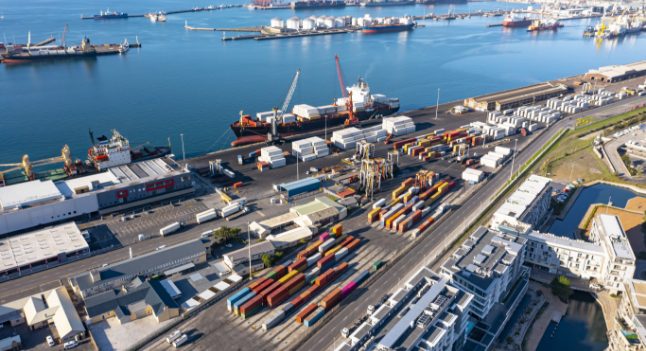 Ocean Freight
Ocean transportation remains the backbone of global commerce. We provide flexible capacity across all major carrier alliances, securing predictable vessel allocations and competitive contract rates. Whether moving standard dry goods or temperature-sensitive perishables, our ocean division handles the entire lifecycle.
Recommendation Engine: Choose FCL when shipment volumes reach or exceed 13–15 CBM, or when cargo security requires exclusive container sealing at origin.
Send an Inquiry Warehousing
Avoid high long-term storage fees and inventory bottlenecks by utilizing our West Coast fulfillment and distribution centers. Positioned strategically near major port terminals, our facilities support cross-docking, inventory buffer storage, labeling, and direct-to-warehouse transloading.
Recommendation Engine: Ideal for Amazon sellers and omni-channel retailers needing fast transloading to avoid port demurrage while staging inventory for nationwide delivery.
Send an Inquiry Air Cargo
When speed to market is non-negotiable or production delays threaten factory timelines, our global air freight division delivers high-velocity transport. We maintain space allocations on premium commercial passenger routes and dedicated cargo freighters worldwide.
Recommendation Engine: Essential for high-value electronics, fashion product launches, seasonal inventory replenishment, and emergency automotive parts.
Send an Inquiry Express Air
Purpose-built for commercial samples, small commercial batches, and high-urgency shipments weighing between 25 kg and 100 kg. Express4Air unifies origin pickup, flight dispatch, destination customs brokerage, and final-mile door delivery into one simple service.
Recommendation Engine: Best suited for product sample approvals, urgent spare parts shipments, and medium-scale B2B commercial parcel runs.
Send an InquiryA technical evaluation framework used by procurement officers to balance transit velocity, volumetric billing metrics, and total cost of delivery.
| Transport Mode | Optimal Volume / Weight | Billing Formula Basis | Avg. Transpacific Transit | Strategic Tradeoffs & Considerations |
|---|---|---|---|---|
| Ocean FCL (20'/40'/40'HC) | > 13–15 CBM or up to 26,000 kg | Flat Rate per Container Unit | 12 – 20 Days (Port-to-Port) | Lowest cost per unit; sealed container security; minimal risk of port handling damage. |
| Ocean LCL (Consolidation) | 1 CBM to 13 CBM | Per CBM or 1,000 kg (W/M Rule) | 18 – 28 Days (Incl. CFS Ops) | Pay only for space utilized; subject to origin/destination CFS loading and devanning lead times. |
| Reefer Container (Cold Chain) | Per temperature-sensitive lot | Flat Rate + Genset Surcharge | 14 – 22 Days (Port-to-Port) | Continuous thermal tracking (-30°C to +30°C); mandatory FDA/USDA agricultural inspection protocols. |
| Air Cargo (Standard) | > 45 kg up to multi-pallet lots | Volumetric Weight ($1\text{ CBM} = 167\text{ kg}$) | 3 – 7 Days (Airport-to-Airport) | High velocity and security; premium freight cost; subject to airline seasonal peak surcharges. |
| Express4Air Door-to-Door | 25 kg to 100 kg packages | All-In Flat Rate per Kg Tier | 3 – 5 Days (Door-to-Door) | Includes door pickup, customs entry, and door delivery; minimal paperwork friction. |
*Transit times represent average operational schedules across major trade lanes (e.g., Shanghai/Yantian to Los Angeles/Long Beach). Actual door-to-door transit depends on origin haulage, customs hold releases, and inland carrier availability.
As global supply chains face structural evolution, global buyers must adapt their procurement strategies to integrate technology, sustainability, and shifting trade regulations.

Machine learning models and IoT sensors now predict ocean port congestion, vessel blank sailings, and weather disruptions, enabling automated route re-indexing before cargo departs origin ports.

Driven by IMO carbon intensity regulations and corporate Scope 3 emission targets, green corridors, biofuel-powered ocean vessels, and electric drayage trucks are reshaping carrier evaluations.
The rise of "China Plus One," nearshoring in Mexico, and sourcing expansion across Southeast Asia (Vietnam, India, Malaysia) require multi-origin freight forwarding flexibility and agile customs brokerage.
Heightened UFLPA enforcement, Section 301 tariff adjustments, and evolving digital customs protocols mandate automated data validation to prevent costly cargo holds and CBP penalties.
To build resilience against systemic shocks, procurement managers must move away from single-carrier sourcing models. Implementing a hybrid logistics framework—blending long-term ocean contract rates with spot market agility and regional warehousing buffers—ensures operational continuity during peak demand surges or unexpected geopolitical bottlenecks. Universal Cargo’s strategic guidance helps importers establish these resilient, multi-tiered logistics networks.
From initial booking strategy to final inland delivery, our structured process ensures complete transparency, compliance, and budget control.
Our account executives assess cargo specifications, Incoterms, origin pickup requirements, duty schedules, and target delivery windows.
We finalize vessel/carrier space bookings, prepare ISF 10+2 documentation, secure continuous customs bonds, and verify export clearances.
Your designated operations manager tracks ocean or air milestones, executes real-time customs entry, and mitigates port congestion risks.
Cargo clears port or airport terminals, moves via integrated drayage or trucking, and delivers directly to your warehouse or FBA center.
Every shipment includes tracking with exportable reporting formats. Upgrade to our iView Web Desktop portal to unlock customized analytical dashboards, operational milestone graphs, vessel location feeds, container status alerts, and arrival calendar management.
Explore iView Tracking TechnologyForget generic call centers and automated ticketing systems. Universal Cargo assigns a dedicated Logistics Account Executive and an Operations Account Manager to your account, giving you direct access to experienced professionals who understand your cargo, business goals, and operational preferences.
Meet Our Logistics Experts
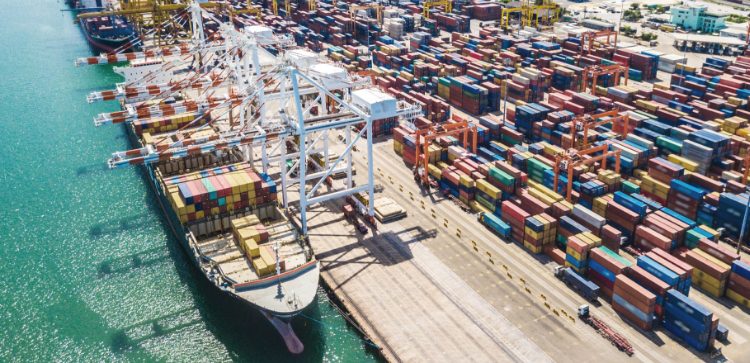
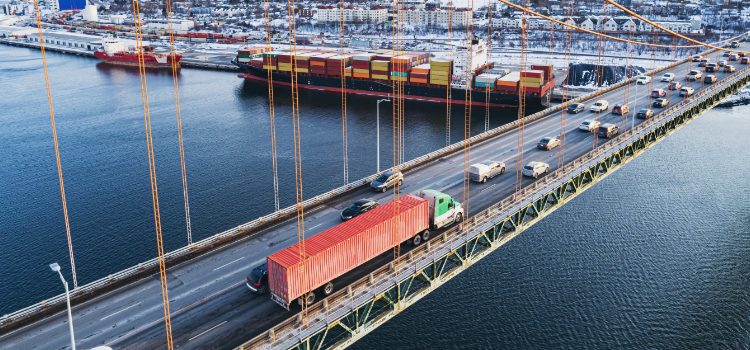
Eliminate handoff gaps, hidden fees, and port delays by integrating your core freight forwarding with our specialized add-on solutions.
Our comprehensive network of regional and national motor carriers delivers reliable container drayage, Less-Than-Truckload (LTL), and Full-Truckload (FTL) transport from all U.S. ocean ports and air hubs to final distribution points across North America.
Our licensed customs brokerage team manages complex Tariff Classification (HTS), ISF 10+2 electronic filings, continuous customs bond issuing, and specialized partner government agency (PGA) clearances—including FDA, FWS, USDA, and EPA approvals.
Standard carrier liability is strictly capped by international conventions (e.g., COGSA limits liability to $500 per package). Our All-Risk Marine Cargo Insurance policies protect the full commercial value of your inventory, door-to-door, against loss, damage, or General Average declarations.
Curious about current transpacific spot rates, port labor negotiations, or new tariff policies? Our media channel translates complex ocean and air freight developments into actionable video recaps for supply chain managers.
"I've handled dozens of container shipments with Universal Cargo. They take complete ownership from Point A to Point B, and most importantly, their follow-through is unmatched. They are at the top of my list for international shipping."
"The operational team at Universal Cargo is phenomenal. They answered all our complex regulatory questions with patience and executed our customs entry flawlessly under a tight deadline."
"As a first-time importer, navigating international freight logistics was daunting. Universal Cargo guided us through every step, simplified ISF filings, and delivered our cargo smoothly."
"We have relied on Universal Cargo for multiple commercial air and ocean shipments. Every single order was handled with precision and delivered on budget. We wouldn't work with anyone else."
Detailed insights into common questions asked by global procurement officers, buyers, and supply chain managers.
Our licensed experts are available Monday through Friday, 7:30 AM to 5:00 PM PT, with 24/7 coverage for active shipments.
Send an InquiryWhile Less than Container Load (LCL) bills on a volume metric (per cubic meter/CBM), Full Container Load (FCL) charges a flat container rate regardless of utilization. As a practical procurement rule of thumb, once a cargo load reaches approximately 13 to 15 CBM, the total cost of LCL consolidation (including origin CFS fees, devanning, and destination handling) often surpasses the flat rate of a 20ft FCL container. Additionally, FCL avoids multi-shipper handling risks and reduces port clearance transit times by 3 to 5 days.
For ocean shipments entering the United States, U.S. Customs and Border Protection (CBP) mandates that the ISF 10+2 be transmitted at least 24 hours prior to the cargo being loaded onto the vessel at the foreign port of origin. Failure to file, late filing, or submitting inaccurate data elements can result in liquidated damages of $5,000 per violation, up to a maximum of $10,000 per shipment. Universal Cargo’s customs brokerage team files ISF automatically upon receipt of your commercial invoice and packing list to guarantee 100% compliance.
Airlines charge freight based on either Gross Weight or Volumetric (Dimensional) Weight—whichever value is greater. The standard IATA volumetric calculation formula for air cargo is:
Volumetric Weight (kg) = [Length (cm) × Width (cm) × Height (cm)] / 6000
If your shipment’s volumetric weight exceeds its actual scale weight on the balance, your air freight charge will be billed against the volumetric weight. Our account executives assist in optimizing box dimensions and pallet configurations to prevent unnecessary volumetric surcharges.
Yes. In addition to standard CBP entry processing, our licensed in-house customs brokers specialize in complex Partner Government Agency (PGA) filings. This includes Food and Drug Administration (FDA) prior notice, cosmetics and medical device registrations, and U.S. Fish and Wildlife Service (FWS) declarations for organic products, timber, and specialized consumer goods.
Under statutory maritime laws such as the U.S. Carriage of Goods by Sea Act (COGSA), steamship lines and ocean carriers maintain strict liability caps—typically limited to just $500 per shipping package or customary freight unit. Furthermore, if a vessel encounters severe maritime distress and declares "General Average," all cargo owners onboard are legally required to contribute to the vessel recovery costs before their goods are released. Marine Cargo Insurance provides All-Risk protection covering the full invoice value of your goods, plus freight costs and anticipated profit margins.
Demurrage and Detention are penalty fees charged by ocean carriers and terminal operators for exceeding allotted free time. Demurrage applies to full containers remaining inside the port terminal beyond free days (typically 3–5 days). Detention applies to empty or full containers held outside the port terminal beyond agreed equipment return windows. Universal Cargo helps importers mitigate these risks through pre-clearing customs entries, scheduling rapid drayage dispatch, and securing extended free-time agreements with ocean carriers.
Partner with Universal Cargo Management Inc. for transparent freight rates, experienced customs compliance, and personal accountability on every shipment. Contact our Los Angeles executive team today to start building your supply chain advantage.