Tailored for Philippine enterprise imports, industrial supply chains, and cross-border e-commerce fulfillment with guaranteed European safety compliance.
Time-critical express air freight from global manufacturing hubs directly to Manila (MNL) and Clark (CRK) with expedited customs clearance.
Complete Door-to-Door DDP services handling Philippine Bureau of Customs (BOC) duties, taxes, and final-mile delivery across Luzon and Visayas.
Weekly shared container consolidation to Manila South Harbor and Cebu Port, ideal for growing enterprises reducing per-CBM shipping overhead.
Integrated parcel courier shipping utilizing global networks for rapid 3-5 day delivery of samples, electronics, and priority commercial cargo.
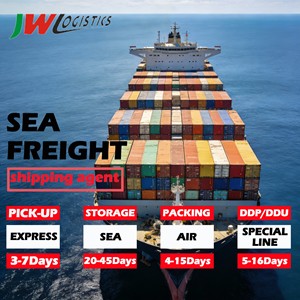
CE-compliant automated picking, packing, and direct-to-consumer fulfillment services optimized for Philippine e-commerce sellers.
Direct liner container shipping contracts providing stable allocations, competitive ocean tariffs, and flexible detention/demurrage terms.
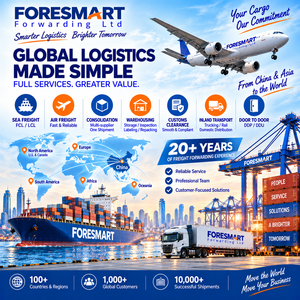
Comprehensive cross-border routing linking Asian, European, and American manufacturing hubs directly with Philippine distribution centers.
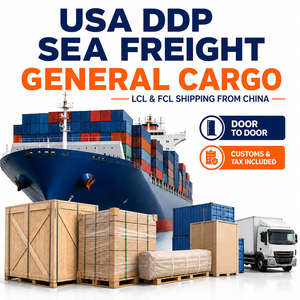
Specialized Flat Rack, Open Top, and Heavy Lift equipment handling for industrial machinery importing into Batangas, Subic, and Mindanao ports.
As the Republic of the Philippines accelerates its national infrastructure modernizations under the "Build Better More" initiative alongside rapid expansion across Philippine Economic Zone Authority (PEZA) economic enclaves, supply chain agility has shifted from a operational convenience to a strategic imperative. Implementing international contract logistics within the Philippine archipelago requires navigating distinct geographic, regulatory, and infrastructural landscapes.
Contract logistics in this region demands strict compliance with European conformity standards (CE Certification) for automated material handling systems (MHS), racking integrity, and machinery safety, coupled with seamless integration into the Philippine Bureau of Customs (BOC) Electronic-to-Mobile (e2m) clearance systems.
Core Technical Takeaway: Deploying CE-certified logistics equipment (conforming to EU Machinery Directive 2006/42/EC and EN 60204-1 safety norms) within Philippine warehousing nodes reduces operational downtime by up to 34% while ensuring compliance with PEZA safety audits and occupational safety standard mandates.
Commercial importing into the Philippines involves detailed tax structures, duty assessments, and regulatory permits governed by the Department of Trade and Industry (DTI), Bureau of Import Services (BIS), and Food and Drug Administration (FDA Philippines). Contract logistics providers acting as certified suppliers must bridge foreign manufacturing quality with local entry protocols:
| Logistics Compliance Vector | Standard Import (Formal Entry) | PEZA Enterprise Clearance | CE Certified Contract Logistics Advantage |
|---|---|---|---|
| Customs System Interface | Standard BOC e2m Declaration | Automated e-TAPS & Farm-in / Farm-out Permits | Pre-validated digital tariff mapping & HS code classification |
| Duties & Value Added Tax (VAT) | 12% VAT + Applicable Tariff Rates | Zero-Rated VAT & Duty-Free Capital Equipment | Complete DDP Tax transparency with direct duty payment management |
| Warehouse Equipment Certification | Local Basic Municipal Clearance | PEZA Environmental & Safety Inspection | CE Certified MHS, Automated Sorting, & EN-15512 Racking Compliance |
| Inter-Island Logistics Protocol | Standard Domestic Bill of Lading | Bonded Transfer Documentation | GPS-Tracked Bonded Trucking & Ro-Ro Sea Feeder Integration |
Why does CE certification matter for contract logistics suppliers operating in Southeast Asian hubs? CE marking signifies that warehousing machinery, automated conveyor networks, palletizers, and safety interlocks adhere to stringent European health, safety, and environmental protection requirements. When transferring complex automotive, semiconductor, or pharmaceutical stock through hubs in Manila, Batangas, or Subic Bay, certified logistics infrastructure guarantees zero structural failure, precise climate regulation, and maximum worker protection.
How our CE-certified contract logistics and multimodal freight solutions solve specific operational challenges across key regional economic corridors.
Serving industrial parks in Laguna Technopark, Cavite Economic Zone, and Batangas. We deliver JIT (Just-in-Time) bonded component feeds utilizing climate-controlled CE-certified warehousing and zero-rated VAT customs workflows.
Handling high-volume B2C and B2B fulfillment across Metro Manila, Bulacan, and Rizal. Utilizing automated sorters, WMS integration, and COD (Cash on Delivery) cash-reconciliation management for last-mile urban logistics.
Maintaining uninterrupted 2°C to 8°C cold chains for healthcare supplies traveling from Manila international gateways to island locations in Cebu, Iloilo, Cagayan de Oro, and Davao via certified reefer containers.
Managing breakbulk, project cargo, and out-of-gauge (OOG) machinery transfers for solar farms, grid expansion, and transport projects via Batangas Port and Subic Bay Freeport Zone.
Providing vendor-managed inventory (VMI) and reverse logistics solutions, optimizing warehouse space while coordinating daily feed shuttles to assembly plants in Santa Rosa and Laguna.
Strategically positioned distribution hubs engineered with reinforced structural framing, uninterrupted backup power generation, and emergency surge-capacity dispatch protocols for humanitarian and corporate continuity.
Understanding regional logistics trends allows multinational procurement directors and local buyers to build resilient supply chains. Our research pinpoints three structural shifts transforming Philippine freight and contract warehousing over the coming decade:
Port congestion at Manila South Harbor and Manila North Harbor (MICT) has driven a strategic shift toward regional port corridors. The Port of Batangas now serves as a primary hub for CALABARZON industrial traffic, while Subic Bay handles Central Luzon imports. Concurrently, Mindanao's Container Terminal (MCT) in Cagayan de Oro and the Port of Davao are becoming direct calling ports for intra-Asia shipping lines. Our contract logistics network offers direct booking feeds into these regional ports, avoiding Metro Manila truck bans and port congestion fees.
The implementation of the BOC Customs Modernization and Tariff Act (CMTA) has digitized customs processing. Key developments include mandatory advanced manifest filings, automated risk assessment (Selectivity System: Red, Yellow, Green Lanes), and single-window import clearances. Our in-house customs brokerage team utilizes direct API interfaces with BOC systems to execute pre-arrival filings, achieving clearance turnaround times under 24 hours for compliant cargo.
In accordance with global ESG directives, leading contract logistics suppliers operating in the Philippines are adopting solar-powered warehousing, electric vehicle (EV) urban delivery fleets, and CE-certified energy-efficient machinery. Energy-efficient automated sorting systems reduce carbon footprints while lowering operating expenses in high-electricity-cost environments like the Philippines.
Detailed technical answers to common questions regarding CE-certified contract logistics, customs clearance, and freight forwarding to the Philippines.
Combining nearly four decades of global freight forwarding expertise (since 1985) with specialized local infrastructure across the Philippines. We deliver uncompromised accountability, operational transparency, and end-to-end management for every shipment.
Connect with our senior logistics architects for custom freight quotes, CE-certified warehousing layouts, or PEZA customs consultation.
Contact Us