Specially engineered cargo underwriting, door-to-door transit protection, and freight forwarding routes connecting Vietnam industrial hubs to worldwide ports.







Over the past decade, the global manufacturing matrix has experienced a profound re-alignment. Vietnam has emerged as the premier anchor of the "China+1" diversification strategy, attracting billions of dollars in foreign direct investment (FDI) across key sectors including high-tech electronics, consumer footwear, textile apparel, renewable energy components, and precision mechanical engineering. Industrial epicenters such as Bac Ninh, Thai Nguyen, Binh Duong, Dong Nai, and Hai Phong now host thousands of Original Equipment Manufacturers (OEMs) and specialized industrial factories.
However, scaling high-volume OEM manufacturing out of Vietnam presents a unique set of maritime, environmental, and logistical risk vectors. Shippers moving high-value containerized freight across the South China Sea, through regional transshipment hubs like Singapore and Port Klang, and over oceanic trade corridors toward North America and Europe face complex liabilities. Standard carrier contracts provide minimal indemnification under historical maritime laws such as the U.S. Carriage of Goods by Sea Act (COGSA) or Hague-Visby Rules—often capping carrier liability at a negligible $500 per package or customary freight unit.
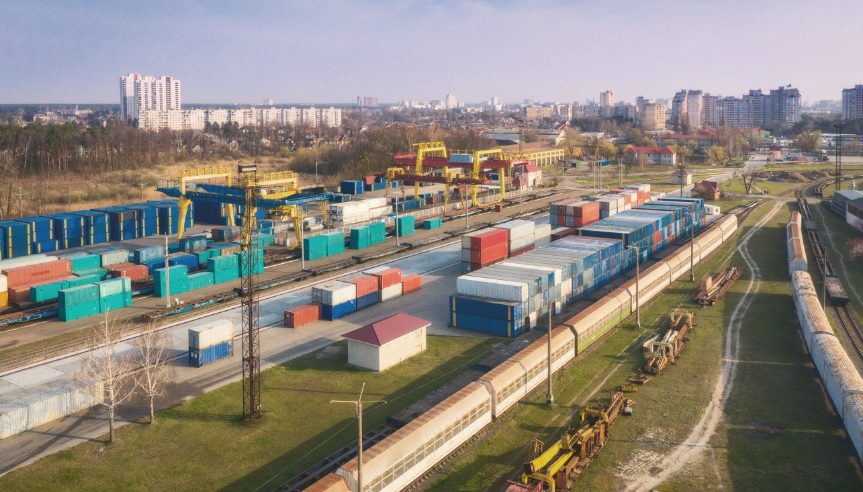
From seasonal monsoons and tropical typhoons causing vessel instability to severe port congestion at Cat Lai (Ho Chi Minh City) and Hai Phong Deep Sea Port (Lach Huyen), cargo exposure during inland drayage and ocean transit is substantial. Custom OEM Freight Insurance provides continuous door-to-door coverage from the moment raw materials enter the OEM factory gate in Vietnam until finished goods reach destination warehouses in the US, Europe, or Australia.
Engineering robust cargo insurance for OEM factories in Vietnam requires a granular understanding of international marine insurance clauses, risk pooling mechanisms, and trade term mechanics (Incoterms 2020). Unlike off-the-shelf commercial property insurance, marine cargo insurance must adapt dynamically to transit modes—Ocean FCL/LCL, Air Freight, and Cross-Border Trucking.
When underwriting OEM goods produced in Vietnamese factories, choosing the appropriate Institute Cargo Clauses (ICC) published by the International Underwriting Association of London is paramount:
| Coverage Category | Institute Cargo Clauses (A) | Institute Cargo Clauses (B) | Institute Cargo Clauses (C) |
|---|---|---|---|
| Risk Scope | All Risks of loss or damage (Subject to standard exclusions) | Specified major perils (Fire, explosion, vessel grounding, water entry) | Minimal basic perils (Vessel collision, grounding, catastrophic jettison) |
| Water Damage & Mold | Covered (Crucial for Vietnam high-humidity textile/garments) | Covered only if sea/river water enters vessel/hold | Excluded |
| Rough Handling & Dropping | Covered during loading, unloading & transshipment | Excluded | Excluded |
| General Average & Salvage | Fully Indemnified | Fully Indemnified | Fully Indemnified |
| Recommended Use | OEM Electronics, Precision Machinery, High-Value Finished Goods | Bulk Commodities, Raw Metals, Structural Materials | Low-value scrap metal, non-perishable raw timber |
Standard ICC (A) terms must be supplemented with specialized policy riders to address localized supply chain risks inherent to Vietnamese manufacturing:
Combining nearly four decades of global freight forwarding mastery with deep localized underwriting networks in Vietnam.
Established in Los Angeles and expanded worldwide, our decades of experience mean we have successfully navigated carrier capacity shortages, port strikes, trade tariff shifts, and global maritime disruptions.
Every account is assigned two dedicated professionals: a Logistics Account Executive who designs strategic insurance & routing plans, and an Operations Manager executing daily shipment tracking 24/7.
In-house licensed customs brokers manage ISF (10+2) filings, continuous customs bonds, FDA compliance, and U.S. Fish and Wildlife regulations to prevent customs holds and port demurrage charges.
Full digital shipment visibility. Search, sort, and export milestone data, view real-time vessel telemetry, monitor climate sensor feeds, and track arrival calendars via an intuitive web dashboard.
Flexible service levels spanning ocean FCL/LCL, air chartering, and Express4Air (3–5 day door-to-door transit for 25–100kg critical OEM components) with integrated freight insurance.
Strong focus on global supply chain security standards aligned with CTPAT criteria, lowering inspection ratios at origin ports in Vietnam and accelerated customs clearance at destination.
Optimizing risk management requires aligning insurance underwriting parameters with the physical supply chain dynamics of specific Vietnamese manufacturing regions:
Primary Industries: Consumer Electronics, Semiconductors, Smartphone Components, Solar Panels.
Risk Profile & Solution: High invoice value per container demands low-deductible All-Risk ICC (A) policy coverage. Cargo typically moves via highway drayage to Lach Huyen Deep Sea Port or via air freight from Hanoi's Noi Bai International Airport (HAN). Policies incorporate static warehouse storage riders at industrial parks and protection against electrostatic discharge (ESD) and water-vapor condensation damage during transit across the Pacific Ocean.

Primary Industries: Footwear, Textiles & Apparel, Furniture, Plastics, Processed Goods.
Risk Profile & Solution: High-volume, multi-supplier LCL consolidation via Cat Lai Port. High humidity in Southern Vietnam introduces severe risk of mold, mildew, and container rain during multi-week ocean voyages. OEM Freight Insurance policies are structured with specialized Mold & Mildew Endorsements and packaged alongside ISTA 3A packaging validation protocols to guarantee claims payout without liability disputes.
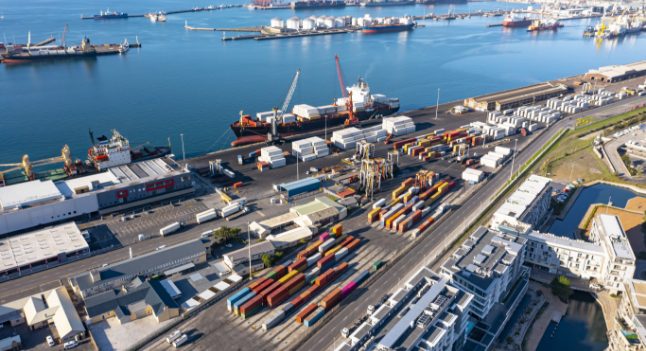
Primary Industries: Heavy Industrial Machinery, Automotive Assemblies, Renewable Energy Hardware.
Risk Profile & Solution: Out-of-gauge (OOG) and breakbulk cargo exported through Da Nang Port. Project cargo is highly susceptible to crane hook damage, improper lashing, and severe sea-state turbulence. Insurance structures utilize Specialized Project Cargo Underwriting, including surveyor inspections at origin loading and discharging ports.
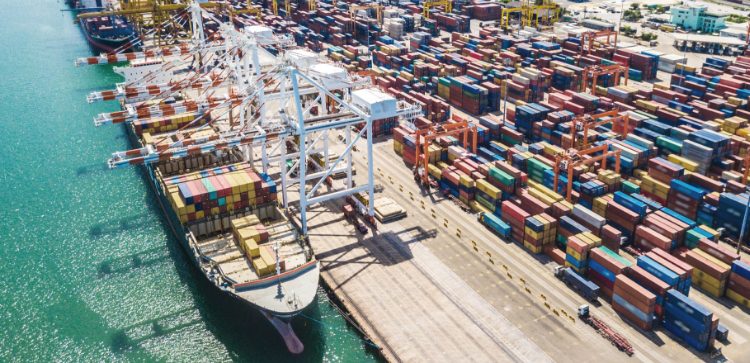
Navigating Vietnam’s freight landscape requires a forward-looking perspective on structural trends reshaping regional supply chains:
Historically, exports from Vietnam relied heavily on feeder vessels transshipping through Singapore or Hong Kong, adding 3 to 7 days of transit time and introducing additional port-handling risk vectors. The rapid expansion of direct long-haul container services from Hai Phong (Lach Huyen) and Ba Ria-Vung Tau (Cai Mep) to the U.S. West Coast (Los Angeles / Long Beach) and Northern Europe has reduced transit times significantly while altering risk exposure profiles.
Leading OEM manufacturers in Vietnam are adopting real-time IoT tracking devices placed inside sea containers. Smart sensors broadcast real-time GPS location, internal temperature, relative humidity, light exposure (indicating unauthorized container opening), and g-force shock impacts. Modern insurance policies integrate this telemetry data to expedite claims processing from weeks to under 48 hours by providing indisputable proof of incident timing and location.
With the Regional Comprehensive Economic Partnership (RCEP) and EVFTA (EU-Vietnam Free Trade Agreement) reducing tariff barriers, regulatory compliance has pivoted toward ESG (Environmental, Social, and Governance) transparency. OEM factories must prove sustainable packaging, low-carbon transportation routing, and strict adherence to international maritime safety codes.
Essential risk-mitigation insights for supply chain managers, buyers, and global trade directors.
Carrier liability under international maritime conventions (such as COGSA or Hague-Visby) is strictly limited—often to just $500 per package or customary freight unit. If a container carrying $250,000 worth of OEM electronics is damaged due to sea-water ingress or vessel instability, the ocean carrier may legally compensate you as little as $500. Custom OEM Freight Insurance reimburses the full invoice valuation (CIF + 10%), ensuring your balance sheet is fully protected.
Under FOB (Free on Board) terms from Vietnam ports like Cat Lai or Hai Phong, risk transfers to the buyer once goods are loaded onboard the vessel. The buyer must arrange freight insurance for ocean transit. Under CIF (Cost, Insurance & Freight), the Vietnamese seller must provide minimum insurance (ICC C); however, ICC (C) is often inadequate for complex OEM products. We recommend purchasing an overarching Open Cargo Policy or specifying ICC (A) coverage in your purchase agreements regardless of chosen Incoterms.
General Average is a legal maritime principle requiring all cargo owners on a vessel to proportionally share the financial losses when cargo or equipment is intentionally sacrificed to save the vessel during an emergency (e.g., grounding or shipboard fire). Without cargo insurance, your container will be impounded at the port of refuge until you post cash guarantees—often tens of thousands of dollars. Our freight insurance immediately posts the required salvage bond so your goods are released without delay.
For ocean freight destined for the United States, U.S. Customs and Border Protection mandates that the ISF 10+2 be submitted at least 24 hours prior to loading cargo onto the vessel at the foreign port (e.g., Hai Phong or Cai Mep). Failure to comply or late filing results in mandatory $5,000 fines per violation and severe customs holds. Our in-house customs team manages ISF filings directly as an integrated step in your logistics workflow.
Vietnam's tropical climate introduces high ambient humidity during factory packing and container loading. During ocean transit, temperature variations cause "container rain"—condensation forming on cold container roofs and dripping onto cargo. Standard marine insurance policies exclude mold/mildew unless explicitly added via a humidity rider. We structure specialized OEM policies that include mold and mildew clauses when prescribed desiccants and ISTA packaging guidelines are observed.
Direct ocean FCL from Southern Vietnam ports to the U.S. West Coast averages 16 to 22 days port-to-port. Ocean LCL requires an additional 3 to 5 days for consolidation at Vietnam CFS locations and de-consolidation at destination. Standard Air Freight takes approximately 3 to 6 days airport-to-airport. For urgent time-sensitive OEM replacement parts or prototype samples (25–100 kg), our Express4Air service provides door-to-door transit in just 3 to 5 business days, including customs clearance.
Consult with our senior logistics underwriters and freight specialists. Get a comprehensive, zero-obligation OEM freight insurance quotation and routing audit tailored to your manufacturing facilities in Vietnam.
Get a Quote
