Select from our specialized international ocean, air, and DDP freight forwarding solutions tailored for Los Angeles importers and global factories.
Less than Container Load (LCL) freight forwarding acts as the operational nervous system for international trade between Asian manufacturing ecosystems (such as Shenzhen, Ningbo, Shanghai, and Qingdao) and North American distribution networks. When suppliers and buyers lack the volume to fill a standard 20ft (33 CBM) or 40ft High Cube (76 CBM) ocean container, LCL ocean freight offers a mathematically optimized, share-budget alternative. However, managing LCL through the San Pedro Bay Port Complex—comprising the Port of Los Angeles (POLA) and the Port of Long Beach (POLB)—requires specialized operational engineering to avoid demurrage, gridlock, and unnecessary handling expenses.
The journey of an LCL shipment originating from a overseas factory supplier bound for a Los Angeles importer follows a rigid five-stage operational workflow:
Supply chain directors frequently face the dilemma of choosing between LCL consolidation and booking an entire FCL container. While LCL eliminates the dead-freight cost of shipping half-empty containers, it introduces Container Freight Station handling fees (CFS Destination Charges) at the Port of Los Angeles. The financial tipping point is evaluated using the following matrix:
| Shipment Volume (CBM) | Recommended Mode | Primary Pricing Factor | Handling Risk Profile | Typical LA CFS Transit Time |
|---|---|---|---|---|
| 1.0 – 5.0 CBM | LCL Sea Freight | Priced strictly per CBM ($/CBM rate) | Multiple touchpoints at origin & destination CFS | Vessel ETA + 3 to 5 Business Days |
| 5.1 – 12.0 CBM | LCL Sea Freight | Cost-effective vs FCL flat ocean rates | Standard palletization & shrink-wrap required | Vessel ETA + 3 to 4 Business Days |
| 13.0 – 15.0 CBM | FCL/LCL Threshold Zone | Comparative analysis (CFS fees vs flat FCL) | Evaluated based on cargo fragility & destination urgency | Vessel ETA + 2 to 4 Business Days |
| > 15.0 CBM | FCL (20ft Container) | Flat rate per container (20ft dry box) | Zero deconsolidation handling; sealed at origin factory | Vessel ETA + 1 to 2 Days (Direct Dray) |
As illustrated above, once an importer's consolidation reaches approximately 13 to 15 CBM, the cumulative destination CFS charges (terminal handling, deconsolidation, documentation) often converge with the flat rate of a 20-foot container. At Universal Cargo, our account executives run automated rate comparisons for every single booking to ensure shippers never overpay for freight space.
Headquartered in Los Angeles near LAX and the San Pedro Bay ports, Universal Cargo Management Inc. has led international logistics innovation since 1985.
Operating continuously in Los Angeles since 1985. Our deep-seated carrier relationships and port terminal access ensure stable vessel space and priority equipment releases.
Every shipper gets two dedicated logistics specialists: a Strategic Account Executive to optimize routing/pricing, and an Operations Manager to execute 24/7 tracking and port clearance.
Direct U.S. Customs clearance, seamless ISF (10+2) filings 24 hours prior to origin loading, continuous bond administration, and specialized FDA and U.S. Fish & Wildlife (FWS) filings.
CTPAT security accreditation guarantees streamlined customs inspections. Integrated iView Web Desktop provides interactive tracking, arrival calendars, and real-time operational metrics.
How customized LCL consolidation and transloading fuel Southern California’s premier economic sectors.
For high-volume e-commerce sellers distributing through fulfillment centers in Ontario, Rancho Cucamonga, and Moreno Valley, our LCL transloading service converts loose overseas cartons into Amazon-compliant, stretch-wrapped pallets within 24 hours of CFS retrieval.
Serving importers in the LA Fashion District with specialized Garment-on-Hanger (GOH) LCL ocean solutions, strict appointment-based delivery, and rapid seasonal turnover capabilities directly from South China factories to local showrooms.
High-value consumer electronics and tech components moving through El Segundo, Irvine, and Santa Monica leverage our Express4Air hybrid ocean-air service, providing anti-static warehouse handling, serial-number tracking, and strict security compliance.
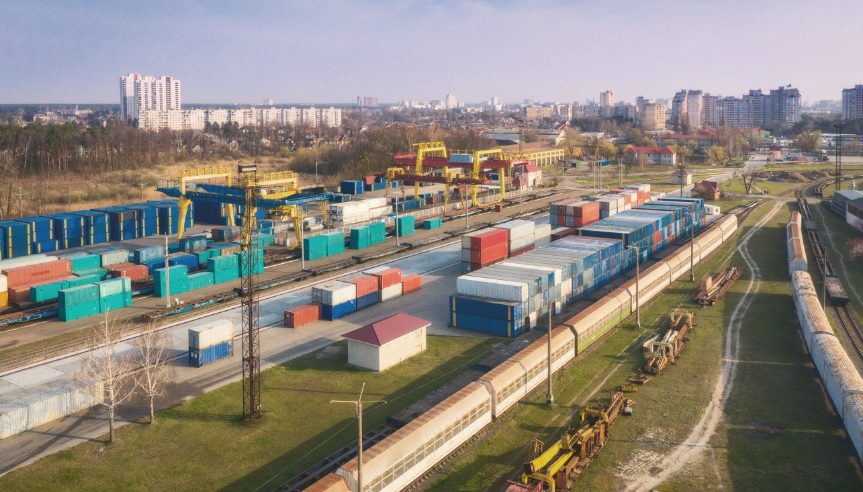
LCL freight forwarding is only as effective as the landside infrastructure supporting it. At Universal Cargo Management, our strategic proximity to the Port of Los Angeles and Port of Long Beach enables rapid container drayage directly to our commercial warehouses.
Whether you require short-term cross-docking, long-term commercial storage, or specialized drayage, our integrated asset and non-asset truck fleet guarantees uninterrupted velocity across your supply chain.
Send an InquiryKey regulatory, environmental, and technological trends shaping Southern California ocean freight logistics.
With the Ports of LA and Long Beach enforcing Clean Truck Fund fees ($10 per TEU on non-zero-emission drayage trucks), Universal Cargo partners with accredited EV and CNG drayage fleets. This eliminates regulatory surcharges while reducing Scope 3 emissions for corporate sustainability targets.
Leveraging terminal automation at LBCT and TraPac, our operations team optimizes container pickups during off-peak night gates under PierPass 2.0. This strategy bypasses daytime Traffic Mitigation Fees (TMF) and accelerates LCL container transport to destination CFS facilities.
As global manufacturers relocate production to Mexico, Los Angeles serves as a primary bonded transloading hub. Multi-origin suppliers combine Asian electronic components with Mexican assemblies via LA-based bonded warehouses, streamlining tariff classifications under USMCA protocols.
Clear, technical answers to common queries regarding LCL sea freight, customs regulations, and local port operations.
Partner with Universal Cargo Management Inc. for reliable, cost-effective LCL ocean freight consolidation, fast CFS transloading, and transparent customs brokerage backed by 39+ years of industry leadership.