Explore our targeted ocean consolidation, express air cargo, and DDP door-to-door freight programs engineered for high efficiency and seamless customs compliance across Luxembourg and the EU.
Accelerated air express and consolidated sea freight solutions linking major Chinese manufacturing hubs directly with Luxembourg Findel Airport and European inland terminals.
Send an Inquiry
Comprehensive DDP door-to-door forwarding. Full customs duty management, tax handling, and final-mile distribution across Luxembourg, Spain, the UK, and North America.
Send an Inquiry
Engineered Less Than Container Load ocean freight consolidation featuring dedicated CFS warehouse deconsolidation and rapid regional transit to European hubs.
Send an Inquiry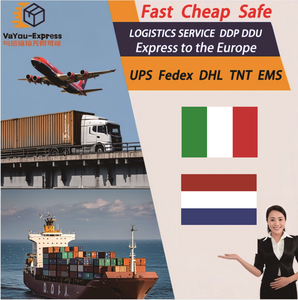
Premium express door-to-door logistics connecting China, Luxembourg, Italy, and the Netherlands. Fully integrated with UPS, DHL, and FedEx network injection.
Send an Inquiry
Cost-optimized ocean consolidation tailored for mid-volume commercial shipments. Provides transparent per-CBM pricing and complete destination clearance flexibility.
Send an Inquiry
Reliable port-to-port and door-to-door ocean freight services servicing Europe, the Middle East, and North America with weekly fixed vessel departures.
Send an Inquiry
End-to-end multi-modal forwarding offering precise cargo tracking, automated customs filing, and scheduled drayage into Luxembourg industrial zones.
Send an Inquiry
Custom engineering for out-of-gauge (OOG) cargo, heavy machinery components, and consolidated industrial shipments with specialized rigging and transport handling.
Send an InquiryStrategic logistics analysis for enterprise procurement leads, supply chain directors, and global exporters moving partial container cargo into the heart of Europe.
Positioned at the geographical and economic center of the European Union, the Grand Duchy of Luxembourg serves as a prime gateway for international Less Than Container Load (LCL) freight movement. Bounded by Germany, France, and Belgium, Luxembourg boasts unmatched multimodal connectivity. Through major maritime gateways such as Antwerp, Rotterdam, Zeebrugge, and Hamburg, LCL ocean containers are rapidly routed via inland rail and barge networks directly to key deconsolidation hubs like the Bettembourg-Dudelange Intermodal Terminal.
For global exporters and localized importers, utilizing Less Than Container Load services eliminates the financial burden of waiting to accumulate a 20ft or 40ft Full Container Load (FCL). By paying strictly for the volume (CBM) or weight (metric tons) occupied, enterprise cargo owners optimize cash flow while maintaining strict supply chain cadence. Furthermore, Luxembourg's Luxembourg Findel Airport—one of Europe's top air cargo hubs—enables seamless sea-air LCL integration for time-sensitive luxury goods, automotive components, and high-tech electronics.
Since 1985, our logistics organization has refined ocean and air freight forwarding into an exact science. We bridge the gap between global origin manufacturing hubs (such as Ningbo, Shanghai, Shenzhen, and Qingdao) and Luxembourg’s sophisticated commercial landscape.
Direct co-loading prevents unnecessary cargo re-handling at intermediate transshipment ports, significantly lowering damage risk for fragile or high-value consignments.
Full marine cargo insurance coverage up to the complete invoice value plus freight (110% CIF), overcoming traditional carrier liability limits established under COGSA and Hague-Visby rules.
Custom logistics frameworks designed around the specific industrial vertical requirements of the Luxembourgish economy.
Luxembourg hosts world-leading automotive technology manufacturers. Our LCL schedules provide reliable replenishment of specialized machinery components, sensors, and raw materials from Asian suppliers directly to production plants in Contern and Capellen under tight JIT (Just-In-Time) windows.
Supporting Luxembourg’s expanding health tech sector. We utilize GDP-compliant (Good Distribution Practice) reefer LCL solutions for temperature-sensitive diagnostic reagents, active pharmaceutical ingredients (APIs), and medical devices maintaining 2°C–8°C or 15°C–25°C environments.
Given Luxembourg’s status as a European data center and satellite communications capital (SES Astra), we engineer secure, shock-monitored LCL air and ocean paths for high-value server racks, microprocessors, and broadcast hardware.
With Amazon operating its European headquarters in Luxembourg City, our DDP door-to-door LCL services streamline inventory restocking into Amazon Fulfillment Centers (FBA) throughout Germany, France, Belgium, and Germany with pre-appointment booking and palette labeling.
A granular breakdown of cargo milestones, customs handling protocols, and transit timelines for LCL consignments arriving in Luxembourg.
| Process Stage | Operational Milestones | Customs & Compliance Protocol | Avg. Transit Window |
|---|---|---|---|
| 1. Origin Consolidation | Cargo receipt at Origin CFS (Ningbo/Shanghai/Shenzhen), palletizing, volume/weight verification (CBM measurement). | Export declaration clearance, AMS/ENS security filings, HBL generation. | Day 1 – Day 4 |
| 2. Maritime Ocean Transit | Main vessel loading, ocean voyage via Suez Canal or Cape Route to EU Gateway Port (Antwerp or Rotterdam). | Carrier manifest transmission, ISF / Advance Cargo Declaration to EU authorities. | Day 5 – Day 30 |
| 3. Port Discharge & Transit | Container unlashing, discharge at Antwerp/Rotterdam terminal, inland barge/rail transfer to Bonded Hub. | Creation of NCTS T1 Transit Document for duty-suspended transport across borders. | Day 31 – Day 34 |
| 4. Deconsolidation & Clearance | Stripping of ocean container at Bettembourg/Luxembourg CFS, individual cargo inspection, sorting. | Final EU Customs Entry (IMA), VAT deferral execution (Article 23 equivalent), duty payment. | Day 35 – Day 36 |
| 5. Final Door Delivery | Tailgate truck dispatch via local haulage network to client facility in Dudelange, Windhof, or Wiltz. | Proof of Delivery (POD) transmission, digital archive filing, invoice settlement. | Day 37 – Day 38 |
How regulatory shifts, decarbonization mandates, and digital transformation are reshaping LCL freight forwarding within the European Union.
Under the EU's Fit for 55 package and Corporate Sustainability Reporting Directive (CSRD), shippers operating in Luxembourg must measure and report Scope 3 transport emissions. Modern LCL services incorporate electrified rail shuttles connecting Antwerp directly to Luxembourg, reducing carbon intensity per ton-kilometer by up to 68% compared to direct road trucking.
The implementation of NCTS Phase 5 in Luxembourg enforces real-time digital tracking of bonded transit cargo. Paperless customs workflows, automated risk assessments, and blockchain-verified certificates of origin drastically diminish border wait times, enabling same-day deconsolidation upon arrival at inland depots.
As EU CBAM regulations mandate carbon intensity reporting on steel, aluminum, fertilizers, and industrial chemicals imported into Luxembourg, our LCL freight documentation integrates detailed supply chain carbon tracking, protecting importers from unexpected financial penalties.
Combining four decades of operational heritage with modern digital tracking tools to deliver flawless ocean and air solutions.
No generic call centers. Every account is assigned a Logistics Account Executive (strategy) and an Operations Manager (day-to-day cargo execution) offering 24/7 personalized oversight.
Included with every shipment. Offers basic export tracking alongside the iView Web Desktop—a dynamic dashboard providing arrival calendars, delay alerts, and shipment sorting.
Full support across ExWorks (EXW), Free On Board (FOB), Delivered Duty Paid (DDP), Delivered Duty Unpaid (DDU), and Port-to-Port contracts tailored to buyer preferences.
Expert answers to complex operational, legal, and financial questions surrounding Less Than Container Load ocean and air freight.
As a practical operational benchmark, when your total shipment volume is between 1 CBM and 13 to 15 CBM, LCL is substantially more cost-effective than booking a full 20ft container (which measures approx. 33 CBM capacity). Under LCL, you pay strictly for the cubic volume occupied. Once your cargo exceeds 14-15 CBM, the flat container rate of an FCL often becomes more economical and offers faster transit due to the elimination of deconsolidation handling at the CFS warehouse.
When LCL containers discharge at ocean ports like Antwerp or Rotterdam, the container is stripped at a local Container Freight Station (CFS). For cargo destined for Luxembourg, goods are dispatched under an NCTS T1 Transit Document (duty-suspended bond). This allows the cargo to travel across Belgian or Dutch territory without paying import duties until it reaches a designated customs warehouse in Luxembourg (such as Bettembourg or Findel), where final EU customs clearance and VAT accounting are performed.
LCL freight is quoted on a W/M (Weight or Measurement) basis, where 1 Cubic Meter (CBM) is equivalent to 1,000 Kilograms (1 Metric Ton), whichever yield is higher. For example, if your shipment weighs 800 kg and measures 2.5 CBM, you will be billed for 2.5 CBM. However, if your shipment weighs 1,800 kg and measures 1.2 CBM, you will be billed for 1.8 CBM equivalent. Our team provides transparent breakdown quotes detailing origin handling, ocean freight, CFS deconsolidation, and final drayage.
Standard mandatory import documentation includes: (1) Commercial Invoice stating clear Incoterms, currency, and itemized values; (2) Detailed Packing List specifying gross/net weight and package dimensions; (3) House Bill of Lading (HBL); (4) Certificate of Origin (where applicable for preferential tariff treatment); and (5) CE Declarations of Conformity or specialized permits (e.g., FDA, REACH, or veterinary clearance) depending on product classification.
Under international maritime law (such as the Hague-Visby Rules and COGSA), ocean carrier liability is strictly limited to $500 per package or customary freight unit, or approximately 2 SDR per kilogram. In the event of vessel fires, container loss at sea, or general average declaration, carrier payouts fall drastically short of commercial cargo value. Marine Cargo Insurance covers 110% of the CIF invoice value, protecting your business against physical loss or damage from warehouse pickup to final tailgate delivery.
Yes. We operate specialized Dangerous Goods (DG) LCL consolidation programs adhering strictly to IMDG Code regulations for ocean freight and ICAO/IATA rules for air cargo. Additionally, our cold-chain LCL services utilize active temperature-controlled reefer containers equipped with real-time data loggers to ensure product integrity for pharmaceutical and perishable shipments entering Luxembourg.
Connect directly with our senior freight forwarding executives for custom route planning, rate benchmarking, and rapid customs clearance support.
Send an Inquiry