Explore our targeted consolidation services engineered specifically for industrial manufacturers, commercial importers, and regional distributors operating in the Greater Ho Chi Minh City Metropolitan Area.
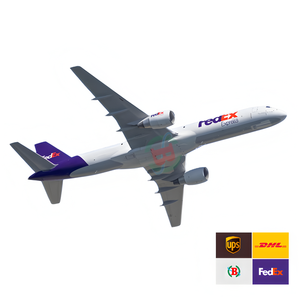
High-speed air express consolidation and door-to-door LTL logistics designed for time-sensitive factory components, electronics, and priority commercial samples originating from Asia into Ho Chi Minh City.
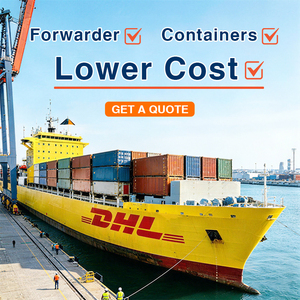
Turnkey DDP (Delivered Duty Paid) ocean and air cargo solutions handling all customs formalities, localized import tax assessments, and last-mile LTL delivery across Southern Vietnam.
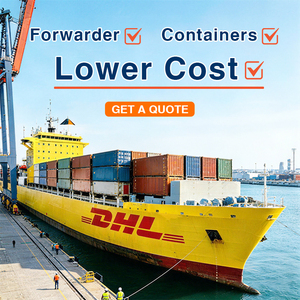
Cost-efficient Less-than-Container-Load (LCL) consolidation services connecting Cát Lái and Cái Mép ports with key international hubs, guaranteeing precise volume-based billing.
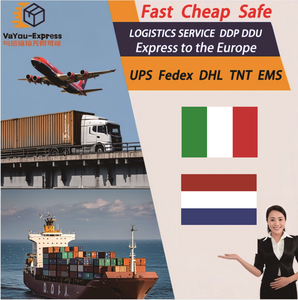
Streamlined express LTL routing integrating major express carriers for high-value industrial spares, precision tooling, and fast-moving retail consumer items.
Budget-optimized sea freight forwarding utilizing shared container space to drastically minimize landed logistics costs for bulk commercial materials and raw goods.
Direct ocean freight bookings and flexible LTL drayage schedules linking Ho Chi Minh City’s maritime terminals with North American, European, and Middle Eastern buyer destinations.
Comprehensive multi-modal door-to-door forwarding featuring real-time tracking, transparent port handling charges, and localized warehouse deconsolidation.
Heavy-lift and out-of-gauge LTL cargo management utilizing flat racks, open-top containers, and specialized heavy trucking units across the Southern Vietnam industrial corridor.
As Southern Vietnam solidifies its position as an indispensable engine of global manufacturing and trade, the demand for highly refined Less-Than-Truckload (LTL) freight manufacturing, consolidation, and supply chain management serving the Ho Chi Minh City (HCMC) metropolitan area has expanded exponentially. Navigating the complex logistics topology of HCMC requires a deep operational understanding of local port infrastructures, municipal traffic regulations, bonded warehousing networks, and customs clearance protocols.
Operating as a premier LTL freight manufacturer and logistics supplier, our company bridges the gap between regional factory production lines and international buyer markets. By implementing advanced cargo consolidation algorithms, dynamic route optimization, and rigorous safety procedures, we enable small, medium, and multi-national enterprises to achieve full-container-load (FCL) efficiency within fractional cargo volumes.
Information Gain Executive Briefing: Optimizing LTL cargo within the Greater Ho Chi Minh City ecosystem demands direct integration with Cát Lái Terminal, the Cái Mép-Thị Vải Deepwater Port Complex, and Tân Sơn Nhất International Airport Cargo Terminals (TCS/TECS) to guarantee sub-24-hour dwell times and seamless customs release.
Unlike standard full-truckload (FTL) transport where a single vehicle services one customer from origin to destination, LTL shipping relies on sophisticated hub-and-spoke networks. Goods collected from manufacturing zones in Bình Dương, Đồng Nai, Long An, and HCMC’s Thu Duc City are merged at strategic Container Freight Stations (CFS). Cargo is systematically weighed, dimensioned via automated cubing systems, palletized in compliance with ISPM-15 heat-treatment standards, and scheduled for precise line-haul transport.
Ho Chi Minh City serves as the financial and logistical epicenter of Vietnam. Effective LTL freight distribution must be tailored to the specific micro-logistics environments found within its primary industrial parks and maritime portals.
Handling delicate electronic components, semiconductors, and precision sensors requires climate-controlled LTL shuttles equipped with pneumatic air-ride suspension to prevent micro-fractures during transit to Tân Sơn Nhất Airport (SGN).
Consolidating textiles, footwear, and consumer goods from Vietnam-Singapore Industrial Parks (VSIP I, II, III) and Tân Thuận Export Processing Zone into dedicated LCL containers destined for North American and European retail distribution networks.
Providing specialized temperature-controlled (Reefer LTL) freight services from Long An and Tien Giang agricultural corridors into HCMC cold-storage facilities for expedited export clearance.
A critical operational reality when managing LTL freight in Ho Chi Minh City is compliance with Department of Transport (DOT) vehicle weight and hourly transit restrictions. Heavy trucks and container chassis are strictly banned from entering inner-city districts during peak daytime hours (6:00 AM – 9:00 AM and 4:00 PM – 8:00 PM).
To overcome these bottlenecks, our logistics model utilizes specialized 1.5 to 2.5-ton light LTL vehicles operating under municipal transit permits, alongside strategically located suburban staging warehouses in Bình Chánh and 12 District. This allows continuous feeder operations without incurring municipal violation fines or delivery delays.
The Southern Vietnamese logistics landscape is undergoing a structural revolution driven by global supply chain diversification (China+1 strategy), regional infrastructure investments, and strict environmental compliance expectations.
Selecting the optimal logistics mode requires balancing cost, volumetric density, speed, and regulatory exposure. The following comparative matrix outlines key benchmarks used by our enterprise account executives when advising HCMC buyers and manufacturers.
| Logistics Dimension | LTL / LCL Freight Solution | Full Container Load (FCL) | Express Air Freight |
|---|---|---|---|
| Target Cargo Volume | 1.0 CBM to 14.0 CBM (Fractional Load) | 15.0 CBM to 68.0 CBM (20'/40' Container) | 25 kg to 500 kg (High Density / Low Volume) |
| Cost Structure Basis | Billed per CBM or W/M (Weight or Measure) | Flat Lump-Sum Rate per Container Unit | Chargeable Weight (Volumetric vs Actual Ratio) |
| HCMC Port Transit Lead Time | 16 - 24 Days (Includes CFS Consolidation) | 14 - 20 Days (Direct Port-to-Port) | 3 - 5 Days Door-to-Door |
| Customs Handling Complexity | Master & House Bill of Lading Deconsolidation | Single Entry Customs Declaration | Automated Express Manifest Clearance |
| HCMC Urban Access Flexibility | High (Utilizes 2-Ton Light Feeders & Suburban Hubs) | Restricted (Requires Night Drayage Permits) | Maximum (Direct Van Delivery to Door) |
Since 1985, our logistics organization has been at the forefront of international trade, containerized shipping, and multimodal LTL delivery networks. Operating with total transparency and dedicated personal oversight, we provide enterprise clients with unmatched operational stability.
Certified supply chain security management minimizing customs inspection delays and protecting high-value LTL shipments from origin factory to destination warehouse.
Every shipper is paired with a dedicated Logistics Account Executive who designs strategic routing, and an Operations Account Manager executing daily LTL milestones.
Expert licensed customs brokers skilled in Vietnam Customs Sub-Departments, Tariff (HS Code) classifications, ISF filings, and FDA/FWS import requirements.
Clear, direct answers to essential logistical, regulatory, and financial questions frequently raised by commercial buyers, factory managers, and supply chain directors in the HCMC region.
LTL cargo (also referred to as LCL ocean freight) is billed using the standard Weight or Measure (W/M) volumetric calculation. 1 Cubic Meter (CBM) is equivalent to 1,000 Kilograms. Whichever metric yields the higher revenue figure is applied. For example, if a cargo payload measures 3.5 CBM but weighs 4,200 kg, billing is assessed on the weight basis of 4.2 Revenue Tons (RT). Our team provides fully itemized quote breakdowns avoiding hidden origin or destination CFS fees.
Cát Lái Port (operated by Saigon Newport Corporation) handles the highest concentration of intra-Asia and feeder container shipments in HCMC, making it ideal for standard regional LTL shipments. However, for direct long-haul ocean lanes to the United States or Europe, utilizing the Cái Mép Deepwater Terminal complex reduces transshipment delays, even though it requires extended highway drayage. Our account executives evaluate your final cargo destination to recommend the most economical port routing.
Standard export/import customs clearance in Vietnam requires a Commercial Invoice, Detailed Packing List, Master/House Bill of Lading (B/L), Certificate of Origin (C/O - Form E, Form D, or Form EUR.1 depending on trade agreement applicability), and a Customs Declaration Form generated via VNACCS/VCIS. Specialized commodities such as chemicals, foodstuffs, or electronics may require specialized quality inspections or phytosanitary certificates.
We maintain a dual-stage distribution protocol. Heavy line-haul trucks transport LTL cargo from ports or factories to our consolidation hubs located on the city outskirts (e.g., Bình Chánh, 12 District). Cargo is then deconsolidated onto light 1.5 to 2.5-ton trucks or specialized electric cargo vehicles permitted to operate during daytime hours, ensuring uninterrupted final delivery to commercial premises and retail stores.
As a practical benchmark, once your consolidated LTL shipment volume reaches approximately 13.0 to 15.0 CBM, booking a full 20-foot container (FCL) often becomes more economical. FCL eliminates CFS handling fees, reduces transit touchpoints, and provides dedicated container seal security. Our account representatives dynamically evaluate both LTL and FCL pricing for every quote request to guarantee maximum cost efficiency.
Connect with our senior logistics architects to receive a fully tailored, cost-optimized LTL freight plan. Transparent pricing, dedicated account management, and reliable execution for every shipment.
Get a Quote