
Direct LCL/FCL, DDP Door-to-Door, and Multi-Modal Logistics Optimized for Danish Importers
Denmark serves as the ultimate maritime gateway to the Nordic region and Baltic Sea basin. Managing logistics into Danish ports requires a refined balance of environmental compliance, high operational efficiency, and stringent customs expertise. As a leading sea cargo supplier and freight forwarding partner for the Denmark market, our organization provides end-to-end supply chain integration tailored to the nuanced infrastructure of Copenhagen, Aarhus, Fredericia, and Esbjerg.
Danish procurement managers and international commercial buyers operate under some of the most rigorous trade standards in the European Union. From handling complex import duties administered by the Danish Customs Agency (Toldstyrelsen / SKAT) to adhering to Denmark's ambitious national decarbonization targets, ocean freight is no longer just about port-to-port container transport—it is about risk mitigation, predictable lead times, and digital supply chain visibility.
Information Gain Benchmark: Unlike conventional freight forwarders operating on generic EU templates, our specialized Denmark maritime corridors combine direct ocean carrier allocations with localized Danish drayage, bonded warehousing, and automated SKAT import clearance filing to guarantee zero unnecessary demurrage at Scandinavian terminals.
As Denmark's premier container hub handling over 60% of national container volume, our direct service lines utilize Aarhus' deep-water terminals for seamless transshipment of FCL and LCL cargo originating from Asia, North America, and southern Europe.
Servicing the Greater Copenhagen metropolitan area and Eastern Denmark via Copenhagen Malmö Port (CMP), utilizing short-sea feeders and zero-emission electric last-mile trucking across the Öresund corridor.
Dedicated project cargo, breakbulk, and heavy-lift logistics routed through the Port of Esbjerg, supporting Denmark’s world-leading offshore wind industry, green hydrogen installations, and heavy machinery imports.
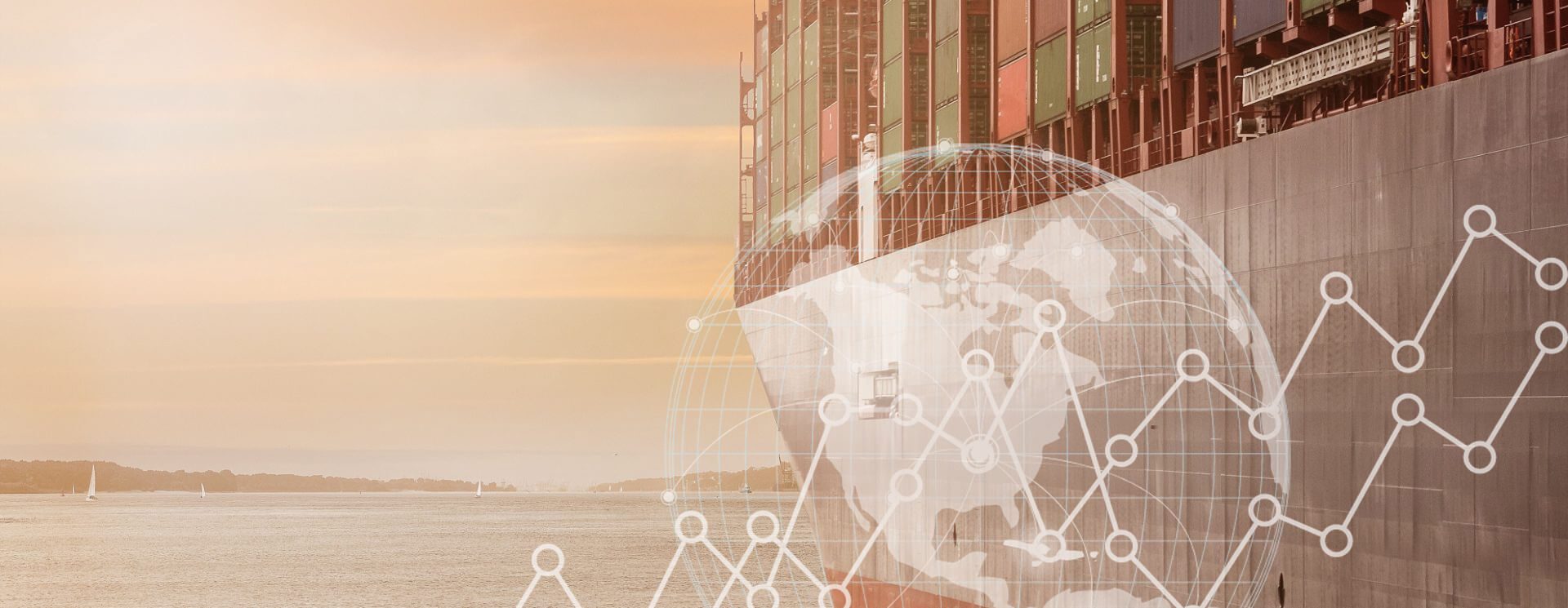
Established in 1985, our logistics network was founded on a simple principle: global trade requires personal accountability. When shipping ocean cargo to Denmark, your enterprise is assigned a dedicated dual-account management team—a Senior Logistics Account Executive focused on strategic routing and cost engineering, paired with an Operations Account Manager handling daily container execution.
Custom-Engineered Ocean Cargo Routing Built for Specific Danish Market Sectors
Location Focus: Port of Esbjerg & Central Jutland
Denmark is the global epicenter of wind energy innovation. Transporting turbine components, high-voltage transformers, and specialized structural steel requires flat-rack containers, open-top units, and charter breakbulk services. Our technical cargo teams calculate precise deck load limits and route sweepings to guarantee zero-defect transport to manufacturing sites in Brande and Aarhus.
Location Focus: Copenhagen Medicon Valley & Kalundborg
Denmark's booming life science cluster demands absolute temperature control. Our Reefer Ocean Freight solutions offer active cold-chain monitoring (-30°C to +25°C), continuous power supply (genset-equipped chassis), and prioritized customs clearance under EU Good Distribution Practice (GDP) guidelines for sensitive raw ingredients and medical equipment.
Location Focus: Odense, Vejle & Greater Copenhagen
Danish design enterprises rely on continuous, cost-effective raw material imports (timber, textiles, metals) and outbound finished goods transport. Our specialized LCL Consolidation hubs allow mid-sized Danish importers to pay strictly for utilized CBM space while benefiting from fixed weekly sailing schedules out of major Asian export terminals.
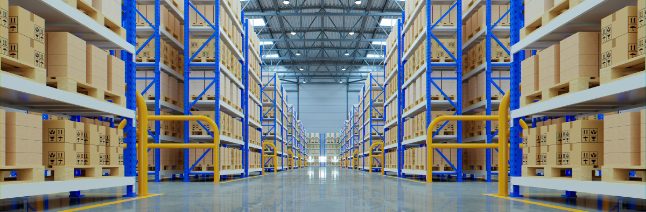
Once your sea cargo arrives at Danish discharge ports, immediate staging and onward distribution are critical to avoiding local port storage surcharges. Our commercial warehousing services bridge the gap between ocean carrier discharge and final door delivery across Denmark, Sweden, Norway, and Northern Germany.
As Denmark targets a 70% reduction in greenhouse gas emissions by 2030, the ocean shipping industry supplying the Danish market is undergoing a historic transformation. Importers and procurement directors must align their sea cargo supply chains with modern EU mandates and local environmental expectations.
Effective 2024, maritime transport is integrated into the EU ETS. Cargo vessels calling at Danish ports incur carbon allowance surcharges based on gross tonnage. We assist shippers in modeling ETS cost impacts and choosing low-emission ocean carriers utilizing green methanol and LNG propulsion.
Denmark's Customs Agency enforces strict electronic entry summary declarations (ENS) under ICS2. All commercial importers must maintain valid EORI registration and ensure precise Harmonized System (HS) code classification to avoid customs holds at the border.
Danish consumers and B2B buyers mandate transparent Scope 3 supply chain reporting. Our sea cargo solutions feature detailed carbon footprint auditing per TEU-kilometer, enabling your enterprise to present verified ESG compliance data to stakeholders.
Quantitative Comparison Guide for Global Procurement Officers & Supply Chain Planners
| Freight Mode | Optimal Cargo Profile | Pricing Benchmark Structure | Typical Transit Time (Asia to Denmark) | Strategic Advantage & Risk Notes |
|---|---|---|---|---|
| Ocean Freight FCL (20' / 40' / 40'HC) |
Shipments > 13–15 CBM or high weight volume | Flat Rate per Container Unit | 28 - 38 Days (Port-to-Port) | Lowest unit cost, sealed container security, direct discharge at Aarhus/Copenhagen. |
| Ocean Freight LCL (Consolidation) |
Partial loads between 1 CBM and 12 CBM | Per CBM or Weight (1 CBM = 1000 kg) | 32 - 42 Days (Door-to-Door) | Pay only for space utilized; requires CFS de-consolidation time at port. |
| Reefer Sea Cargo (Cold Chain) |
Perishables, Biotech, Dairy, Pharma | Container Base + Power/Genset Surcharge | 28 - 35 Days (Port-to-Port) | Precise set-point temperature control; mandatory FDA/EU health checks. |
| Air Freight Forwarding (Standard / Charter) |
Urgent, high-value electronics, prototypes | Chargeable Weight (Volumetric 1:6000) | 3 - 6 Days (Airport-to-Airport) | Maximum speed; significantly higher cost per kilogram. High reliability. |
| Express4Air Door-to-Door | Time-critical B2B samples (25 kg to 100 kg) | All-In Courier Rate (Incl. Customs) | 3 - 5 Days (Door-to-Door) | Includes pickup, customs clearance, and final delivery in Denmark. |
*Transit times represent indicative averages for major trade lanes (e.g., Shanghai/Ningbo/Shenzhen to Aarhus/Copenhagen). Actual timelines vary based on ocean carrier rotations, feeder schedules, and customs release speeds.
Expert Guidance on Customs, Incoterms, Container Selection, and Local Regulations
The choice depends primarily on your final delivery destination within Denmark and the ocean carrier’s service route. Port of Aarhus is Denmark’s primary deep-water container terminal capable of handling direct ultra-large container vessels (ULCVs), making it ideal for Jutland (Jylland) and Funen (Fyn) industrial regions. Copenhagen (CMP) is often preferred for shipments destined for Zealand (Sjælland), the capital region, or transshipment into Southern Sweden via the Öresund bridge. Our team optimizes port selection to minimize internal Danish road haulage costs.
Importing goods into Denmark requires a valid EU EORI number registered with Danish Authorities (Toldstyrelsen). Denmark imposes a standard value-added tax (moms) of 25% on imported commercial goods, calculated based on the Customs Value (CIF price + duty + internal EU freight). Under DDP (Delivered Duty Paid) terms, our customs team manages duty payments and administrative filings on your behalf, ensuring seamless compliance with local tax requirements.
As a operational rule of thumb, when your total cargo volume reaches approximately 13 to 15 cubic meters (CBM), booking a full 20-foot container (FCL) becomes more cost-effective than Less than Container Load (LCL). Furthermore, FCL eliminates the extra handling, risk, and time associated with Container Freight Station (CFS) consolidation and de-consolidation, reducing total door-to-door transit time to Denmark by up to 5 days.
Freight forwarding contracts in Denmark and the wider Nordic region are commonly governed by NSAB 2015. These conditions outline clear parameters regarding forwarder liability, claims procedures, and demurrage responsibilities. Standard carrier liability under international marine law (such as Hague-Visby rules) is limited to 2 SDR per kilogram or 666.67 SDR per package. We strongly advise securing comprehensive All-Risk Marine Cargo Insurance to protect the true commercial value of your inventory during ocean transit.
Yes. Our DDP sea cargo services cover origin pickup, ocean freight booking, export customs, Danish import entry through SKAT, payment of duties and 25% Danish VAT, container drayage, and final scheduled delivery to commercial warehouses, retail distribution networks, or e-commerce fulfillment facilities across Denmark.
Standard mandatory documentation includes: 1) Master or House Bill of Lading (B/L), 2) Commercial Invoice detailing line-item values and currency, 3) Detailed Packing List specifying gross/net weights and dimensions, 4) Certificate of Origin (where preferential tariff agreements apply), and 5) Specific export/import licenses for regulated categories such as chemicals, pharmaceuticals, or food products requiring Danish Veterinary and Food Administration clearance.
Partner with an established international freight forwarder backed by 40 years of logistics expertise. Benefit from competitive container rates, dedicated account management, and flawless customs execution across all Scandinavian ports.