Navigating cross-border trade into Brazil requires deep operational mastery of national customs protocols, local tax mechanisms, and specialized maritime pathways. Known historically for its complex regulatory architecture—often referred to as "Custo Brasil" (The Brazil Cost)—importing goods into major industrial zones like Santos, Paranaguá, Rio de Janeiro, and the Manaus Free Trade Zone (ZFM) demands an experienced export clearance factory and global logistics coordinator.
Select a specialized logistics mode tailored to your commodity type, weight, and regulatory urgency.

Designed for urgent commercial samples, high-value tech spares, and cross-border e-commerce batches requiring expedited customs clearance and 1688 order consolidation.

Full DDP door-delivery services absorbing import taxes (II, IPI, PIS/COFINS, ICMS) under tax-paid structures for frictionless receipt in São Paulo, Rio, and Curitiba.

Cost-efficient consolidation for partial container loads (1 to 15 CBM) with systematic palleterization, de-consolidation at Brazilian bonded terminals, and duty management.

Premium express freight forwarding utilizing premier global carrier networks paired with custom customs clearance handling for quick-turnaround enterprise demands.

Budget-friendly DDP/DDU ocean shipping solutions for high-volume consumer commodities, machinery parts, and industrial supplies entering South America.

Dedicated 20ft, 40ft, and 40ft High Cube container shipping directly to Santos, Paranaguá, and Rio Grande with direct carrier contracts and guaranteed space allocations.

Seamless intermodal connections transferring containerized cargo from Brazilian coastal entry ports into inland distribution hubs like Campinas, Belo Horizonte, and Brasília.

Specialized Flat Rack, Open Top, and Breakbulk shipping solutions engineered for industrial machinery, energy infrastructure, and agricultural equipment.
Analyze transit times, tax implications, and regulatory frameworks across major shipping pathways.
| Logistics Mode | Optimal Weight / Volume | Avg. Transit (Origin to Port) | SISCOMEX & RADAR Requirement | Customs Clearance Complexity |
|---|---|---|---|---|
| Ocean FCL (Full Container) | > 15 CBM / Full 20'/40' Containers | 22 - 32 Days (Destination dependent) | Required (RADAR Unlimited/Limited) | Standard Inspection (Green Channel: 24-48h) |
| Ocean LCL (Consolidation) | 1 - 14 CBM / Partial Loads | 28 - 38 Days (Includes De-consolidation) | Required (RADAR Standard) | Moderate (Terminal De-consolidation audits) |
| Air Freight (Commercial) | > 100 kg Cargo Batches | 3 - 7 Days (Airport-to-Airport) | Required (DU-E & DI Linkage) | Fast (Specialized Airport Customs Terminal) |
| Express4Air (Door-to-Door) | 25 kg - 100 kg Express Batches | 3 - 5 Days (End-to-End) | Simplified Courier / Full DDP Option | Pre-Cleared via Automated Express Channels |
| Breakbulk / OOG Project | Heavy Industrial Equipment | 30 - 45 Days (Special Vessel Allocation) | Special Import License (LI) + RADAR | High (Physical Inspection & Rigging Clearance) |
Exporting to Brazil requires seamless integration with Brazil's national foreign trade system, SISCOMEX (Sistema Integrado de Comércio Exterior). All Brazilian importers must hold an active RADAR License (Registro e Rastreamento da Atuação dos Intermediários de Comércio Exterior) issued by the Receita Federal. As an elite export clearance partner, our factory and freight forwarding operations align origin export documents—including the DU-E (Declaração Única de Exportação)—with destination DI (Declaração de Importação) or DUIMP (Declaração Única de Importação) filings.
We manage complex tariff classifications under the NCM (Nomenclatura Comum do Mercosul) system to avoid severe fines, re-classification penalties, or customs holds at ports like Santos or Paranaguá. Our compliance team verifies pre-shipment inspections and coordinates with regulatory agencies such as ANVISA (health and cosmetics), MAPA (agricultural goods), and INMETRO (industrial standards).
How our export clearance and shipping solutions drive efficiency across Brazil’s distinct regional economies.
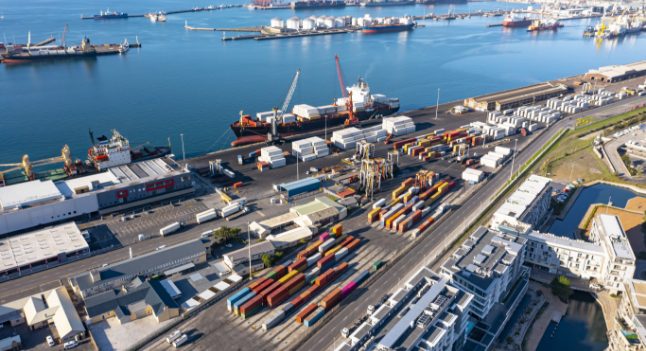
The Greater São Paulo region, including Campinas and the ABC industrial hub, demands strict Just-In-Time (JIT) component deliveries. Utilizing our direct FCL ocean services to the Port of Santos, automotive suppliers benefit from optimized NCM code mapping and green-channel customs clearance, minimizing port storage fees (Demurrage & Detention) and accelerating delivery to assembly plants.
Shipping to the Zona Franca de Manaus (ZFM) offers substantial tax incentives (Import Duty & ICMS reductions) but involves rigorous SUFRAMA (Superintendência da Zona Franca de Manaus) registration. Our specialized multimodal routes utilize ocean freight to Vila do Conde or Manaus river ports paired with pre-formatted clearance documents to ensure zero tax compliance hiccups.
Brazil’s rapid solar expansion in Bahia, Ceará, and Pernambuco requires high-density container loads and Breakbulk shipping of solar inverters, PV modules, and mounting structures into the Ports of Suape, Pecém, and Salvador. We handle heavy-lift logistics combined with ex-tariff (Ex-Tarifário) customs duty reduction processing.
Strategic shifts modernizing supply chain dynamics between international factories and Brazilian buyers.
The unification of PIS/COFINS, IPI, ICMS, and ISS into dual Value-Added Taxes (IBS and CBS) promises to streamline import tax calculations, reducing administrative friction for DDP and DDU freight forwarders by 2026.
The complete transition from traditional Declaração de Importação (DI) to DUIMP (Single Import Declaration) on the Portal Único reduces clearance inspection times by up to 40% at major ports.
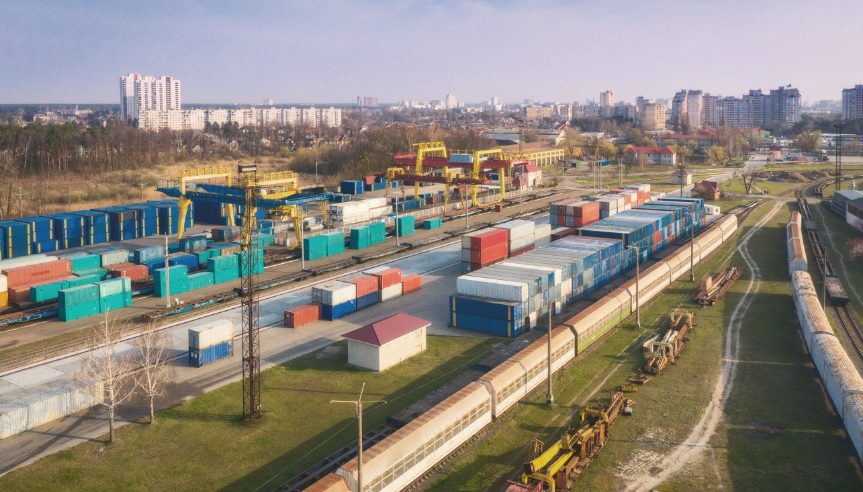
Expansion of bioceanic highway corridors connecting Brazil with Pacific ports in Chile and Peru is creating fast-track transpacific alternative routes for factory-direct cargo moving out of Asia.
Rooted in nearly four decades of global shipping excellence, our network combines local Brazilian customs expertise with worldwide freight muscle.
In operation since 1985, our logistics organization has navigated decades of global carrier alliances, port congestion, currency fluctuations, and trade policy shifts.
Every account is partnered with a specialized Logistics Account Executive (for strategic routing and rate optimization) and a dedicated Operations Account Manager (for live tracking and execution).
Licensed customs specialists capable of handling complex ISF filings, continuous customs bonds, and regulated commodities subject to FDA, FWS, ANVISA, and MAPA oversight.
Adherence to strict supply chain security standards under the CTPAT framework, ensuring faster clearance throughput and reduced risk profiles during customs inspections.
From FCL, LCL, and Reefer container shipping to 3-5 day Express4Air services and commercial warehousing near key transit hubs like Los Angeles (LAX) and global gateway ports.
All shipments come standard with tracking software. Our advanced dashboard delivers key statistics, shipment sorting, arrival calendars, and automated reporting.
Expert guidance on common hurdles faced by Brazilian importers and global factory exporters.
A RADAR License (Registro e Rastreamento da Atuação dos Intermediários de Comércio Exterior) is a mandatory authorization issued by the Brazilian Federal Revenue (Receita Federal) permitting companies to operate within the SISCOMEX system. Depending on your financial capacity, RADAR is categorized into Expresso (up to USD 50,000 per 6 months), Limitado (up to USD 150,000), or Ilimitado (over USD 150,000). Foreign exporters utilizing our DDP door-to-door services can bypass direct RADAR requirements by leveraging our fully compliant local entity import structure.
Import duties in Brazil are calculated cascadingly on the CIF Value (Cost, Insurance, and Freight). The tax cascade includes: 1) II (Imposto de Importação), 2) IPI (Imposto sobre Produtos Industrializados), 3) PIS-Importação and COFINS-Importação, and 4) State-level ICMS tax (which ranges from 17% to 22% depending on the destination state like São Paulo or Santa Catarina). Proper NCM code assignment at origin is essential to ensure correct duty rates and avoid penalities.
Under DDU (Delivered Duty Unpaid), the buyer in Brazil is responsible for cleared customs filings, paying import duties, and managing port charges. Under DDP (Delivered Duty Paid), the seller/forwarder manages the entire logistics chain, absorbing all customs inspections, tax duties, and local trucking fees to deliver directly to the buyer's warehouse. Given the complexity of Brazilian customs, DDP is increasingly favored by international exporters seeking seamless trade.
As a rule of thumb, once your cargo volume exceeds 13 to 15 CBM, booking a Full Container Load (FCL 20ft) is generally more cost-effective per unit than Less than Container Load (LCL). FCL also bypasses cargo de-consolidation delays at Brazilian port terminals, reducing overall transit time by 4 to 7 days and lowering handling risk.
Essential export documents include the Commercial Invoice (signed in blue ink per Brazilian customs custom), Packing List, Bill of Lading (B/L) detailing wooden packaging treatment (ISPM 15 compliance), and the Certificate of Origin. If the product is subject to regulatory oversight (e.g., ANVISA or MAPA), pre-clearance certificates must be uploaded prior to shipping.
Express4Air is an express door-to-door air solution tailored for 25 kg to 100 kg shipments. Unlike standard airport-to-airport air freight which requires separate customs brokers and local drayage pickup, Express4Air bundles pick-up, expedited flight transit, automated customs clearance, and final truck delivery into a single 3 to 5-day workflow.
Connect with our dedicated logistics account executives to structure a customized ocean, air, or DDP clearance plan. Fast quotes, zero tax surprises, and guaranteed follow-through on every shipment.
