
Air & Sea Express
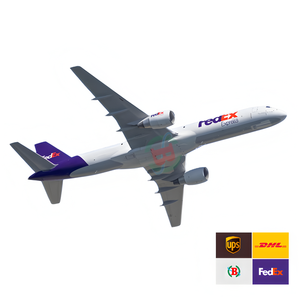
1688 Direct Air Express & Multimodal Logistics Agent
- NACCS Pre-Filing Compatible
- Integrated Express Air (3-5 Days)
- Small Package & Bulk Freight
Engineered for high-volume cross-border trade into Japanese ports (Tokyo, Yokohama, Osaka, Nagoya, Kobe). Select a tailored logistical product to connect with our dedicated trade specialists.
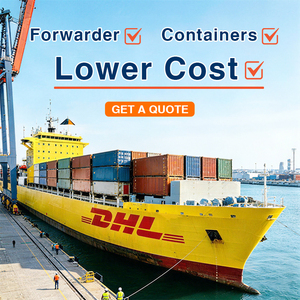
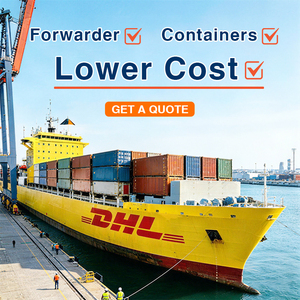

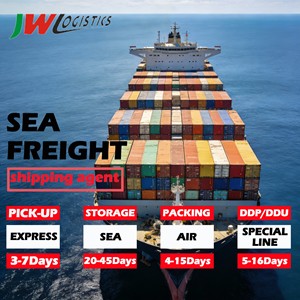
Mastering cross-border logistics to Japan requires navigating rigid statutory requirements under the Japan Customs Act (関税法), strict tax registration rules, and digital integration with national port clearing networks.
Navigating the Japanese import regulatory ecosystem demands an intricate understanding of both administrative statutes and localized customs protocols. As one of the world's most sophisticated trading nations, Japan maintains rigorous entry thresholds designed to enforce safety standards, protect domestic intellectual property, and ensure exact fiscal collection of duties and local taxes. For global manufacturers and suppliers shipping industrial equipment, automotive spares, high-tech components, consumer goods, and perishable items to Japan, partnering with a seasoned cargo clearance specialist is essential for preventing port bottlenecks and costly storage penalties.
Customs declarations in Japan are governed primarily by Article 67 of the Customs Act. Under statutory procedure, any commercial commodity brought into Japan from overseas must be formally declared to the Director General of Regional Customs (such as Tokyo Customs, Yokohama Customs, or Osaka Customs) after being placed into a designated Bonded Area (Hozei Area). The clearance process evaluates three mandatory components:
| Compliance Tier | Regulatory Mandate | Impact on International Suppliers |
|---|---|---|
| HS Code Classification | Japan Tariff Schedule (9-digit tariff code) | Determines precise duty rates, preferential origin status under RCEP/CPTPP, and non-tariff requirements. |
| Importer Representation | IOR vs. ACP (Customs Act Art. 95) | Non-resident entities must appoint an Attorney for Customs Procedures (ACP) to file on their behalf. |
| Tax Settlement | Japan Consumption Tax (JCT) & Qualified Invoice | Mandates 10% JCT payment at customs clearance; enables business buyers to claim input tax credits. |
| Pre-Clearance Network | NACCS Automated Interface Integration | Enables EDI transmission of vessel manifests and advance cargo declarations prior to ship berthing. |
Modern cargo management in Japan relies on the Nippon Automated Cargo and Port Consolidated System (NACCS). This unified electronic interface links Regional Customs bureaus, port authorities, harbor transportation firms, customs brokers, and bonded warehouses. By connecting our global tracking systems directly into NACCS EDI protocols, our logistics account executives execute real-time document verification, duty assessment calculation, and automatic clearance status tracking—slashing standard clearance windows from days down to hours.
Specific regional industrial clusters in Japan possess distinct customs inspection profiles, logistics infrastructure, and transport requirements. Here is how our clearance capabilities adapt locally.
Ports of Entry: Tokyo Port (Oi/Aomi Terminals), Yokohama Port, Narita (NRT), Haneda (HND).
High-volume e-commerce inventory and precision consumer electronics bound for Kanto distribution centers demand rapid airport-to-door or berth-to-FC dispatch. We integrate fast-track NACCS clearance with pre-filed JCT tax documentation, facilitating immediate clearance for direct delivery to Amazon Japan warehouses or localized fulfillment networks.
Ports of Entry: Port of Osaka, Port of Kobe, Kansai International Airport (KIX).
Importing agricultural items, fresh seafood, and temperature-sensitive pharmaceutical ingredients through Osaka and Kobe requires strict quarantine compliance under the Ministry of Health, Labour and Welfare (MHLW). We coordinate refrigerated (Reefer) container monitoring, sample extraction, and physical inspections within bonded cold-storage units.
Ports of Entry: Port of Nagoya, Yokkaichi Port, Chubu Centrair Airport (NGO).
The industrial heartland of Aichi Prefecture requires precise Just-In-Time (JIT) manufacturing supply chains. We manage heavy machinery, automotive components, and Out-of-Gauge (OOG) flat-rack shipments, securing MLIT road transportation permits and coordinating bonded drayage straight to assembly lines.
Ports of Entry: Hakata Port, Moji Port, Fukuoka Airport (FUK).
With Kyushu emerging as a hub for advanced semiconductor fabrication, fast cross-border logistics from East Asia into Hakata and Moji are paramount. We deliver dedicated clean-room logistics coordination, urgent air express handling, and strict compliance under the Foreign Exchange and Foreign Trade Act (FEFTA).
Strategic logistics planning requires understanding the regulatory shifts, labor constraints, and trade agreements currently reforming Japanese supply chains.
Strict driver overtime caps in Japan have constrained long-distance drayage capacity. We counter this by utilizing intermodal coastal shipping, rail connections, and pre-cleared inland container depots (ICDs).
Since the introduction of Japan's Qualified Invoice System, foreign sellers must present compliant customs documentation to enable domestic business clients to claim tax credits. Our ACP service guarantees tax compliance.
Utilizing regional trade agreements dramatically lowers duty costs into Japan. Our customs specialists manage Rules of Origin self-declarations and Certificates of Origin to unlock preferential tariff rates.
Japan Ministry of Land, Infrastructure, Transport and Tourism (MLIT) is accelerating port digitisation. We connect directly into digital port APIs to streamline document workflows and eliminate paper delays.
Combining North American strategic routing capabilities with localized Japanese customs execution. Built on personal accountability, modern tracking tech, and comprehensive multimodal options.
Headquartered in Los Angeles with strategic nodes across major worldwide sea and air hubs. Experienced across shifting trade policies, carrier shortages, and customs reforms.
Every account is assigned two experts: a Strategic Logistics Account Executive who designs optimal routing, and an Operations Account Manager who monitors live execution.
Included with all shipments. Gain real-time milestone visibility, export shipment ledgers to Excel, track arrival calendars, and monitor CBM container usage seamlessly.
From Express4Air (3-5 day door-to-door), FCL/LCL ocean freight, reefer containers, to commercial warehousing, trucking, CTPAT security, and marine insurance.
A operational benchmark detailing transit speeds, billing metrics, customs complexity, and ideal commercial applications.
| Shipping Mode | Target Cargo Profile | Pricing Structure | Typical Japan Transit | Customs Clearance Profile |
|---|---|---|---|---|
| Ocean FCL (Full Container) | Bulk shipments (>15 CBM) or heavy industrial machinery | Flat container rate (20', 40', 40'HC) | 12 - 22 Days (Port-to-Port) | Standard NACCS filing; bond release at container terminal |
| Ocean LCL (Consolidation) | Mid-sized commercial batches (1 to 14 CBM) | Per Cubic Meter (CBM) or Weight equivalent | 16 - 26 Days (via CFS) | De-consolidation required at Japanese CFS prior to duty payment |
| Express4Air Service | High-value, urgent packages (25 kg to 100 kg) | All-inclusive door-to-door rate | 3 - 5 Days (Door-to-Door) | Expedited air express manifest filing at Narita/Haneda/KIX |
| Reefer Containers | Temperature-controlled perishables & pharmaceuticals | Flat rate refrigerated container + power surcharge | 12 - 20 Days (Continuous power) | Requires MHLW quarantine inspection & health certificate clearance |
Addressing the core legal, administrative, and logistical questions foreign shippers ask when exporting goods into the Japanese market.
An Importer of Record (IOR - 輸入者) is a Japan-resident entity legally responsible for declaring imported goods, paying customs duties, and ensuring product compliance. If your business is located overseas without a registered local branch in Japan, you cannot act as the IOR. Instead, under Article 95 of the Japan Customs Act, you must appoint an Attorney for Customs Procedures (ACP - 税関事務管理者). The ACP handles customs administrative tasks on your behalf, enabling your foreign corporate entity to legally import goods into Japan in your own company name while complying with local Japanese tax regulations.
Imports into Japan are subject to a 10% Japan Consumption Tax (JCT), comprised of national and local consumption tax rates, calculated on the CIF (Cost, Insurance, Freight) value plus applicable customs duties. Under Japan's Qualified Invoice System, business buyers in Japan require official tax-compliant invoices showing the JCT paid at import to claim input tax credits. Our customs clearance workflow ensures that JCT payments are accurately documented through NACCS and tied to your registered ACP profile.
Products governed by the Food Sanitation Act, Cosmetics/Pharmaceutical Affairs Law, or the Plant Quarantine Act fall under the jurisdiction of the Ministry of Health, Labour and Welfare (MHLW) and the Ministry of Agriculture, Forestry and Fisheries (MAFF). Clearance requires submitting advance notification forms, ingredient lists, and obtaining clearance certificates prior to formal Customs declaration under Article 70 of the Customs Act. Our team coordinates pre-inspection filing to streamline these statutory steps.
To access reduced or zero tariff rates under the Regional Comprehensive Economic Partnership (RCEP) or the Comprehensive and Progressive Agreement for Trans-Pacific Partnership (CPTPP), goods imported into Japan must satisfy specific Rules of Origin (ROO). Shippers must provide a valid Certificate of Origin (COO) or execute an approved Origin Declaration by the exporter/producer. Our customs brokerage team evaluates your HS Code against Japanese tariff schedules to ensure full compliance before filing.
Under international maritime law (such as COGSA or the Hague-Visby Rules), ocean carrier liability is strictly capped—often limited to $500 per package or customary freight unit, regardless of actual cargo value. Furthermore, carrier liability excludes acts of God, severe sea weather damage, or general average declarations. Comprehensive Marine Cargo Insurance covers the full declared CIF value plus anticipated profit, protecting your shipments against damage or loss throughout the transit corridor.
Japan enforces the Advance Container Manifest Information Rules (24-Hour Rule). Vessel operators and NVOCCs must transmit detailed cargo manifest data electronically to Regional Customs via NACCS at least 24 hours prior to vessel departure from the port of loading. By pre-clearing documentation through NACCS EDI links, customs officers review classification and risk profiles before ship arrival, enabling instant discharge and immediate gate-out authorization.