
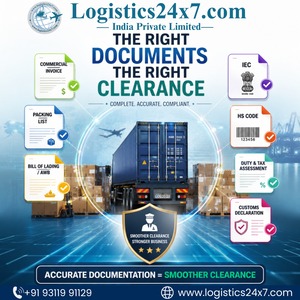
Explore our targeted portfolio of international document preparation, risk assessment, digital freight management, and cross-border regulatory support engineered for manufacturers and corporate buyers.

Malaysia stands as a pivotal nexus in ASEAN trade, linking East Asian manufacturing hubs with global Western markets. However, strict oversight by the Royal Malaysian Customs Department (RMCD) and the Ministry of Investment, Trade and Industry (MITI) demands robust compliance infrastructure.
Malaysia enforces strict legal controls over the export, transshipment, transit, and brokering of dual-use goods and strategic materials. Manufacturers dealing in advanced electronics, semiconductors, and specialized chemical compounds must secure proper permit authorizations (Single-Use, Bulk, or Multiple-Use Permits) from MITI to eliminate severe legal exposure and costly port holds.
Misclassifying goods under Malaysia's Customs Duties Order can result in hefty penalties under the Customs Act 1967. Our specialized trade audits ensure accurate 10-digit HS Code assignment, mitigating Sales and Service Tax (SST) exposure while leveraging statutory tax exemptions for raw materials imported into Licensed Manufacturing Warehouses (LMW) or Free Commercial Zones (FCZ).
Unlocking preferential duty treatments requires precise Certificate of Origin (CoO) management. We guide Malaysian exporters and international buyers through the intricacies of Form E (ACFTA), Form D (ATIGA), RCEP, and CPTPP rules of origin (Regional Value Content vs. Change in Tariff Classification), preventing origin disputes during destination customs entry.
From the high-tech electronics belt in Penang to the sprawling maritime gateways of Port Klang and Johor, trade compliance requirements vary dynamically. Here is how our localized expertise mitigates risk in primary industrial sectors.
The Penang "Silicon Valley of the East" and Kulim Hi-Tech Park account for a vast percentage of global semiconductor testing, assembly, and packaging. Importers and exporters operating here face intensive scrutiny regarding dual-use technology transfers under STA 2010. Our customized documentation protocols streamline K1 (Import) and K2 (Export) declarations, maintaining flawless compliance across Free Industrial Zones (FIZ) while ensuring fast-track release of time-critical microchip components.
As Malaysia's primary container hubs, Westports and Northport in Port Klang handle massive volumes of chemical, palm oil derivatives, and consumer goods traffic. Exporters must navigate stringent Royal Malaysian Customs Department procedures alongside international maritime standards. We provide integrated pre-shipment inspections, commercial invoice validation, container load supervision, and direct customs brokerage to prevent port demurrage and detention expenses.
Malaysia leads the world in global Halal certification standards governed by JAKIM. Exporting food products, pharmaceuticals, and cosmetics requires uncompromised traceability and dedicated non-contaminated logistics pathways. We manage the delicate convergence between JAKIM Halal export documentation, MAQIS (Malaysian Agricultural Quarantine and Inspection Services) permits, and temperature-monitored reefer container compliance.
With Malaysia accelerating its National Automotive Policy (NAP) and Electric Vehicle (EV) adoption, tier-1 manufacturers require uninterrupted supply lines for lithium-ion packs, drivetrains, and industrial robotics. We coordinate mandatory SIRIM Type Approval certificates, MITI Approved Permits (AP), and tariff classifications under the ASEAN Harmonised Tariff Nomenclature (AHTN).
The Malaysian regulatory ecosystem is undergoing rapid modernization. Global trade directors and local manufacturers must align with four macro trends driving compliance transformation across the region.
The New Industrial Master Plan 2030 pushes Malaysian factories toward high-complexity manufacturing. Compliance strategies are shifting from basic clearance to high-tier supply chain security and export governance.
Malaysia's Inland Revenue Board (LHDN) is phasing in mandatory national e-Invoicing. Cross-border trade declarations must strictly synchronize with digital invoice data to ensure customs tax validation.
RMCD's fully integrated uCustoms system automates risk management. Exporters need digital document accuracy to avoid algorithmic customs audits and automated red-channel holds.
With the EU Carbon Border Adjustment Mechanism (CBAM) taking effect, Malaysian exporters must report embedded carbon emissions. We help track and comply with international green logistics standardizations.
Why corporate buyers and global brand owners are shifting from transactional shipping providers to dedicated compliance-first logistics managers in the Malaysian market.
| Operational Parameter | Basic Freight Forwarder | Universal Cargo Compliance Integration |
|---|---|---|
| Malaysia Customs Clearance (RMCD) | Basic customs filing; client assumes all liability for HS Code or valuation errors. | In-house Licensed Customs Brokers; pre-audit HS classification & SST optimization. |
| Strategic Trade Act (STA 2010) | No dual-use screening; risk of shipment seizure for unpermitted high-tech items. | Complete MITI permit management, dual-use screening & end-user verification. |
| Preferential Tariffs (Form E / ATIGA / RCEP) | Manual paper submissions prone to rejection by destination customs. | Automated Rules of Origin validation, Regional Value Content (RVC) verification. |
| Accountability Structure | Call-center ticketing queues with rotation of unknown agents. | Two dedicated staff per account: 1 Logistics Executive + 1 Operations Manager. |
| Supply Chain Visibility | Basic carrier website tracking updates. | Real-time iView Web Desktop with customized statistics, calendar view & analytics. |
| Regulatory Regulatory Approvals (SIRIM/MAQIS) | Outsourced to third parties without central monitoring. | Direct agency coordination ensuring seamless pre-clearance certificates. |
Clear, authoritative answers to critical compliance, tax, and customs brokerage queries encountered by international buyers and Malaysian manufacturers.
A: Non-compliance with STA 2010 carries severe legal consequences under Malaysian law, including heavy corporate fines, imprisonment for company directors, and immediate confiscation of dual-use goods. Any commercial entity exporting, transshipping, or brokering restricted electronic components, sensors, or chemicals without a valid MITI permit faces severe operational suspension. Universal Cargo performs rigorous dual-use pre-screenings to ensure proper permits are locked in prior to port arrival.
A: Form E (under the China-ASEAN Free Trade Area) and Form D (under the ASEAN Trade in Goods Agreement) certify that goods fulfill specific origin rules, such as a minimum 40% Regional Value Content (RVC). When presented during Royal Malaysian Customs clearance via the K1 entry form, import duties can be reduced to 0% on qualified tariff lines. Our team audits origin declarations to prevent post-clearance duty assessments and penalties.
A: An LMW status granted under Section 65/65A of the Customs Act 1967 allows export-oriented manufacturers in Malaysia to import raw materials, machinery, and packaging components free of customs duties and Sales Tax (SST). To maintain LMW compliance, companies must undergo periodic customs audits and maintain flawless raw material movement records. Universal Cargo assists in coordinating seamless LMW customs filings and bonded transport.
A: SIRIM (Standard and Industrial Research Institute of Malaysia) approval is mandatory for regulated products such as electrical appliances, wireless communications gear, construction materials, and personal protective equipment. Products must obtain a Certificate of Approval (CoA) before RMCD permits release. Universal Cargo manages pre-shipment SIRIM verification, preventing costly port storage delays at Port Klang or KLIA.
A: Malaysia's Inland Revenue Board (LHDN) e-Invoicing framework mandates real-time validation of invoice data. For cross-border transactions, commercial invoices must contain validated Unique Identifier Numbers (UIN) matching customs K1/K2 declarations. Mismatches can delay tax claims and trigger customs audits. Our digital document solutions ensure perfect data alignment across sales, customs, and tax filings.
A: Carrier liability is legally constrained under international conventions such as the Hague-Visby Rules or the US Carriage of Goods by Sea Act (COGSA), which often limit recovery to $500 per package or 2 SDR per kilogram. This falls far short of covering modern high-value industrial cargo or microelectronics. Universal Cargo provides comprehensive, full-value marine cargo insurance tailored to your specific trade lanes.
Founded in 1985, Universal Cargo has built a nearly four-decade reputation as a premier international freight forwarder and trade compliance specialist. Headquartered minutes from LAX and the Port of Los Angeles, we seamlessly link Asia-Pacific production lines with Western buyer networks.
We eliminate impersonal call centers. Every client is assigned a dedicated Logistics Account Executive who designs optimal routing strategies, paired with a specialized Operations Account Manager who controls daily execution and customs status.
Our licensed house customs brokers maintain direct relationships with customs authorities. We handle complex Importer Security Filings (ISF 10+2), continuous bonds, FDA/FWS clearances in the US, and partner network filings with RMCD in Malaysia.
Aligned with Customs-Trade Partnership Against Terrorism (CTPAT) standards, we safeguard cargo integrity across FCL ocean freight, consolidated LCL, temperature-controlled reefer, 3-5 day Express4Air, commercial warehousing, and nationwide trucking (LTL/FTL).
Connect with our senior trade compliance directors and freight architects. We deliver customized duty-optimization plans, rapid customs clearance, and transparent global door-to-door transport tailored to your enterprise operational needs.