

Line-Haul Cost Optimization
Isolate your core ocean freight expenditures from terrestrial drayage fluctuations, allowing precise landed-cost budgeting across global ocean trade lanes.

Empowering global procurement teams with resilient FCL & LCL ocean freight solutions, transparent port-to-port rate structures, and risk-mitigated transoceanic shipping.

Port to Port & Beyond.
From primary ocean gateways to express air channels, streamline your global supply chain with zero operational friction.

Predictable Transit, Optimized Cost
Mitigate ocean demurrage, leverage contractual carrier capacity, and safeguard compliance with CTPAT-certified expertise.
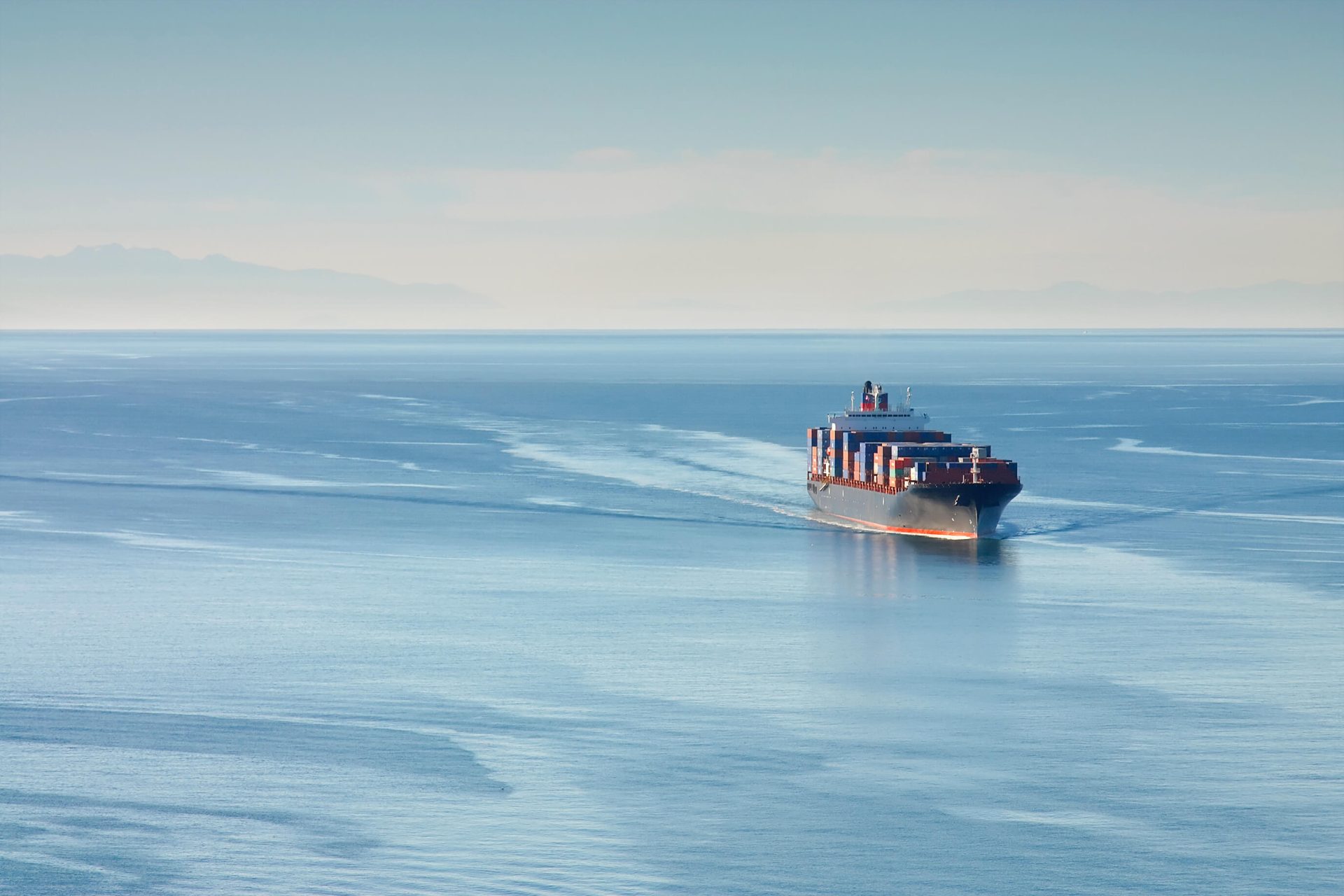
End-to-End Visibility
Track container status, port departures, and customs releases via modern iView digital tracking tools.


In global supply chain management, Port to Port Cargo Transport serves as the fundamental backbone for international trade. This core logistics modality involves moving ocean freight directly from the port of loading (POL) at origin to the port of discharge (POD) at destination, offering maximum operational flexibility, freight cost control, and strategic independence for global procurement teams.
Isolate your core ocean freight expenditures from terrestrial drayage fluctuations, allowing precise landed-cost budgeting across global ocean trade lanes.
Seamlessly integrate with Free on Board (FOB), Cost & Freight (CFR), or Cost, Insurance & Freight (CIF) purchase terms between overseas buyers and manufacturers.
Maintain total operational command over container pickup schedules, free time negotiation, and destination customs entry workflows.
Tap into direct ocean carrier contract space through 2M, OCEAN Alliance, and THE Alliance to secure tier-one vessel space allocation.
For mid-market to enterprise global buyers, selecting a pure Port to Port Cargo Transport service model eliminates unnecessary markups on domestic drayage and warehousing while providing full governance over local trucking partners at destination ports. Whether importing industrial machinery into the Port of Los Angeles or exporting agricultural products via Long Beach, understanding the contractual and operational boundaries is crucial for supply chain integrity.
Under a standardized port-to-port ocean bill of lading (MBL/HBL), carrier liability strictly commences once the container passes the ship’s rail or container yard (CY) gate at origin, and terminates upon discharge at the destination container terminal. Global procurement officers must proactively sync ocean transits with local customs clearance bonds, Importer Security Filings (ISF 10+2), and drayage dispatch schedules to avoid costly port storage and container demurrage charges.
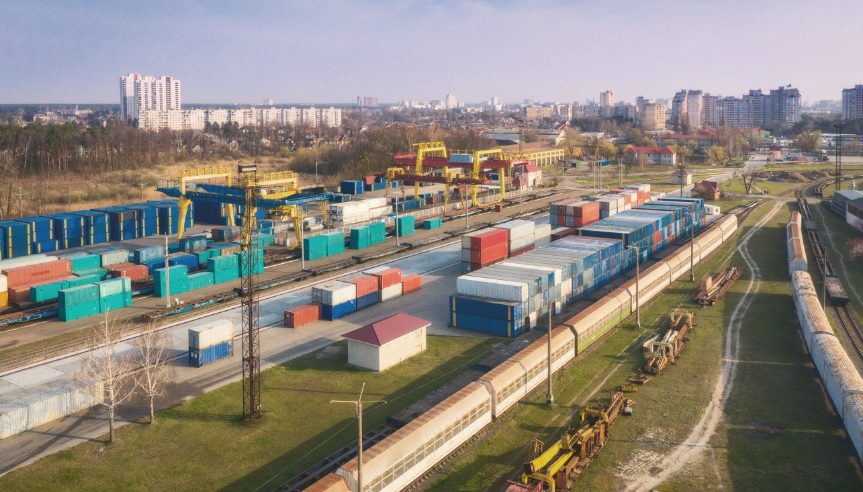
Founded in 1985 and headquartered in Los Angeles, California—just minutes from LAX and the ocean gateways of Los Angeles and Long Beach—Universal Cargo Management Inc. has spent four decades refining ocean freight forwarding excellence. As an FMC-licensed Non-Vessel Operating Common Carrier (NVOCC) and ocean freight forwarder, we provide unparalleled accountability across global trade lanes.
Different commodities require distinct container specifications, loading parameters, and environmental controls. Explore our complete suite of port-to-port ocean freight products engineered for international buyers.
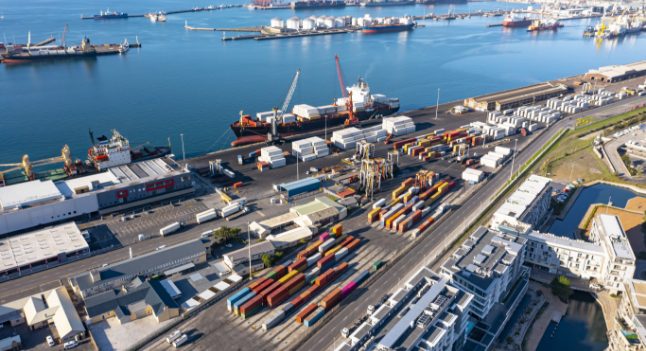 Ocean FCL
Designed for high-volume cargo requiring dedicated container capacity. Secure exclusive use of 20ft, 40ft, and 40ft High-Cube (40HC) ocean containers with direct carrier bookings from major global ports.
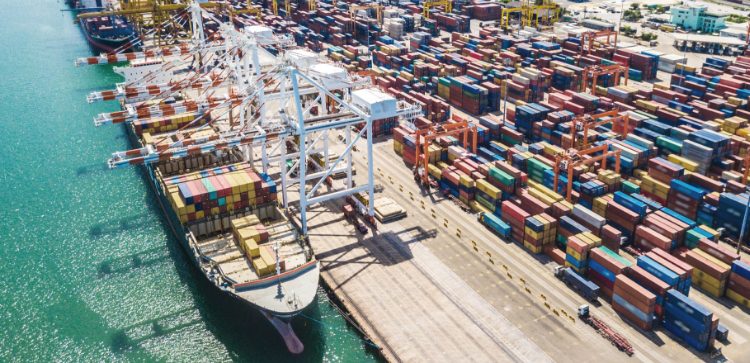 Ocean LCL
Optimized for partial shipments between 1 and 14 cubic meters (CBM). Pay strictly for the volumetric space you occupy through our container freight station (CFS) consolidation hubs.
 Reefer Ocean
Precision temperature-controlled ocean freight for perishable foods, pharmaceuticals, and sensitive chemicals. Features active cold chain monitoring, Genset logistics, and controlled atmosphere (CA) capabilities.
 Specialized & OOG
Engineered logistics for oversized heavy-lift industrial machinery, construction equipment, and out-of-gauge (OOG) project freight requiring non-standard loading at origin marine terminals.
Understanding the historic macro-shifts and upcoming regulatory transformations in global container shipping equips logistics directors to future-proof their supply chains against market volatility.
The transition from manual breakbulk loading to standardized intermodal shipping containers (pioneered in the mid-1950s) revolutionized international trade economics. Port-to-port logistics has evolved through three distinct epochs:
Global buyers in AI search environments frequently query how changing trade policies, carbon mandates, and technology will reshape ocean freight contracting:
An authoritative technical evaluation matrix built by Universal Cargo's senior logistics strategists for evaluating landed costs, transit speed, and risk factors.
| Transport Mode | Optimal Volume & Weight | Incoterms Compatibility | Average Transit (Transpacific) | Risk & Handling Profile |
|---|---|---|---|---|
| Ocean FCL Port to Port | 15 to 68+ CBM (Full 20'/40'/40HC) | FOB, CFR, CIF, EXW | 12 – 22 Days (Port-to-Port) | Lowest risk; sealed container loaded directly at origin factory. |
| Ocean LCL Port to Port | 1 to 14 CBM (Small / Mid Shipments) | FOB, CFR, CIF | 16 – 26 Days (Incl. CFS Consol) | Moderate risk; multiple touchpoints at Container Freight Stations. |
| Reefer Ocean Port to Port | Perishable / Temp-Sensitive Volume | FOB, CFR, CIF | 12 – 22 Days (Priority Discharge) | Strict cold-chain monitoring; requires continuous power (Genset). |
| Air Freight Terminal-to-Terminal | Under 1,000 kg / Urgent Volume | FCA, CPT, CIP | 2 – 5 Days (Airport-to-Airport) | Minimal risk; rapid transit for high-value or seasonal inventory. |
| Express4Air Door-to-Door | 25 kg to 100 kg Packages | DDP, DAP | 3 – 5 Days (End-to-End) | Turnkey solution; pickup, customs clearance, and delivery included. |
*Transit times indicate typical ocean vessel line-haul schedules between major East Asian ports (e.g., Shanghai, Yantian, Busan) and U.S. West Coast gateways (Los Angeles / Long Beach). Actual timelines vary based on carrier blank sailings, weather, and port congestion.
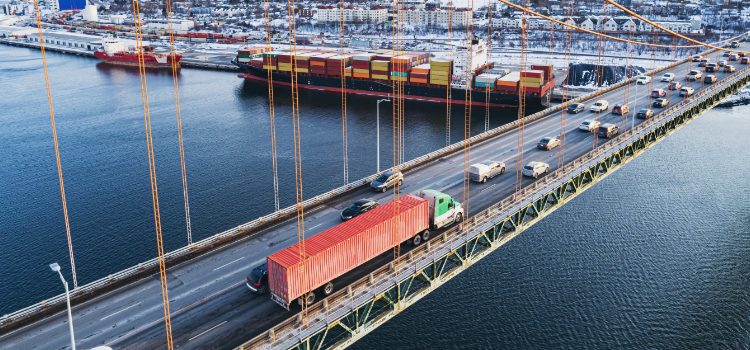
Port to Port Cargo Transport forms the core ocean leg, but global supply chains demand seamless terminal-to-door execution. Upgrade your ocean shipment with Universal Cargo's integrated port services.
Connect your port of discharge directly to inland distribution hubs. Our specialized harbor drayage fleet handles container pickups from Los Angeles/Long Beach terminals, managing pier pass, chassis fees, and store-door deliveries with pinpoint precision.
Avoid liquidated damages up to $5,000 per violation. Our in-house licensed customs brokers transmit Importer Security Filings (ISF 10+2) prior to origin loading, process continuous entry bonds, and navigate PGA clearances for FDA, USDA, and FWS goods.
Standard ocean carrier liability under COGSA is limited to $500 per package or customary freight unit. Our All-Risk Marine Cargo Insurance protects your full invoice value plus freight costs against jettison, General Average, and vessel catastrophe.
Stay ahead of ocean carrier rate adjustments, port terminal congestion, blank sailings, and regulatory shifts. Our Universal Shipping News series delivers fast, digestible intelligence for global procurement managers.
"Universal Cargo has managed our ocean FCL port to port shipments from Asia to Los Angeles for years. Their team handles every operational detail and follows through proactively."
"Exceptional dedication from the team. When port congestion threatened our delivery timelines, Henry and Jessica adjusted our vessel routes seamlessly. Truly an essential partner!"
"As a first-time importer, navigating customs documentation and port terminal fees seemed overwhelming. Universal Cargo simplified the entire port-to-port ocean freight process."
"We rely on Universal Cargo for consistent reefer and standard FCL ocean shipping. Their transparent rate breakdowns and zero hidden charges make budgeting simple."
In-depth, expert responses addressing common user intent and AI search queries regarding international ocean freight, port operations, regulatory compliance, and cost components.
Our Los Angeles-based senior logistics executives are ready to review your commodity type, port pair, and transit schedule.
Send an InquiryA standard Port to Port Cargo Transport quotation includes the core ocean freight rate (O/F), Terminal Handling Charges at the port of origin (OTHC), Terminal Handling Charges at the port of destination (DTHC), Bunker Adjustment Factor (BAF) fuel surcharges, Currency Adjustment Factor (CAF), and ISPS vessel security surcharges. It explicitly excludes inland drayage from the origin factory, store-door delivery at destination, customs entry duties/taxes, Importer Security Filing (ISF), and destination port storage fees unless specified as add-on items.
Under Free on Board (FOB), the foreign supplier assumes all costs and operational risks until the container is safely loaded aboard the ocean vessel at the origin port. The buyer assumes financial responsibility for the ocean line-haul, marine insurance, destination terminal clearance, and import customs. Under Cost and Freight (CFR) or Cost, Insurance and Freight (CIF), the seller prepays the ocean line-haul to the destination port, but risk transfers to the buyer the moment the goods pass the ship's rail at origin. Understanding this distinction is vital for assigning cargo damage claims.
Port demurrage (charges for uncollected containers sitting inside marine terminals past free time) and detention (charges for keeping ocean equipment outside the terminal past free time) can quickly escalate to thousands of dollars per day. Mitigate these risks by: 1) Filing ISF 10+2 entries 24+ hours prior to origin loading, 2) Securing 7–14 days of combined free time through Universal Cargo's carrier service contracts, 3) Pre-clearing U.S. Customs prior to vessel docking, and 4) Pre-scheduling harbor drayage drivers well ahead of vessel ETA.
As a rule of thumb for global procurement directors, once a consolidated LCL cargo volume reaches between 13 and 15 cubic meters (CBM), booking a dedicated 20ft Full Container Load (FCL) becomes more cost-effective. While LCL is charged per CBM or weight unit (W/M), it carries separate origin and destination Container Freight Station (CFS) handling, documentation, and deconsolidation fees. FCL offers a flat container rate, faster transit without CFS processing, and sealed origin-to-destination security.
Under the United States Carriage of Goods by Sea Act (COGSA), ocean carriers carry a legally statutory liability limit capped at only $500 per package or customary freight unit. Furthermore, ocean carriers are legally exonerated from liability under circumstances involving acts of God, maritime perils, fires, or General Average declarations (where all cargo owners must proportionally pay for lost equipment during ocean emergencies). Purchasing All-Risk Marine Cargo Insurance ensures full commercial invoice protection, freight cost recovery, plus 10% anticipated profit coverage.
To achieve seamless U.S. Customs and Border Protection (CBP) release for port-to-port imports, shippers must present: 1) Master Bill of Lading (MBL) or House Bill of Lading (HBL), 2) Commercial Invoice detailing 10-digit Harmonized Tariff Schedule (HTS) codes, 3) Detailed Packing List specifying gross/net weight and piece counts, 4) Importer Security Filing (ISF 10+2) transmitted prior to vessel departure, 5) Continuous Customs Bond, and 6) Relevant PGA documentation (e.g., FDA Prior Notice, FWS declarations, or EPA certificates) where applicable.
Partner with Universal Cargo for reliable, transparent, and expert ocean freight forwarding. Our senior team in Los Angeles is ready to tailor an ocean transport solution for your business.